







HAGÅTÑA (The Guam Daily Post) — The Guam Department of Education is weighing options on how to address the 24 days face-to-face students missed in the first semester of the ongoing school year. Part of the discussion centered around quality of instruction versus quantity of instruction.
It’s likely that GDOE will request senators waive the 24 days missed this school year because of Covid-19 related school closures.
“Maybe not lock us into the 24 days itself, but just to waive for this entire school year should additional days come up and surprises that we are covered beyond those 24 days,” Guam Education Board Chairman Mark Mendiola said of an approach to dealing with mandatory benchmarks for student learning.
While GDOE has the option to seek a waiver of the 180-days of instruction required by law, it’s not guaranteed that the Legislature will approve.
With the school year entering its second semester, the clock is ticking to make up the lost time.
Mendiola indicated he would like an attorney’s take on the missed instructional days.
“Perhaps maybe I don’t know if it’s a legal opinion, because ultimately the board can be sued by a student or parent that says, hey you didn’t provide my child those 24 days,” Mendiola said. “Perhaps maybe we can get legal counsel to chime in on that – just to make sure if we go down the route of providing the waiver. Of course if the legislature approves it then it would be a moot issue. But I am just looking forward, that we could hang our hat on something should it come to the decision on what we need to do to make up those 24 days.”
He noted that timing is everything when it comes to seeking the waiver.
“If there are additional days, of course the flexibility is on the board now if we are going to shut schools down or anything. I don’t think we are going to revert to that, I just want assurances from the Superintendent and his team that we are able to transition seamlessly if we are going to go back online or modified cohorts so that we no longer lose instructional time in the transition,” Mendiola said.
Requiring summer classes
With the uncertainty of the Covid-19 pandemic GDOE must prepare to tackle learning loss and loss of instructional days from various angles.
One option presented by Guam Education Board member Robert Crisostimo involved mandating the attendance of some students in the Summer School program.
“If we vote on it as a board, when you identify students at the level they are at, if they are two grade levels below the grade level they are supposed to be. That it be mandated that they have to go to summer school,” Crisostimo said.
The idea was presented to GDOE officials during a Guam Education Board of GEB work session last Wednesday. Public school officials noted it was something that could be looked into.
Deputy Superintendent Joseph Sanchez was optimistic about the suggestion and said, “it’s definitely possible.”
“The superintendent put on the chat, requiring a student to go after school and during the summer in order to advance to the next level or grade applies to the retention policy,” said Sanchez sharing a comment from Superintendent Jon Fernandez.
Sanchez also shared a sentiment he’s heard from teachers and administrators: that part of the challenge is making sure the students are motivated.
“Teachers and administrators can do a lot on our end but at the same time we have to continue to remind students that part of it also is their motivation,.” he said.
Last summer, GDOE noted that 6,000 students were enrolled in the Summer School program, the highest enrollment the department has ever seen in the program.
GDOE’s summer program has the funding to support even more students.
“We do recognize the difference between just making up days versus the longer term work that needs to be done to support students academically and trying to make up for list time,” Sanchez said.
GDOE’s accelerated learning plan hinges on student attendance. Sanchez said although school is open 5-days a week, there have been a number of students who are habitually absent. The most recent count GDOE provided was 174 students who could not be accounted for during the first semester.
Crisostimo pushed to explore the mandatory summer classes on the premise that students would fall further behind in learning.
“When they come back for the new school year and haven’t had any primer to that new school year whatever grade level they are supposed to be in by age, they are operating now three years below that grade. Crisostimo stressed, “if we don’t do anything to mitigate that we are just staking up learning loss and skill deficiency grade after grade.”
Mendiola supported the idea, but, called for legal counsel to chime in on the legality of making it mandatory.
“If there’s legal issues surrounding that, are we able to do that and be able to provide that to the students? Also for students that may want to have additional supports, I don’t think we should deny any student who would like to take more opportunities to go to summer school or take enrichment classes or courses,” Mendiola said.
Whatever course GDOE takes, Mendiola stressed the importance of the board obtaining a legal opinion and having their “ducks in a row.”
“I think we should seek legal opinion just so that the board, if a parent or student challenges the 24 days not being provided or the school year not extended. I just want to make sure that we have that.” Mendiola said, “I want to make sure we get the ball rolling sooner rather than later that we are not playing with it because we don’t know what is going to happen with the legislative body. We can request but they may deny us.”
The discussions held during the GEB work session will be factored into the GDOE’s plan of action.
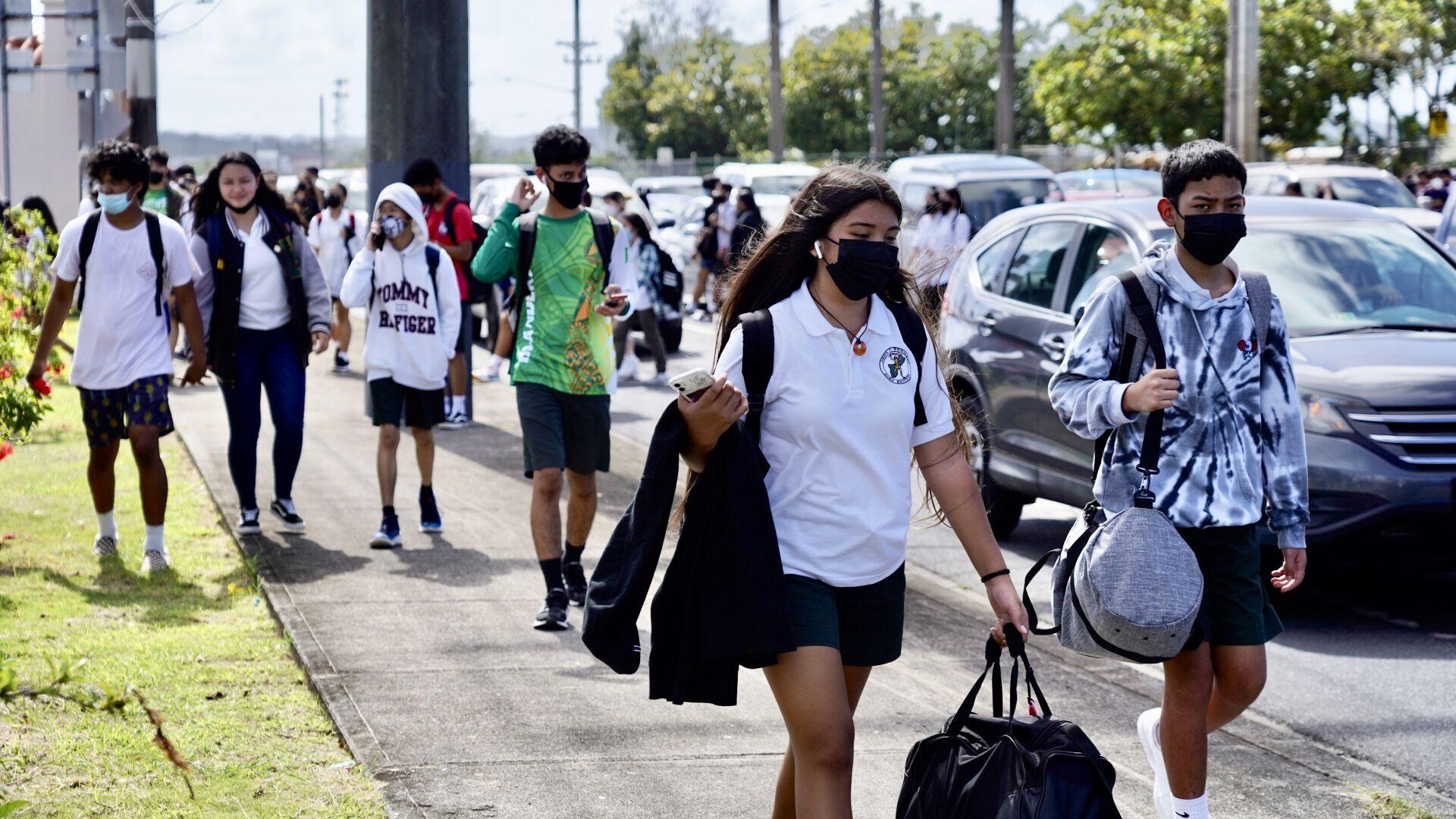
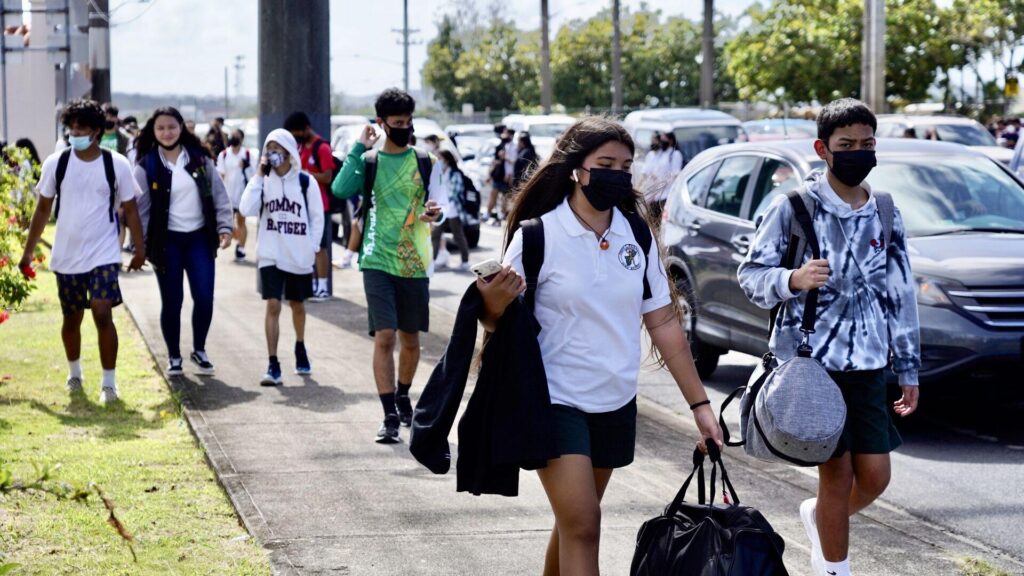
John F. Kennedy High School students leave campus after school Dec. 10, 2021.
