





HAGÅTÑA (The Guam Daily Post) — Ten lawmakers have put forth bipartisan legislation that would authorize the creation of a program for the use of body-worn cameras by officers at the Guam Police Department.
The measure, Bill 181-37, won’t require body cameras by law, but would authorize the chief of police to develop a bodycam program for GPD.
This is because lawmakers were concerned that mandating body cameras could jeopardize the use of federal funds to cover costs, according to Sen. Chris Barnett, who leads the legislative committee on public safety and serves as the main sponsor of Bill 181.
GPD Chief Stephen Ignacio has said a federal grant will cover the cost of procuring police body cameras, Barnett added.
Bill 181 is co-sponsored by Sens. Telo Taitague, William Parkinson, Roy Quinata, Christopher Duenas, Joe San Agustin, Amanda Shelton, Dwayne San Nicolas and Thomas Fisher, and Vice Speaker Tina Muña Barnes.
Alleged police brutality
The measure comes as recent allegations of police brutality have surfaced on Guam.
In August, GPD launched an internal investigation regarding the apprehension of Joshua Paul Taitano.
Taitano was allegedly speeding on his motorcycle, driving into oncoming traffic, and reportedly attempted to evade officers. His arrest is detailed in an official magistrate’s complaint, and was captured through home surveillance footage, but there appear to be major differences between the two.
The complaint stated Taitano jumped off his motorcycle, attempted to climb the gate of a residence and resisted arrest by pulling his arms away from officers and kicking his feet.
The surveillance footage appeared to show Taitano getting hit by a patrol car while still on his motorcycle, causing him to fall to the ground. One officer then exits his vehicle, runs toward Taitano and tackles him against the gate of the residence. Three other officers then appear to restrain Taitano, who was brought to the ground and escorted to a patrol car minutes later.
In his mugshot, Taitano’s left eye is seen bulged, swollen and black. He was reportedly in possession of methamphetamine.
In another incident, Veronica Patao, 65, alleged that a police officer pushed a table against her chest, causing her to lose balance and hit her head on the floor. Patao said she has a medical condition that can result in seizures. She recalled lying on her side, crying and vomiting, stating that she could not breathe.
Both of these incidents remain under internal investigation at GPD.
Body camera policy
The findings and intent within Bill 181 state that body cameras have become increasingly popular in recent years as means to prevent or document officer misconduct. But the bill adds that these devices are unpopular among law enforcement as everything they say or do on duty is recorded, including at times when they have a reasonable expectation of privacy. Another concern among law enforcement is that recorded criticisms of other officers or supervisors may be used against them, according to Bill 181.
“To balance the needs of the public, investigators, prosecutors, defense attorneys and victims, the use and release of bodycam recordings should be subject to a fair and concise policy,” the measure states.
Under Bill 181, bodycam recordings would not be considered public information as defined in Guam’s Sunshine Act, the local law on public disclosure. The chief of police would have the sole discretion on the release of bodycam footage, and Bill 181 lists several reasons.
These include court orders, criminal investigations, GPD internal investigations, instances where public interest outweighs confidentiality and any other purpose deemed appropriate by the chief.
Regarding public interest, Bill 181 states that the release of body camera footage should not occur when the release might impair, hinder or disrupt and investigation or trial. In instances where recordings are released pursuant to this purpose, such recordings would be considered public information.
‘Accountability and transparency’
Under Bill 181, the police chief would be required to develop a storage, retention and archiving policy for bodycam recordings.
“Bodycams go along towards promoting accountability and transparency for both police officers and the public. The bill gives GPD the legal authority to start a bodycam program and also deals with the potential release of bodycam footage,” Barnett told The Guam Daily Post.
“The committee on public safety is ready to address any concerns or issues that may surface after the implementation of a bodycam program to ensure best practices are used for the protection and safety of all involved,” he added.
Police officers have used body cameras in the past. The Guam Daily Post has asked for any existing GPD policies regarding the use of bodycams, and is awaiting a response.
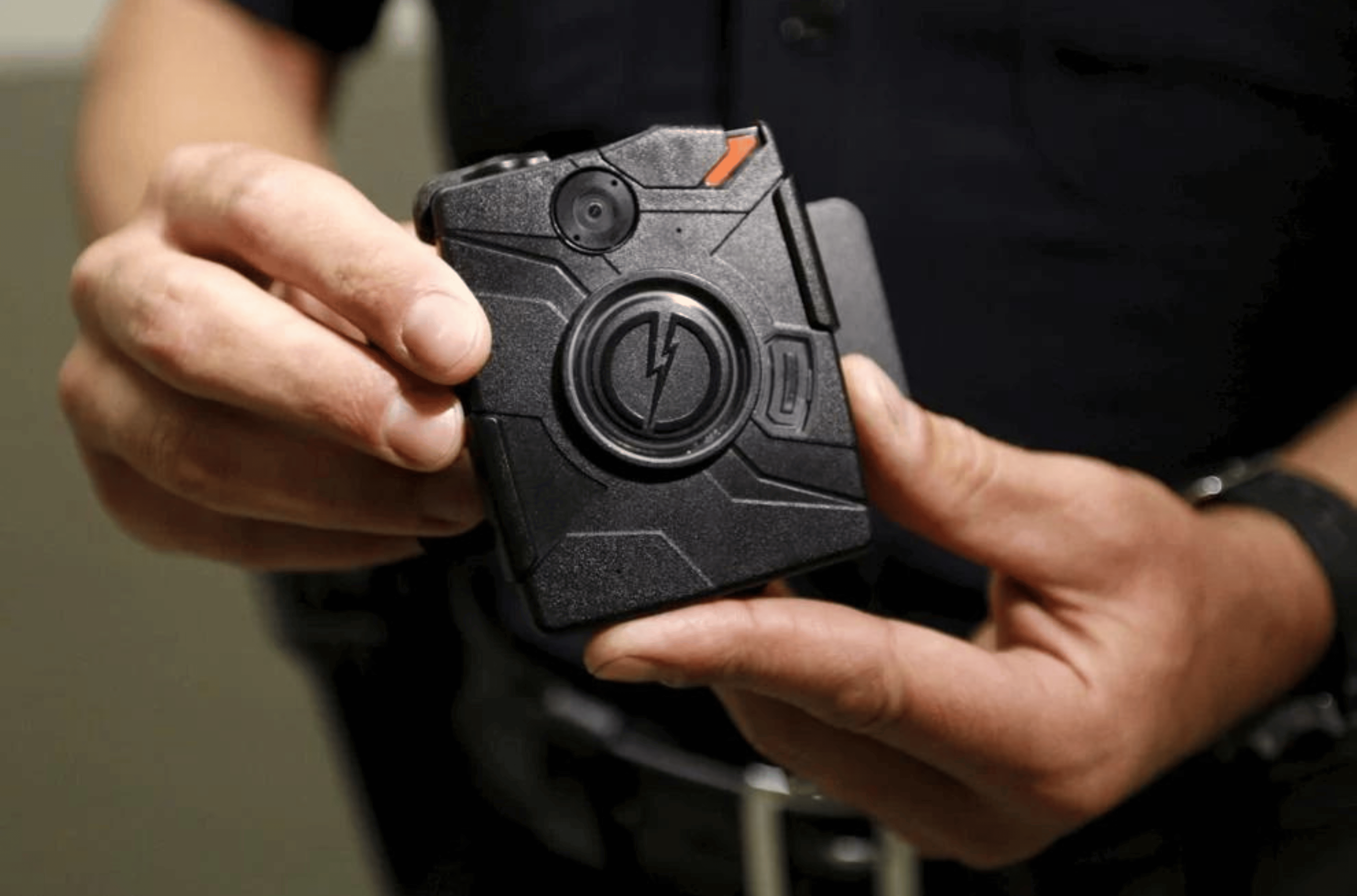
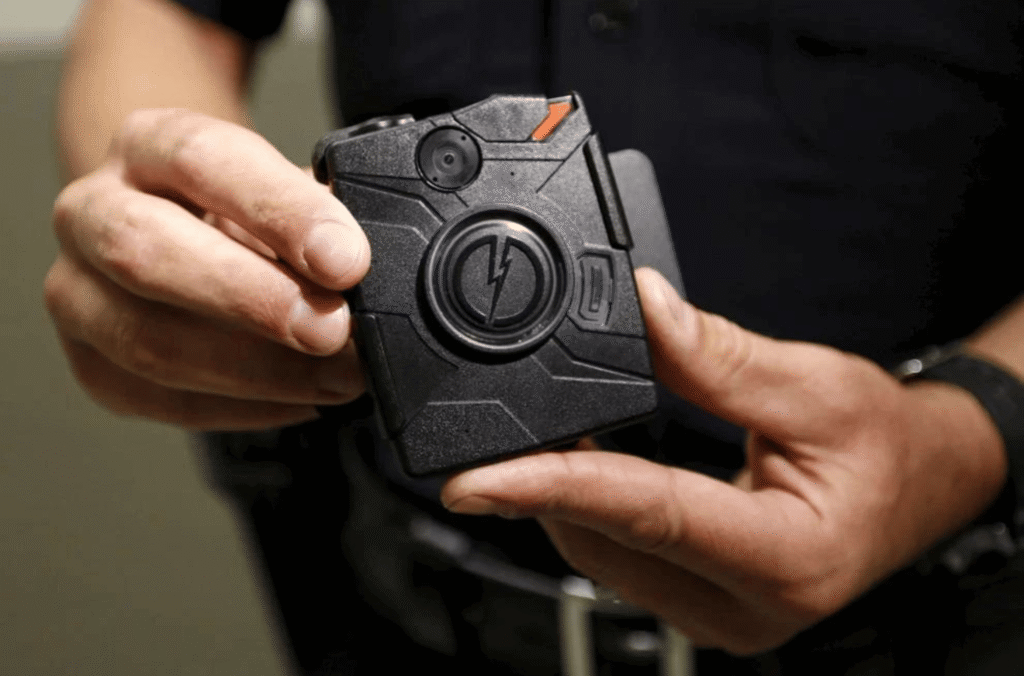
An example of a body-worn camera is shown during a media event hosted by the Los Angeles Police Department. Reuters
