





By Chea’Lee Erb
MV Correspondent
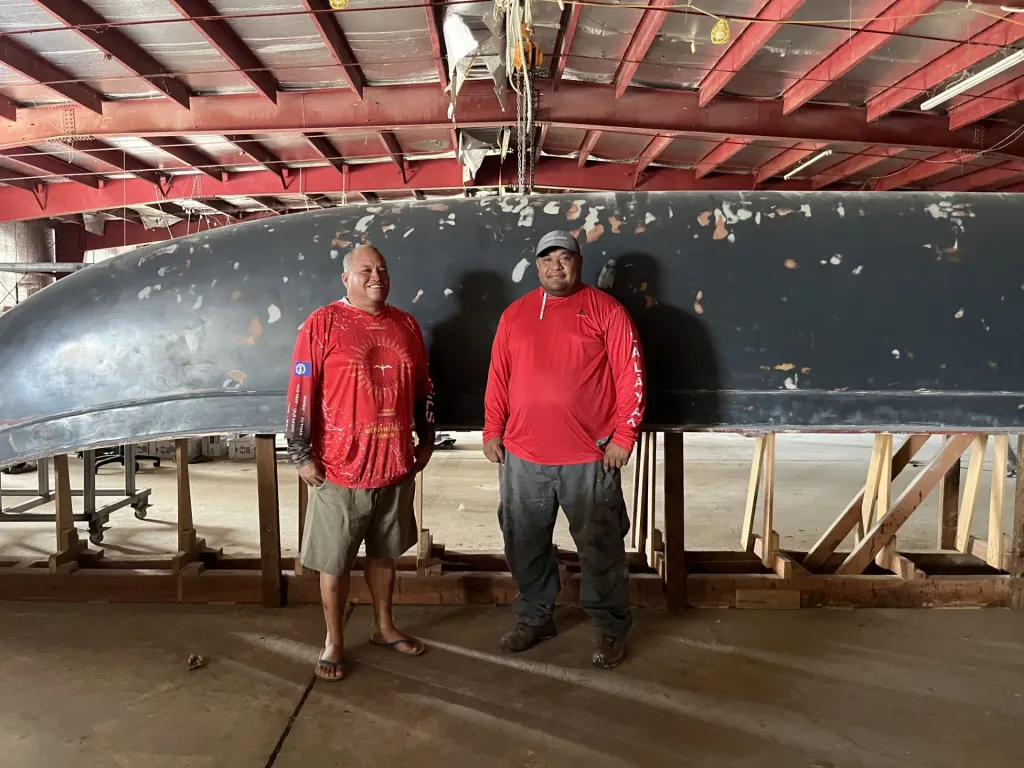
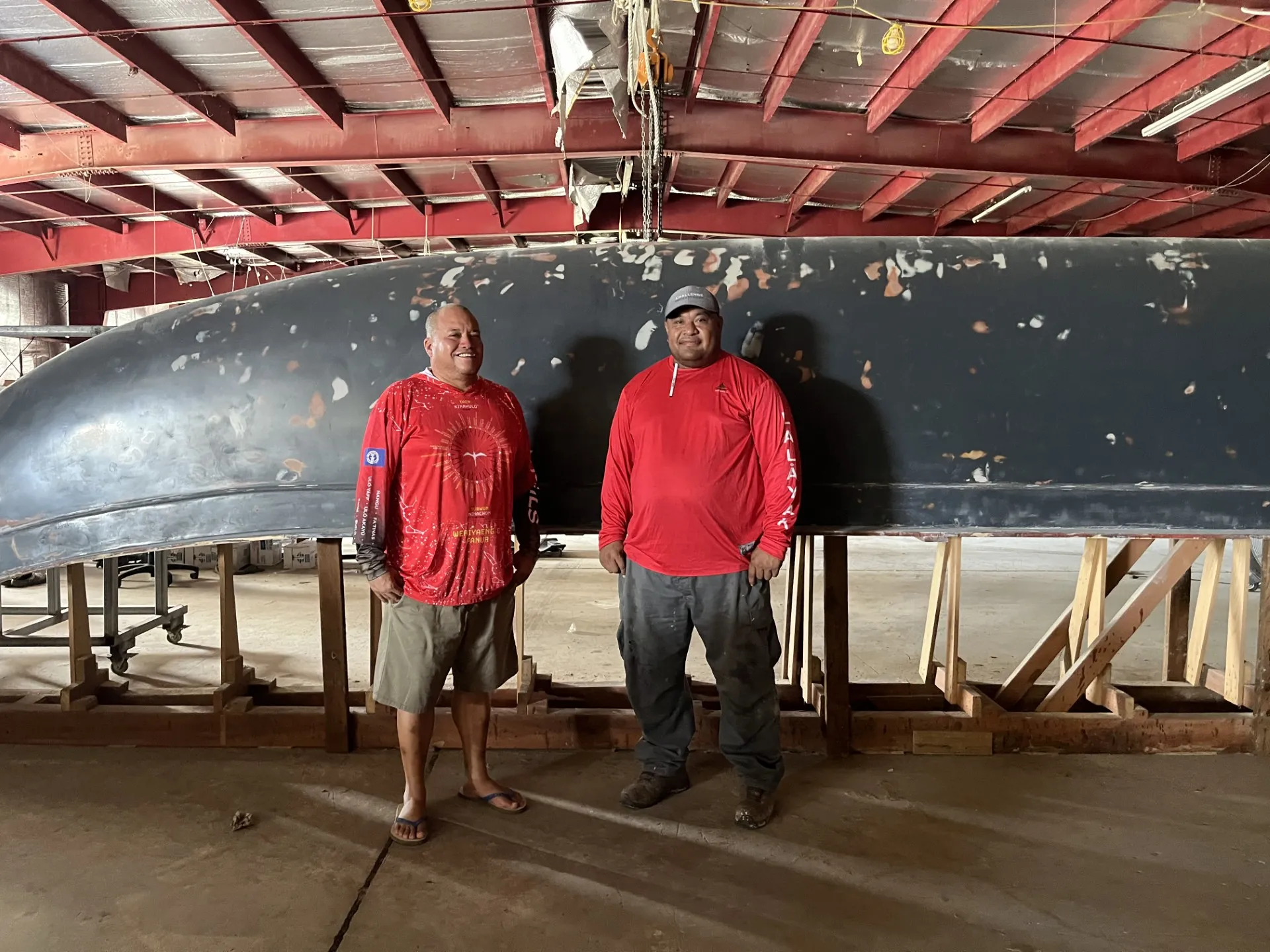
LONG before Larry Sharry, father of four, and Jun Coleman, father of 9, became fathers themselves — they were sons and grandsons absorbing a tradition that has survived history for thousands of years.
Jun, a captain with the Guma Sakman, explained why it is important for Pacific fathers to pass down the traditions of their ancestors. With a mixed heritage of Chamorro and Carolinian, he gave insight on how Chamorros largely lost their traditional navigation knowledge under Spanish colonization, with only fragments surviving. “Carolinians never lost it, and it was through Carolinian navigators that Chamorros began relearning what their own ancestors once knew.”
“Across the wider Pacific, different islands may use different names for the stars and winds,” he said, “but the underlying knowledge is the same: respect for the ocean, canoe, wind, sun, moon, and stars, and the materials nature provides to anyone willing to learn them.”
That inheritance reached both men through specific people, in specific places. Larry, also a captain, who is Chuukese and carries a quarter Chamorro and Carolinian, learned mainly on Saipan where his grandfather first brought him along at age 11.
“I followed him, watched what he did on the canoe, but I was just sitting down.” Larry said.
He spent those early years simply watching before he began helping with sailing and rigging in junior high. What stayed with him wasn’t one lesson but a continued experience, handed down piece by piece. “I learned from him, fishing on the canoe, then he’d teach me the names, and what parts are what, when this breaks what you need to fix,” he said.
Jun was born in Hawaii and moved to Saipan around preschool age. His first time in a canoe came not long after, around four or five years old, with older cousins and an aunt. The teacher who shaped him most arrived later when he was in his late teens, far from Saipan, on the island of Satawal roughly 500 miles to the south. There, an elderly navigator known as Papa Mau took him under his wing.
“Traditionally, navigation knowledge was guarded closely and taught almost exclusively within a navigator’s own clan”, Larry added.
Papa Mau broke from that, and didn’t wait for Jun to come find him.
“He invited me to his island,” Jun said. “I didn’t ask him, he told me to come. I really appreciate everything I learned from there.”
Both men described their role on the water in terms that map directly onto fatherhood.
“The navigator, the captain in modern terms, is like the father, and the crew are the children,” Jun said. “We have to work together, help each other out, and make the voyage safe.”
Both have held that role as captains, responsible for the safety of everyone aboard, including their children, who are learning the ways of the sea. It’s a role neither treats lightly. Larry has called off voyages rather than risk the people aboard. “Safety’s always my priority,” he said.
That same sense of duty is what drives them to keep teaching, decades after their own father figures first put them in a canoe. For Larry, teaching his children the tradition is about survival as much as heritage.
“Nowadays it’s kind of starting to fade off, too many distractions, and we have to push to teach them more,” he said. “It’s good for them, and it’s good for survival.”
For Jun, it’s about identity. “We have to keep the tradition alive and the culture going, because it’s who we are, it’s where we come from.”
Now both men are doing for their own children what was once done for them. Jun has had his children around canoes “ever since they were born,” adding that kids tend to pick up the knowledge faster than adults because they’re still young enough to memorize quickly.
Larry began teaching his children around eight years old, a core age when the real teaching can begin.
When asked what they want their kin to understand about their relationship with the ocean, Larry pointed to the same lesson his grandfather modeled for him: respect alongside love.
“It’s beautiful, and we have to respect it like our ancestors taught us,” he said. “It can play with you, but it can also take you anytime.”
Jun’s answer echoed it.
“You’re at the mercy of the ocean. It can be good or bad, it’s up to you,” he said. “You have to start with respect, and take care of it. That’s our precious resource. It’s a part of us.”
Both men acknowledged that even with everything they’ve learned across these islands, they’re still students of the men who came before them. Weather patterns have grown less predictable than how it was thousands of years ago, even as the same sun and stars guide the way. “They knew way more than we know now,” he said. “We’re still learning.”
That humility carried into what they wanted to say to other fathers this Father’s Day. Larry kept it simple, with a nod to the community’s ongoing typhoon recovery: “Happy Father’s Day to everybody.”
Jun’s message doubled as a tribute to the fathers and teachers who came before him.
“Remember our responsibility to our family, our kids, and our wives,” he added this final message,
“Don’t give up, and make sure your kids know you love them. Communicate with them, show them the way. That’s what our ancestors did, taking care of their families and all their responsibilities.”
Larry and Jun teach through Guma Sakman, which offers sailing instruction free of charge for local families, a continuation of the same openness Papa Mau once showed Jun on Satawal. “We are here for our community,” said Jun, “Families are welcome to come out. Don’t hesitate. You have to at least try.”
