








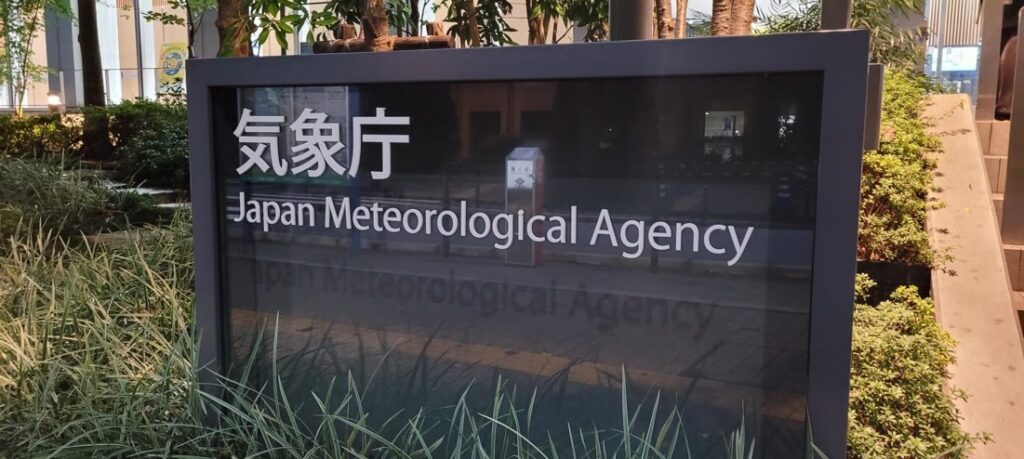
TOKYO — Over a decade since a fatal earthquake and tsunami killed nearly 20,000 people in northeastern Japan, the Japan Meteorological Agency has expanded and updated its emergency warning system.
JMA Earthquake and Tsunami Observation Division senior engineer Shinya Nakamura said the changes are aimed at providing more accurate and expeditious advisories to the public.
Speaking to visiting journalists from the Caribbean and the Pacific Islands on Monday, Nakamura said through an interpreter that warnings can only be issued by the agency once it detects an earthquake.
He said based on lessons learned in 2011, the agency has implemented new measures to further err on the side of caution.
The agency had initially estimated that the earthquake that hit on March 11 that year measured Magnitude 7. However, in the final analysis, it was Magnitude 9.
Nakamura said the agency had underestimated the earthquake’s intensity, noting that it takes time to accurately calculate or measure the magnitude or intensity.
Since the disaster, however, the agency now issues a maximum tsunami warning when a Magnitude 8 earthquake is estimated to have occurred in Japan.
Prior to 2011, the division’s focus had been on rapid dissemination of information and updates to the public.
He said after 2011, the agency adopted a detection device that shows wavelengths which aids in its efforts to quickly and accurately detect an earthquake and calculate its intensity, before issuing advisories to community members and providing updates every few minutes.
According to the agency’s Office of Disaster Mitigation-Planning Division assistant scientific officer Akari Miki, JMA provides residents in Japan with Earthquake Early Warnings or EEWs issued immediately after detection, to secure time to protect themselves before strong tremors arrive.
JMA estimates the focus, magnitude, and seismic intensities of earthquakes using data from seismographs.
According to information provided on the JMA website, to monitor earthquakes, the agency operates an earthquake observation network comprised of about 200 seismographs and 600 seismic intensity meters.
It also collects data from over 3,600 seismic intensity meters managed by local governments and the National Research Institute for Earth Science and Disaster Prevention.
The data are inputted into the Earthquake Phenomena Observation System at the headquarters in Tokyo and the Osaka District Meteorological Observatory on a real-time basis.
Within five minutes after an earthquake hits, information is disseminated through the issuance of warning and bulletins to the general public.
If the seismic intensity is Level 3 or greater, the agency issues a Seismic Intensity Information report in under two minutes.
The information is sent to the central government, as well as to the general public through the dedicated communication link to television and radio stations.
Warnings and bulletins are also issued online.
Local governments, police departments, fire departments, and mobile phone companies are activated to ensure that residents at risk are informed.
Loud speakers and sirens, primarily located in coastal communities, are sounded to raise awareness.
Each municipality is responsible for ensuring that its emergency speakers and sirens are operational.
With the latest technology to support disaster management and meteorological services, JMA continues to implement its services to the people of Japan through extensive disaster preparedness and mitigation.
For more information, visit https://www.jma.go.jp/.
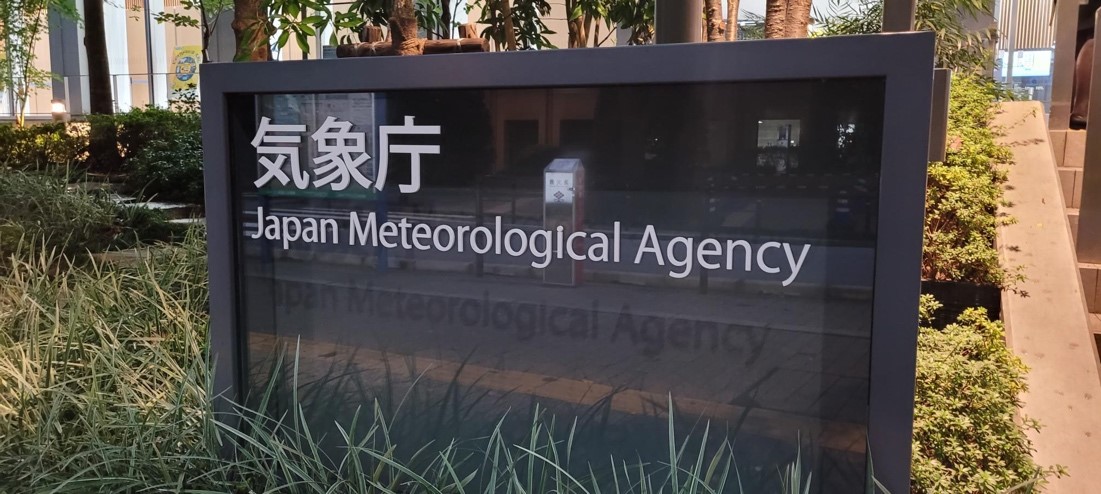
The Japan Meteorological Agency in Tokyo.
