


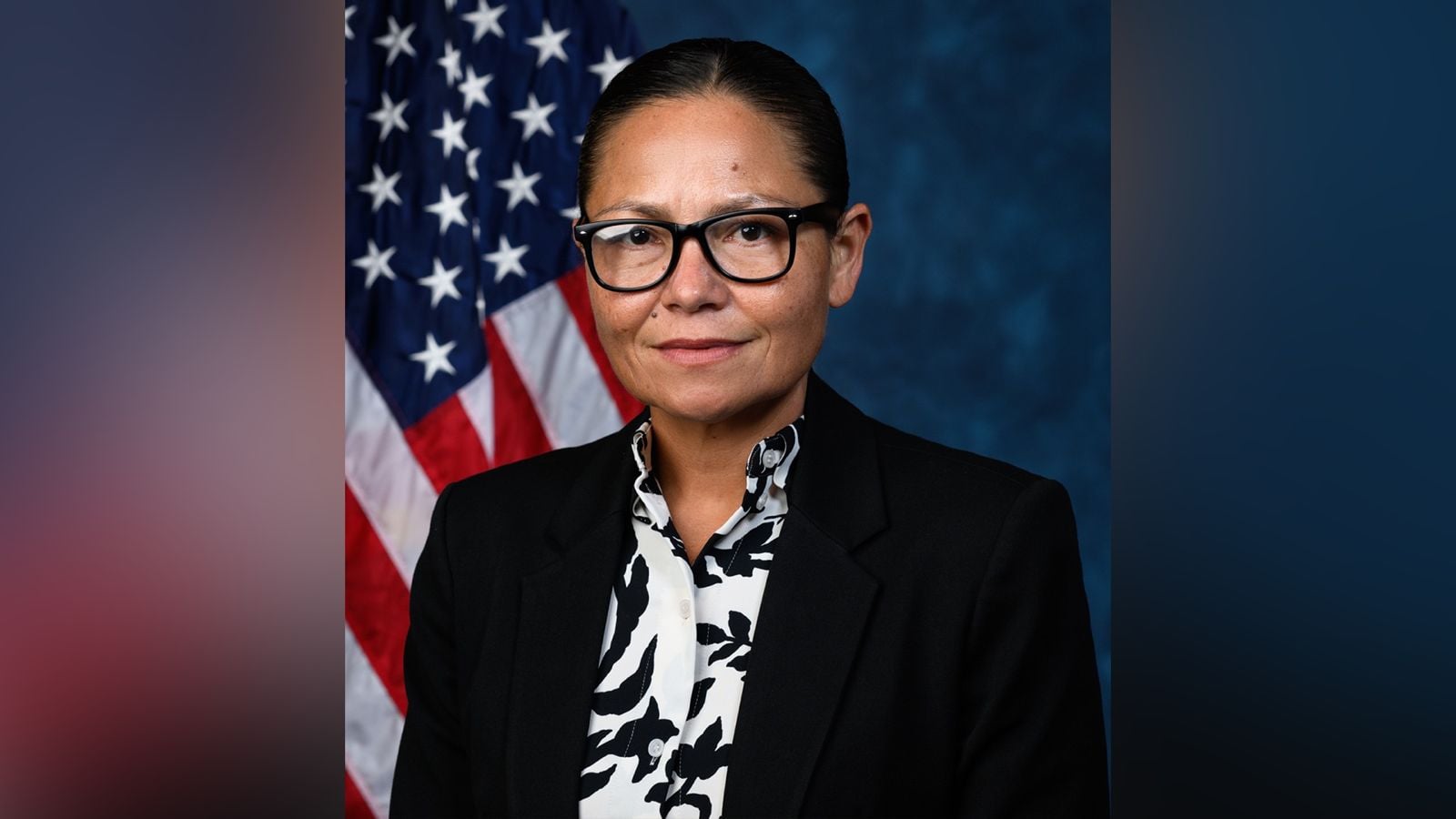


REPRESENTATIVE Gloria DLC. Cabrera, R-Saipan, on Thursday joined a number of her colleagues in the House of Representatives who claim that the executive branch’s move to cut each lawmaker’s budget allocation by 16.3 percent is beyond its mandate.
“Neither the Legislature nor the executive branch is authorized to change or circumvent constitutional provisions that mandate allocations for separate branches of government. So in effect, the reduction being exercised by the executive branch on the legislative branch is a violation of the these provisions which are part of the supreme law of the land,” said the vice chairwoman of the House Committee on Health and Welfare.
P.L. 3-68, or the Planning and Budgeting Act of 1983, states that at any time that revenue projections for the CNMI is reduced by 3 percent or $200,000, the governor is authorized to execute a proportional reduction in all branches, agencies and departments of government.
But Cabrera argued that there is a law “more superior” than P.L. 3-68: The 1985 amendments to the CNMI Constitution “that make it unconstitutional for the executive branch to further cut the supposedly larger pie of the legislative branch.”
She said subsequent to P.L. 3-68 were the following constitutional amendments: allocating $155,000 to each legislator, $400,000 to each of the presiding officers in each House, an individual budget allocation for the Legislative Bureau and the adjustments that have to be made on the budgetary ceiling every two years starting 1998 based on the 1996 composite price index.
Cabrera said she has no problem with any cost-cutting measure as long as it is “within the confines of the law, reasonable, not partial and will not negatively compromise essential and direct public services.”
But she said that if the executive branch would continue to “disproportionately reduce the budget of departments and agencies especially those already with a deficit and those that are into essential services, this would really become disadvantageous to the people.”
She added, “It’s very disheartening to know that public health services as well as public safety to a certain extent would be compromised because of the current economic crisis and on top of that, this proposed budget reduction.”
Cabrera said the “shifting around of the number of public safety officers in patrol may have contributed to the vulnerability of businesses and the public to criminal-related behavior, thus the City Trust bank and the Treasury Office were robbed.”
