

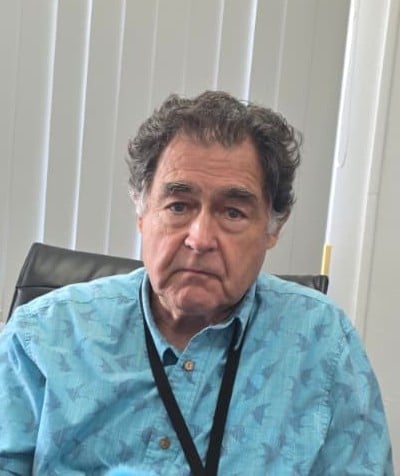



In an interview Tuesday during this week’s Pacific Climate Change Roundtable in Majuro, Sheppard said relocation of populations is a long-term option that needs to be looked at, while addressing adaptation and mitigation measures in the short-term.
Essential to moving ahead in the face of climate change is increasing the availability of information and access to predictions about the impacts in particular islands, Sheppard said.
Scientific scenarios show that sea level rise is expected to exceed one meter (three feet) by 2100, he said.
The meeting in Majuro this week has discussed at length adaption options for improving the ability of islands to withstand worsening climate events ranging from cyclones (typhoons) to high waves. “The message is that nature-based solutions are the best,” he said. Enhancing forests and mangroves, and protecting reefs “are a logical way to respond.” Mitigation needs to focus on alternative energy and improving energy efficiency, he said.
Important to this process “is getting the message about climate change out (to the community) in an easily understandable way,” Sheppard said. “We need to improve our outreach to young people.”
While the Samoa-based SPREP has a broad range of environmental projects that it works on in the region, Sheppard described climate change as the “over-arching framework that touches all other issues.”
The need at SPREP, as at the national level in island countries, is to integrate climate change throughout all programs and departments. It is essential that governments don’t view “environment” as a separate sector, he said. “That’s what needs to happen to climate change,” he said. “It is not the domain of just one department. It needs to be incorporated in national planning strategies.”
