


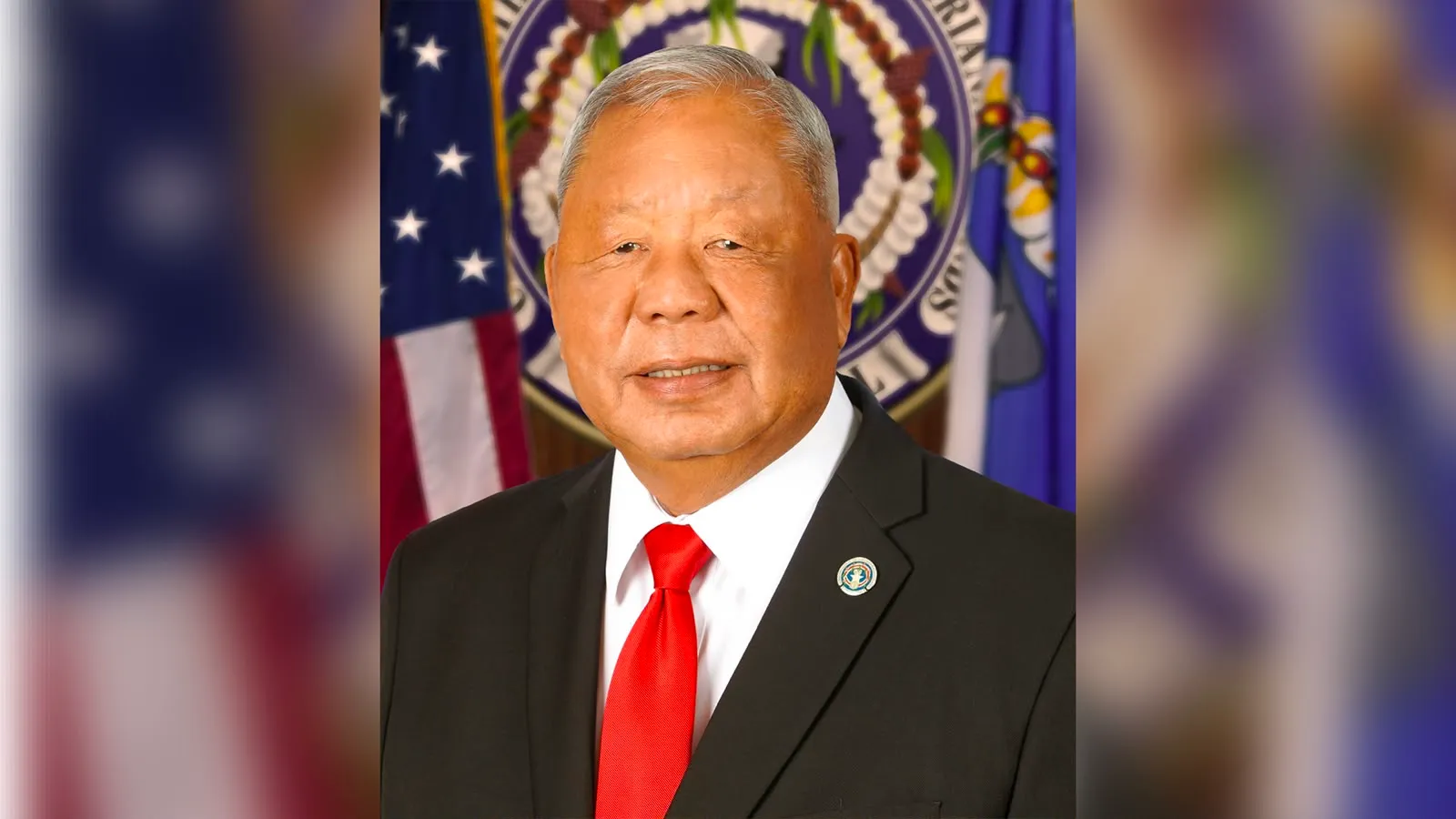


Since he came out with a proposal to allow active Fund members to get their money back, Cabrera, R-Saipan, said he has been receiving calls and emails from government employees supporting the idea.
Cabrera estimated that close to 1,000 government employees are happy about House bill 17-226, which the speaker introduced during the session last Wednesday.
A government employee, who declined to be identified, said H.B. 17-226 will give him and his co-workers options.
“What’s wrong with that?” he asked. “I’m sure a lot of people would get their money back as soon as they can.”
Another employee who will complete her 15th year in government service in November also emailed Cabrera saying: “I am one of the employees who desperately need to withdraw my retirement contribution before my 15 years is up this November.”
A Department of Public Safety employee also told the speaker: “A lot of us here are in favor of the proposal.”
House of Representatives sergeant-at-arms Pete Towai said allowing him to get his money back will give him the best opportunity to invest it somewhere else.
Cabrera said his bill will help active Fund members assert their “property rights.” He estimated that each member who has been working in the government for 15 years or longer may get up to $60,000.
Of the Fund’s estimated $270 million, there may be up to $90 million that will go to the active members once his bill is enacted into law.
This money, Cabrera said, will circulate in the CNMI economy.
Attorney Michael Dotts who represents retirees in a lawsuit against the Fund, its board of trustees and former investment consultant Merrill Lynch, said if the bill will also help individual retirees to withdraw their money now, they should be allowed to do so.
Normally, Dotts said it would not be good to allow retirees to withdraw from a retirement program early.
However, he said, “these are not normal times and this is not a normal situation.”
“The Fund will be gone in just three years. It is hard to accept this but right now it looks pretty clear that that is what is going to happen. When it does happen the impact to this community will be devastating and a lot of retirees and their families are going to suffer terribly.”
The priority, Dotts said, “has to be helping retirees cope with what will soon be a very unpleasant reality.”
In a separate interview, Ed Diaz, a retiree, said he does not support his cousin’s bill because it is not good for retirees like him.
Diaz’s father and the speaker’s mother are siblings.
Diaz said Cabrera’s proposal is a political suicide.
“He is my cousin but I will not vote for him anymore because of that bill he introduced,” Diaz said.
Cabrera said retirees need not to worry about his bill.
He said H.B. 17-226 is just giving back to the active members their own contributions and the interest. The employer contributions will stay with the Fund and “that is one less thing the retirees have to worry about.”
Also, he said, once active members start withdrawing from the Fund, it will reduce the number of future retirees which means less drawdowns in the future.
Former Fund officials to blame
All the Fund’s problems should be blamed on its former officials, Judge Kenneth L. Govendo said on Tuesday during the hearing on the motion for temporary restraining order filed by the Fund to stop the enactment of the derivative law or P.L. 17-51.
He said the past Fund officials turned a blind eye on the issues affecting the pension agency.
Govendo said, “It’s been well known for many, many years, among a lot of people, including trustees of the Fund, that things were not really looking toward the future.”
He said only the CNMI’s pension agency allows retirees to get a lot more than what they put into the system.
He also referred to the opinion he wrote in 2009 that the Fund had been too generous in allowing great grandchildren to obtain benefits.
“This is something that the trustees should look at every day. We keep doing this kind of practice,” he said.
“I don’t blame you,” he said, referring to the current Fund officials. “I think the current legal team is the best that the Fund has ever had and has made some things happen.”
He cited the efforts of Fund board legal counsel Viola Alepuyo for going after the central government over unpaid contributions which the previous Fund officials failed to do.
Govendo said the enactment of P.L. 15-15 made the situation worse for the pension system.
Signed by Gov. Benigno R. Fitial in 2006, P.L. 15-15 suspended the payment of the government’s obligations to the Fund from fiscal years 2006 to 2007.
Govendo later declared the law unconstitutional.
As for generous benefits, Govendo cited the case of former Chief Justice Marty Taylor who received $135,000 a month.
Govendo said Taylor had already received within less than three years more than he had paid into the Fund.
“That kind of a retirement fund cannot survive and it has been evident for years,” Govendo said.
He said he remembered Taylor telling him that in Hawaii, retired Hawaii Supreme Court justices “are tickled to death that they get $3,000 a month from their retirement fund to go along with their earned Social Security checks.”
“We’ve known these practices have been going on for a long time that has led to the state we’re in — the government not paying the contributions, and not getting good enough returns from investment. This has been going on for a long time.”
