





By law, every year on April 1, the budget must be submitted.
The proposed budget amounting to $39.7 million, contains operational, resource, and investment funding requirements of each department, office, agency, and program of the FSM national government and matches them against anticipated revenues.
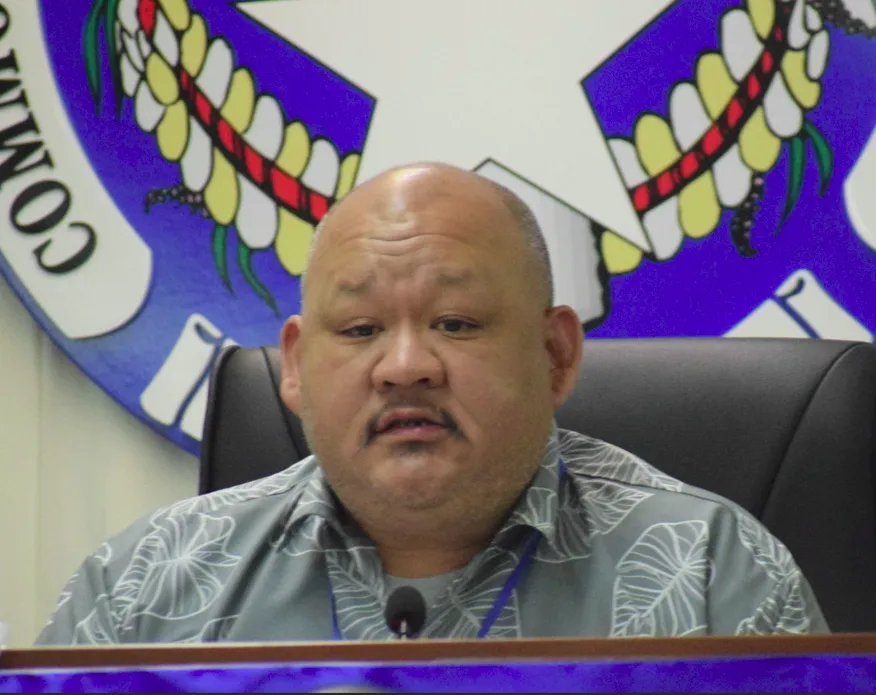
In his transmittal letter, Mori stated that “the FY 2010 budget proposal is formulated at a time of greatest challenge and uncertainty for our nation. Today, we are in the midst of a recession and face an economic downturn of historic proportions. Real GDP per capita has steadily declined from fiscal year 2005 onward, from $1,934 in 2005 to less than $1,832 in 2007 and an expected drop again in 2008 and 2009.”
He said this budget proposal is distinguished from previous budgets in that it provides a “blueprint for the government to deal with the current economic and financial crisis and pave the way for a brighter future.”
The approach consists of spending cuts and savings, appropriate use of one-time resources to prevent the collapse of the Social Security and MiCare programs and the dedicated use of new, recurring revenues, in the investment in human resource and infrastructure development, and in capital formation through private sector development.
The FY 2010 budget is formulated on the administration policy that core operating expenditures of the national government remain at the current FY 2009 level and to apply a 10 percent budget reduction on travel and non-essential expenditures.
When the original budget submissions were submitted by all executive agencies, the total was over $46 million.
Through the budget review process of the executive budget review committee, the proposed budget was cut to $39 million in order to balance it with the projected revenues.
Total revenues projected for FY 2010 are approximately $39,739,723 and include domestic sources, Compact Sector Grants, and money from Supplemental Education Grants.
This projected revenue does not include potential funds from other U.S. grantor agencies, foreign governments and other international and regional organizations.
Compared to FY 2009, total receipts from domestic and compact sources will increase by 1.3 percent, primarily coming from domestic revenues.
Total operating expenses for the three branches of the National Government, the Public Auditor’s Office, and all agencies of the FSM government is $22,136,043, of which $15,219,405 or 68 percent is for the executive branch, $3,049,223 or 13.8 percent is for the legislative branch, $1,190,894 or 5.4 percent is for the judiciary, $976,087 or 4.4 percent is for the Public Auditor’s Office, $1,460,724 or 6.5 percent is for boards and commissions, and $239,710 or 1 percent is for all others.
This represents a slight increase in total operating expenses of 0.2 percent for the executive branch, a decrease of 1.8 percent for the legislative branch, and a decrease of 1.5 percent for the judiciary.
Together, the total expenditures proposed for FY 2010 is $39,739,723, which is an increase of $6,397,828 or 19.1 percent over FY 2009.
Based on its total revenue projected and the proposed total expenditures, the national government will have a balanced budget with no surplus.
Now that the budget has been submitted to Congress, it will be reviewed, undergo possible revisions, and hopefully be approved in May.
