

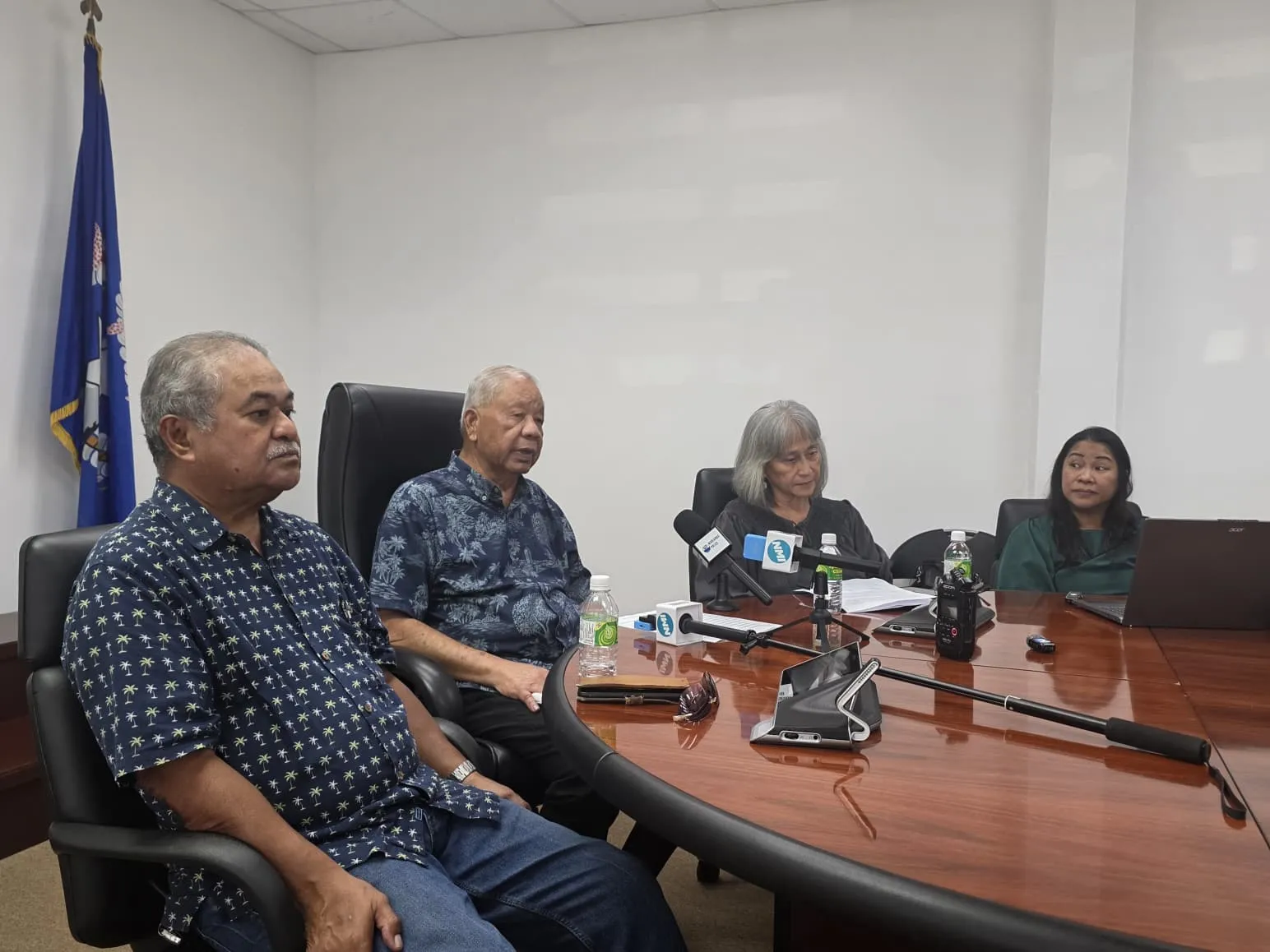


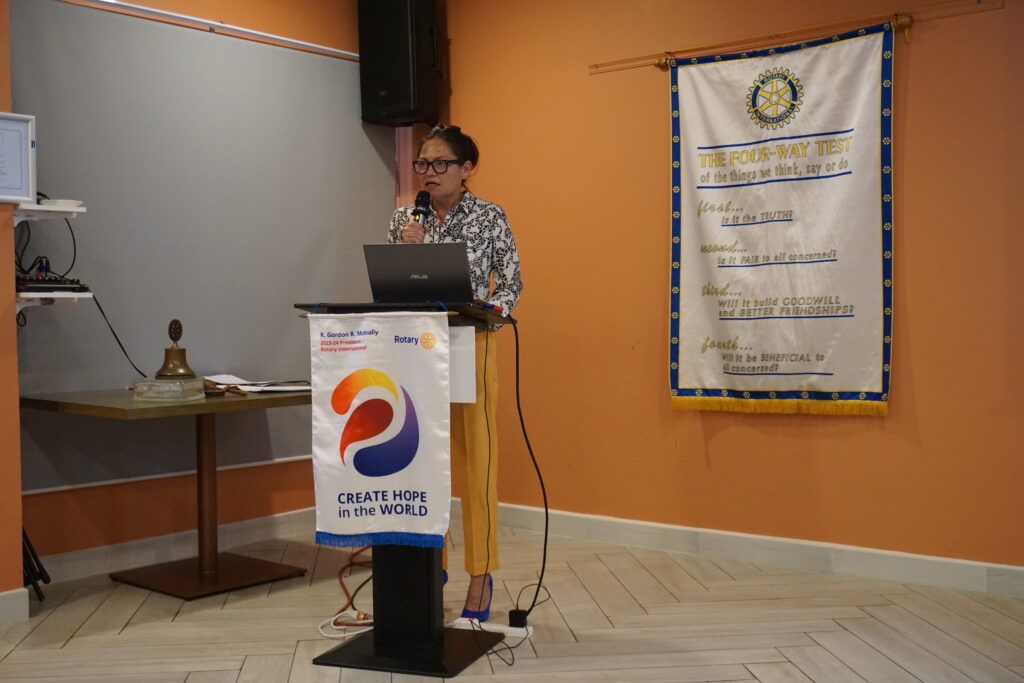
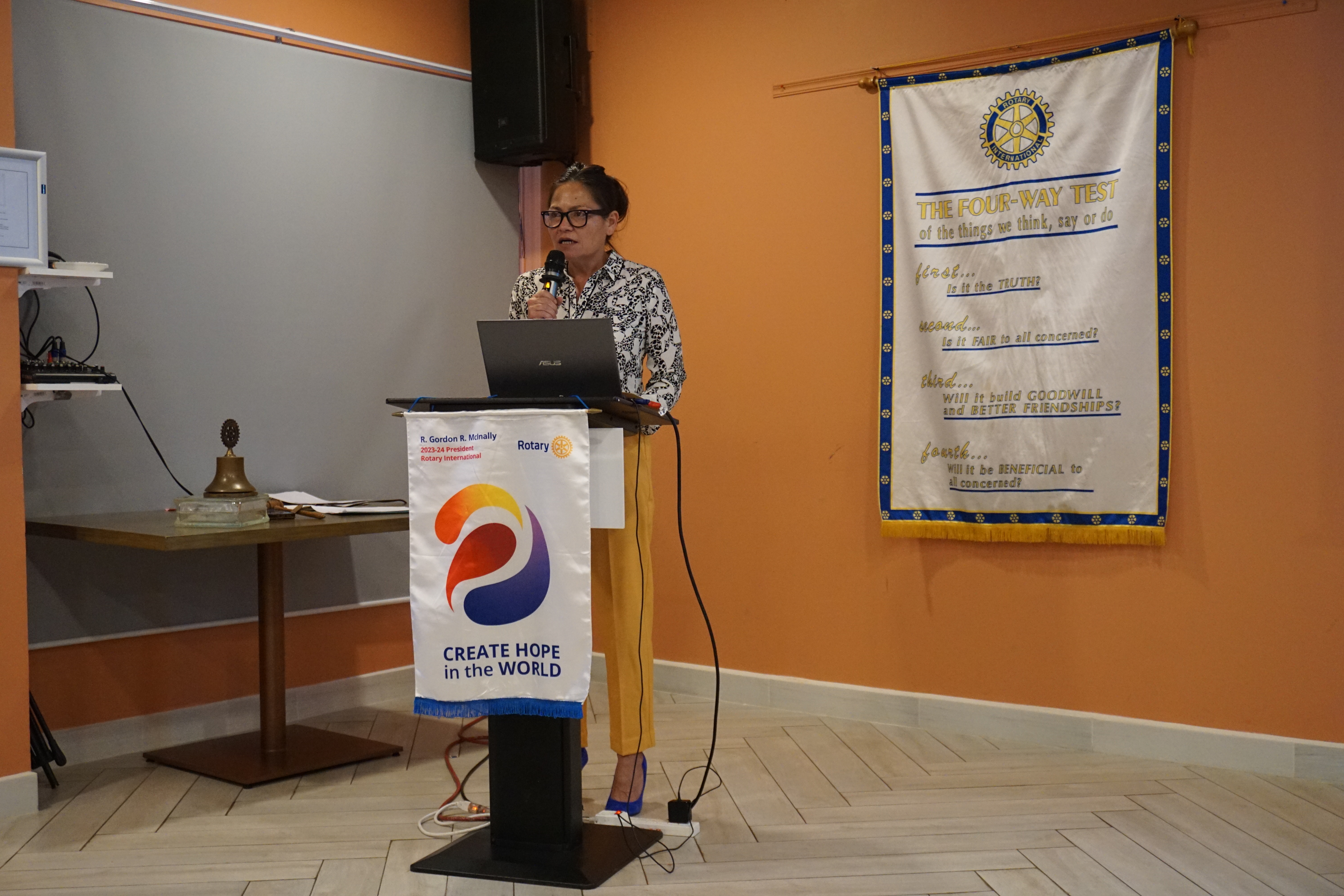
Kimberlyn King-Hinds was the special guest speaker of the Rotary Club of Saipan at Crowne Plaza Resort on March 19.
KIMBERLYN King-Hinds, the special guest speaker of the Rotary Club of Saipan on March 19, talked about “The Role of CNMI Women in Conquering Goliath, the Commonwealth Joint Military Training Activities” as part of the club’s celebration of Women’s Month.
A former Commonwealth Ports Authority board chair, King-Hinds was at one point the local counsel in a lawsuit led by the nonprofit environmental law organization Earth Justice against the Department of Defense and the U.S. Navy.
In her remarks, she highlighted the role that women of the CNMI played in advocating against the “high hazard impact training activities” on Tinian and Pagan that would have allowed the use of “heavy artillery and ammunition, such as rocket launchers, howitzers, and bombs.”
She said at the forefront of the movement were various community organizations led by women. These included the late former Rep. Cinta Kaipat, former Rep. Rosemond Santos, Keli Tenorio, Genevieve Cabrera and the Tinian Women’s Association led by Deborah Fleming, Florine Hofschneider and Juanita Mendiola.
“They were not only making noise, but they were also organizing the community to show up and speak out against these plans,” King-Hinds recalled. “These women were fired up and ready for battle. They were at festivals and public spaces educating the community about these plans.”
King-Hinds said when the public comment period began for the initial environmental impact statement pertaining to the Commonwealth Joint Military Training or CJMT activities, the Marianas submitted 27,000 comments to the military. King-Hinds attributed the outpouring of comments to the grassroots advocacy of CNMI women.
“In all my life growing up in the CNMI, I have never seen our community come out en masse to any public hearing. But because [the women] hit the pavement … they empowered our community to take action,” King-Hinds said. “[It] speaks volumes of the aggressive grassroots campaign that these women launched to help educate the public.”
She added, “These women did not ask for permission to take a stand for what they believed in, and in leading the charge for the preservation and protection of our islands, our culture, our community and our ability to make a life here of substance and quality, they showed the strength of our community.”
King-Hinds said although Earth Justice’s lawsuit was not successful, the 27,000 comments from the Marianas became “the baseline for any policy discussion.”
She said the CJMT’s plans “have been drastically changed” to prevent the bombing of Pagan and Tinian. Also removed were references to “special use airspace” that would “impact international flights,” among other things, she added.
She said the CNMI and DOD are also “taking a collaborative approach in the [environmental impact statement] revision,” which includes DOD sharing revisions as they are made, as opposed to “DOD dumping thousands of pages of documents to review.”
A candidate for Congress
Variety asked how her experience with grassroots advocacy on behalf of the Marianas would influence her leadership style, should she be elected to the U.S. Congress.
King-Hinds said the CNMI delegate must continuously build relationships with federal agencies to the benefit of the Commonwealth.
“The one thing that this experience has taught me is that the federal government is multi-layered,” she said. “A lot of times when we knock on doors to ask for policy change we find ourselves being reverted to these line-item agencies who have agency discretion to tailor regulations to address the unique challenges that certain areas are encountering.”
For example, she said, the CNMI Economic Vitality & Security Travel Authorization Program or EVS-TAP was not approved through legislation, but by the Department of Homeland Security.
“We didn’t see a change in the law, but what we did was build these relationships with our counterparts in [Washington, D.C.] who had authority and purview over that specific issue. In doing so we were able to educate them about what our unique challenges are,” she said.
King-Hinds said she still has relationships with counterparts in Washington, D.C. in her role as the Tinian municipality’s attorney.
She underscored the importance of speaking directly with federal agencies.
“I think that we have to think outside the box. It’s very difficult as we’ve seen over the years to get legislation passed [in the U.S. Congress]. So we have to build on the relationships that we have with our federal partners at the agency level. If you look at Congress [regarding] a lot of these issues, they punt the ball. And what they do is give the agencies the discretion to be able to address these issues if it’s allowed by law. And so I’m looking for other opportunities other than just legislation to build on this relationship and advocate for our people.”
