



By Bryan Manabat
[email protected]
Variety News Staff
THE American Red Cross has expanded its presence across the Marianas in the aftermath of Typhoon Sinlaku, deploying 207 stateside volunteers to Saipan while the local chapter ramps up shelter support, field assessments and community coordination.
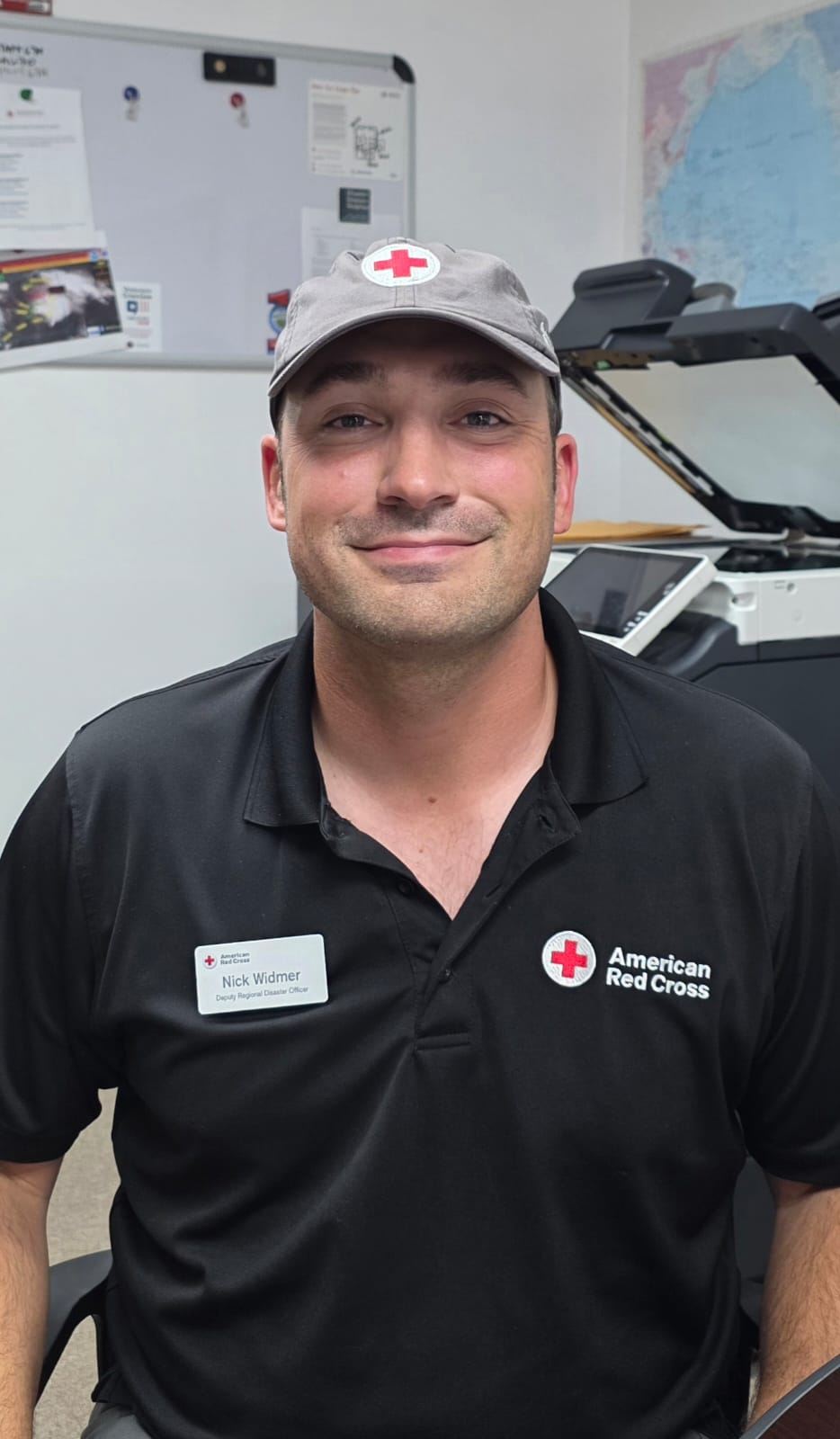
Nick Widmer, the Red Cross coordinating officer on Saipan, said volunteers are staffing shelters, managing logistics and supporting local partners as the islands address immediate humanitarian needs.
“We provide immediate disaster sheltering — getting people somewhere safe so they can begin their recovery — and then we provide the basic needs: food, water, shelter,” Widmer said.
Red Cross teams are serving three hot meals a day, delivering water to shelters and working with the Commonwealth government to ensure sanitation facilities meet standards. Efforts continue to restore showers and restroom access. Specialized disability integration volunteers are also visiting shelters to ensure accessibility and address functional needs.
Widmer said the Red Cross is working “hand in glove” with FEMA and the Commonwealth government on response and recovery efforts, while coordinating with partners such as World Central Kitchen and supporting FEMA-led water distribution.
Local chapter steps up assessments
Alongside the stateside deployment, the American Red Cross Marianas Chapter has expanded its own operations, with teams conducting preliminary field assessments.
“The first steps would just be preliminary assessments,” said board chair Joshua Wise. “Going village by village, checking each street, assessing how many homes are in each street. We’re not doing specific damage assessments yet — that will be the next step down the line.”
Longtime chapter staff member JD Tenorio said the immediate priority remains supporting shelters and displaced families.
“Our main focus right now is really supporting the shelters and making sure that the folks who have been impacted and displaced by the storm are getting their needs met,” Tenorio said.
Reaching residents outside shelters
Authorities and aid groups note that many residents are choosing to remain in damaged homes rather than move into public shelters. Tenorio said coordination with community partners is key to reaching those individuals.
“If we identify areas or pockets in the community that need, say, food, then we can reach out to our other partners or connect them with the partners that are doing feeding around the community,” he said.
Wise said assessment data will guide the next phase of response.
“As we’re doing our assessments, we’re going to identify what the needs are, and that will really determine our service delivery plans moving forward,” he said. “Our focus right now is the shelters, and for those with needs outside the shelter, we connect them with our community partners.”
Call for volunteers
Both Wise and Tenorio said additional volunteers are urgently needed to support ongoing assessments and relief efforts.
“We definitely still need volunteers,” Wise said. “The more hands we can get to help, the quicker we can try to get things like assessments done.”
He said volunteers are working in specialized teams, including healthcare and nursing support for shelter residents.
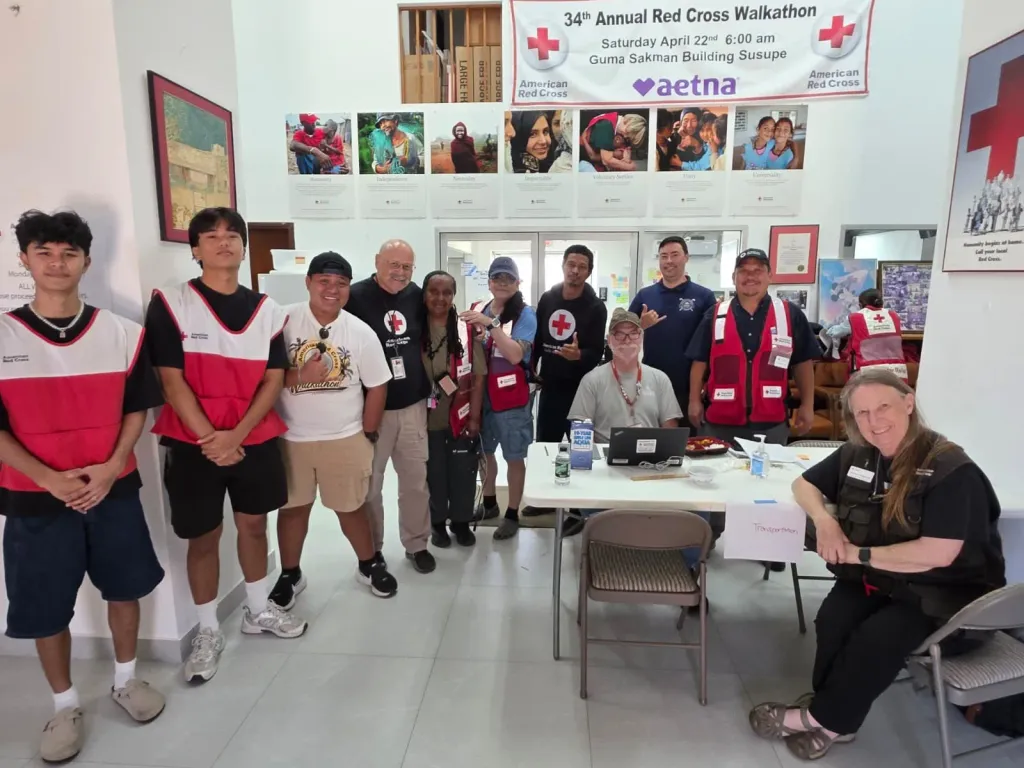
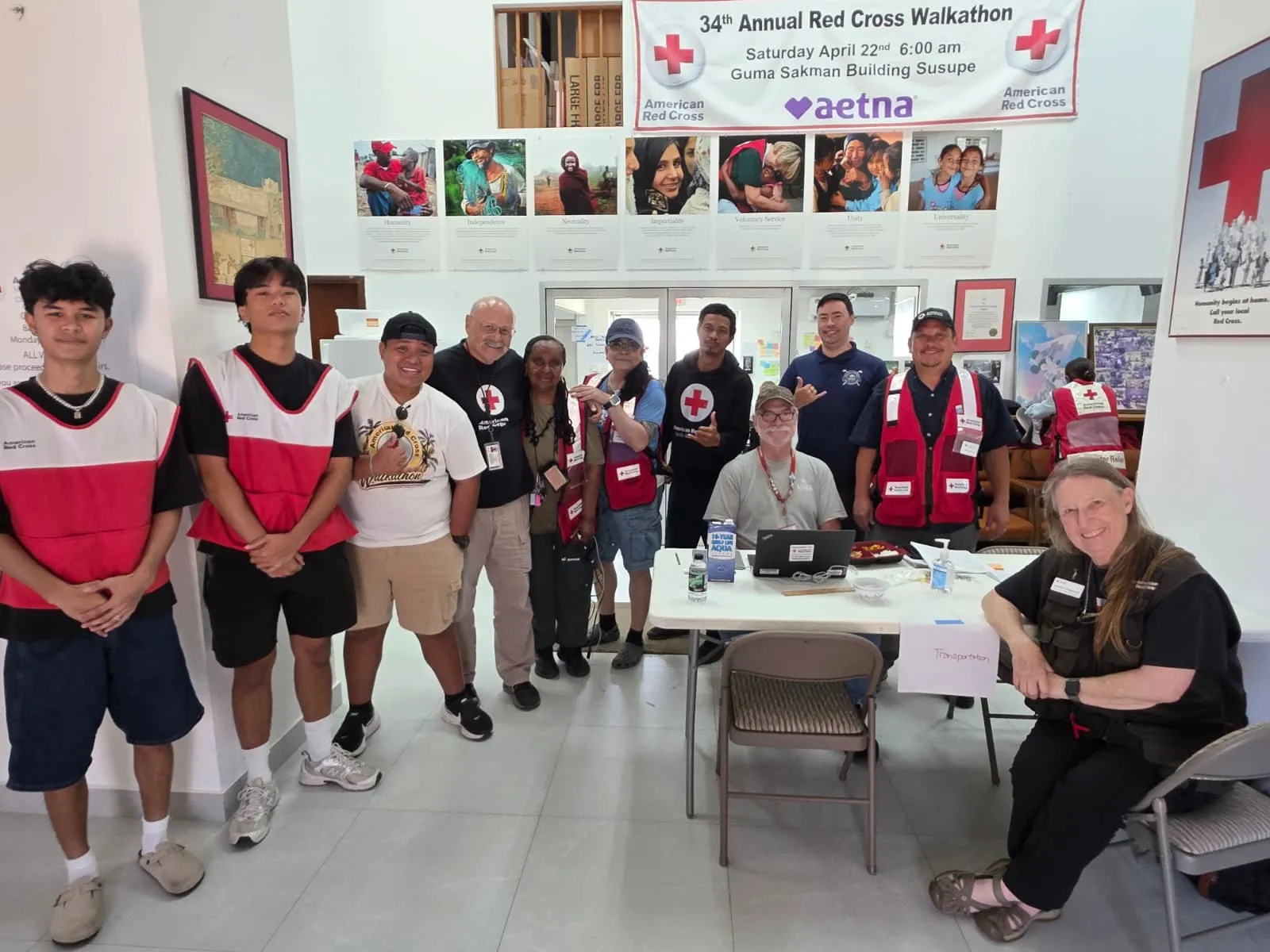
Tenorio highlighted strong participation from youth volunteers, many through the Red Cross Club.
“We have a lot of youth volunteers helping in many different capacities — whether they’re helping entertain the kids at the shelters or helping here at the chapter with supplies,” he said. “We’re a small community, but when times like this come, we all stand up and help each other out.”
The chapter will post a volunteer sign-up flyer with a QR code on its Facebook page. Once registered, applicants will be contacted by the volunteer services team and scheduled for assignments.
Staying informed and continuing relief
Tenorio encouraged residents to follow official channels and media updates for information on feeding sites and other services, noting that agencies are coordinating through the Joint Information Center to ensure consistent messaging.
So far, the Red Cross has supported more than 500 shelter residents on Saipan and more than 115 on Tinian, with operations spanning Saipan, Tinian and Rota under a unified disaster relief mission.
Residents can call 670-234-3459 (not 1-800-RED CROSS as earlier stated) to report damage, whether or not they are staying in shelters. Widmer said these reports help guide long-term recovery planning.
He also noted that the Red Cross is entirely donor-funded, with national support enabling volunteers to deploy to disaster zones worldwide.
As assessments continue, officials said the Red Cross will remain on the ground, adjusting operations and working alongside government and nonprofit partners to support recovery efforts across the CNMI.
Bryan Manabat was a liberal arts student of Northern Marianas College where he also studied criminal justice. He is the recipient of the NMI Humanities Award as an Outstanding Teacher (Non-Classroom) in 2013, and has worked for the CNMI Motheread/Fatheread Literacy Program as lead facilitator.
