





By Emmanuel T. Erediano
[email protected]
Variety News Staff
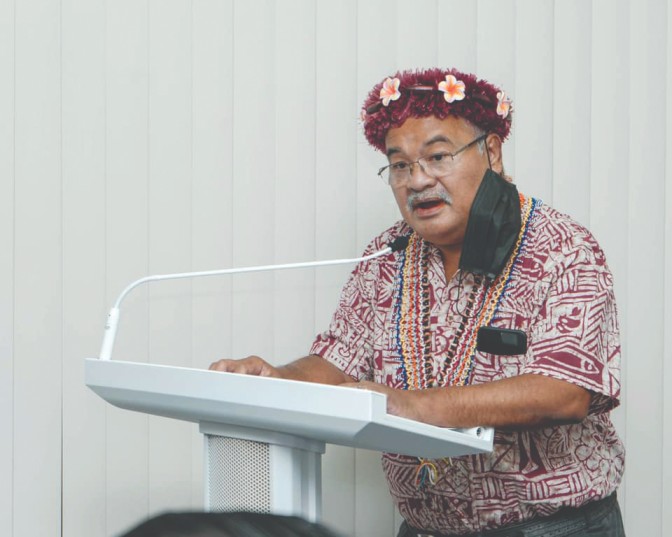
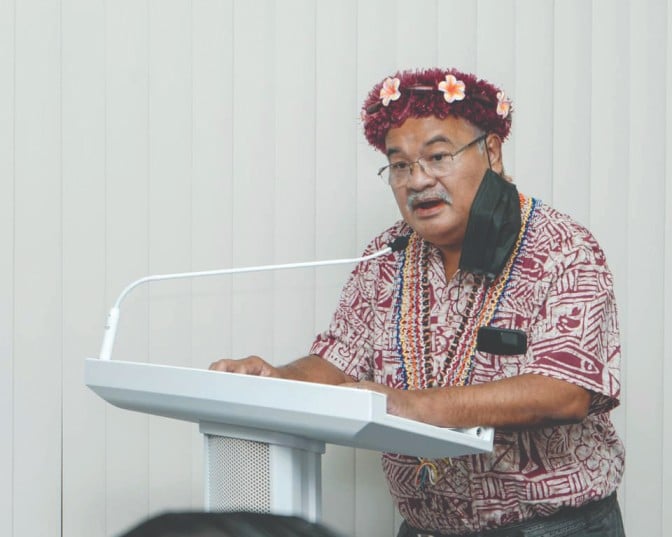
ON behalf of the URAALI Refaluwasch Association, its senior advisor and cultural practitioner, Melvin L.O. Faisao, is urging the House of Representatives to consider advocating for a 37% benefit-sharing framework in light of President Donald Trump’s Proclamation 10918, which lifts commercial fishing prohibitions in Pacific marine national monuments, including the Marianas Trench.
In a letter on Friday, Faisao told Speaker Edmund S. Villagomez and Rep. Angelo A. Camacho, who chairs the House Committee on Natural Resources, that it is important for the CNMI not only to observe these changes, but also to receive a fair and measurable share of the benefits tied to commercial fishing activity.
He cited Article VII, Section 702 of the Covenant, which makes clear that revenues derived from natural resources in areas adjacent to the CNMI should provide a fair return to the NMI government.
At present, Faisao said, this obligation has not been fully implemented in the fisheries context. As federal activity expands in waters adjacent to the CNMI, he said, there is a clear need to define and assert what a “fair return” means in practical terms.
“With that in mind, I respectfully recommend consideration of a structured 37% benefit-sharing framework tied to fishing activity within the 0–50 nautical mile zone adjacent to CNMI,” Faisao said.
This framework, he said, can be approached in two parts.
First, a fixed 10% allocation based on access, derived from federal fishing permits, licensing, and vessel authorization fees, reflecting the value of access to waters adjacent to the CNMI.
Second, a variable 27% allocation based on catch, tied to the metric tonnage of fish harvested or other catch-based reporting mechanisms, reflecting the scale of resource extraction occurring within CNMI-adjacent waters.
Together, these two approaches recognize both the value of access and the level of activity taking place, Faisao said.
He stressed that the CNMI would not be asking for a subsidy. Rather, it is a practical framework to give effect to the Covenant’s requirement for an equitable return, he said.
If access is being restored and economic activity is increasing in areas that directly affect the CNMI, then there should also be a clear, measurable, and enforceable return to CNMI communities.
“Such an approach can directly support priorities we already know are critical, including reef restoration, workforce development, and strengthening local food security and resilience. I share this respectfully and in the interest of ensuring CNMI is not left on the sidelines as these policies move forward. I welcome the opportunity to discuss this further or assist in coordinating with relevant federal partners,” Faisao said.
Emmanuel “Arnold” Erediano has a bachelor of science degree in Journalism. He started his career as police beat reporter. Loves to cook. Eats death threats for breakfast.
