





By Bryan Manabat
[email protected]
Variety News Staff
RESIDENTS and elected officials pressed the Commonwealth Utilities Corporation on accountability, transparency, and the impact of rising power costs during Thursday’s CUC board of directors meeting.
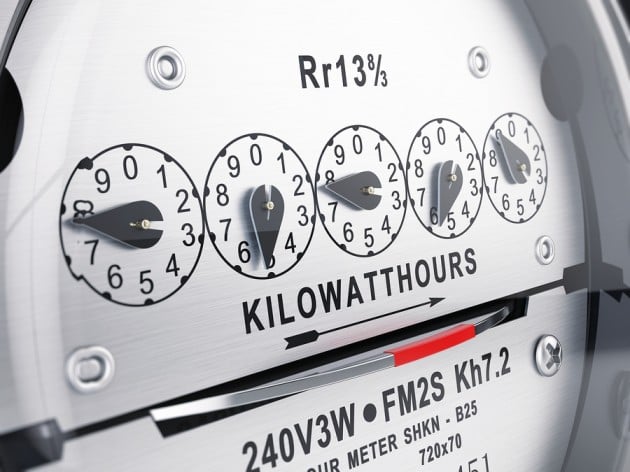
The comments came as CUC seeks approval from the Commonwealth Public Utilities Commission to lift the cap on its Fuel Adjustment Charge, allowing the rate to rise from 24 cents to 44 cents per kilowatt-hour. The utility says global fuel prices have doubled, and it can no longer absorb the cost.
Saipan resident Del Benson questioned CUC’s governance structure and the public’s lack of meaningful involvement.
“My first question is, who is CUC accountable to? Who are the stakeholders?” he said. “I don’t think the public feels like stakeholders because we have no meaningful input in discussions.”
Benson criticized the meeting format as one-way communication, saying it gives the impression that CUC “has its own agenda” and is “hiding from the public.”
‘A direct hit to family budgets’
Rep. Vincent Aldan, chair of the House public utilities committee, framed the fuel cost surge as a direct threat to household stability across the Commonwealth.
“Monthly fuel costs are expected to jump from $4.2 million to more than $8.2 million, creating a shortfall of roughly $4 million per month,” he said.
With CUC seeking to raise the FAC, Aldan said the impact on families is immediate and severe.
“For the average residential customer already paying $600 per month, this is not some distant accounting issue,” he said. “This is a direct hit to family budgets, pushing already struggling families closer to the breaking point.”
He criticized what he described as a recurring pattern of shifting systemic problems onto ratepayers. “Families do not get to automatically raise their income when fuel spikes. Ratepayers cannot keep serving as a shock absorber for every weakness in the system,” he said.
Aldan called for structural reforms, including transparency in fuel purchasing, stronger oversight of ratepayer funds, grid modernization, and a long-term energy plan that reduces dependence on imported fuel.
Magofna urges delay amid falling oil prices
Senate Vice President Corina Magofna urged the board to “hold off on increasing the rate,” acknowledging CUC’s financial strain but pointing to recent declines in global oil prices.
“We’ve already seen some price decrease…from $109 to, I think, $76 as of this morning,” she said. She asked CUC to pause any increase while the Senate and administration work to identify funding sources to assist with fuel purchases.
Magofna also highlighted upcoming legislative efforts to strengthen consumer protections.
CPUC ready to act once quorum restored
CPUC Chairman James Sirok addressed the meeting, saying the commission is aware of CUC’s petition and prepared to act once it regains a quorum.
“The commission is well aware of the situation with fuel pricing, and we’re ready to work with CUC to resolve it,” Sirok said.
He confirmed receipt of CUC’s request to raise or waive the FAC cap. “I am in receipt of your attorney’s request to raise or waive the cap on an expedited manner, and we will be acting on that,” he said, noting that the commission cannot move until a quorum is restored.
CUC: ‘We follow the law’
CUC Board Chairman Allen Perez emphasized that the utility’s role in setting the FAC is strictly defined by law.
“The FAC formula is not our formula,” Perez said. “It is a formula approved by CPUC and has been followed for the last 12 years. We simply input the fuel supplier’s monthly price into the CPUC-approved formula.”
He said CUC has become an “easy target,” but warned that delays in addressing the fuel shortfall could jeopardize power generation.
“What is everybody going to say once there’s no power?” he asked, pointing to the daily cost of fuel and the need for coordinated action among the CPUC, Legislature, and administration.
Perez said CUC employees and consultants are already doing everything within their authority.
“Why do people think CUC is a villain or intends to harm the public? We pay the same rates. Our families pay the same rates. We have a job to do, and we will do our job as mandated by law,” he said.
Bryan Manabat was a liberal arts student of Northern Marianas College where he also studied criminal justice. He is the recipient of the NMI Humanities Award as an Outstanding Teacher (Non-Classroom) in 2013, and has worked for the CNMI Motheread/Fatheread Literacy Program as lead facilitator.
