



By Ulysses Torres Sabuco
[email protected]
Variety News Staff
TWENTY days after Super Typhoon Sinlaku swept across the Northern Marianas, the departure hall at the Francisco C. Ada/Saipan International Airport no longer looked like a place still working through damage.
Recovery is already underway at the island’s only international gateway.
There were no raised voices, no visible strain — only a steady line of passengers, a quiet rhythm of movement, and small gestures that carried more weight than usual.
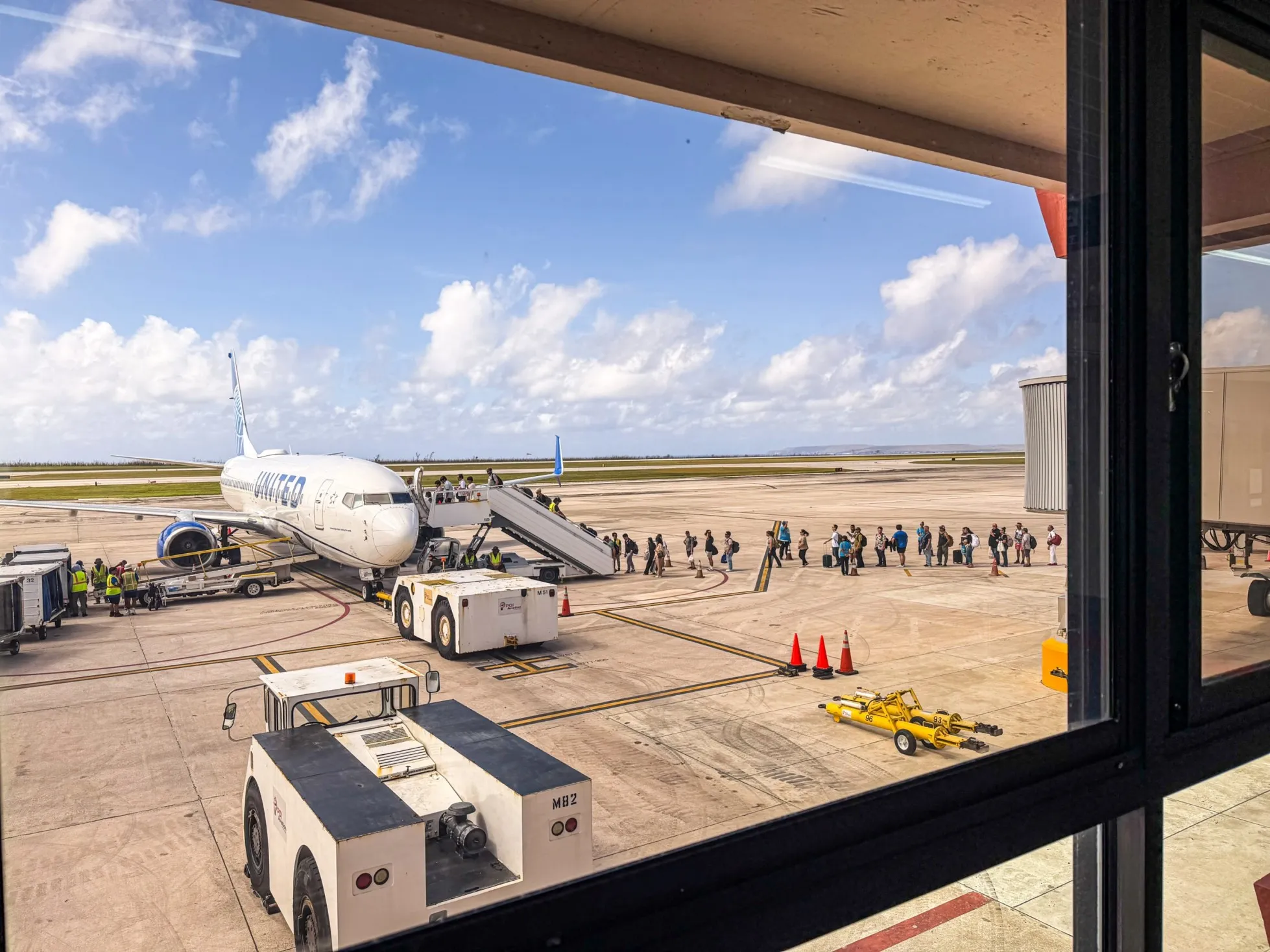
This was United Airlines Flight 76, a Boeing 737-800, scheduled to depart at 9:55 a.m. on May 4. On this Sunday morning flight from Saipan to Guam, the system held — quietly and deliberately — despite everything that had been lost or disrupted.
For now, it remains the only regular commercial link out of Saipan.
Ticketing holds the line
At the United Airlines counter, the work was steady and unhurried. A counter attendant moved passengers through check-in with practiced ease, answering questions, tagging bags, and guiding those still adjusting to changed procedures.
This single daytime flight has become the island’s primary air bridge in the weeks since Sinlaku. Even in the immediate aftermath of the storm, service resumed with minimal interruption, continuing the carrier’s long-standing commitment to the CNMI.
Next to it, the ticketing counters of Jeju Air, T’way Air, Hong Kong Airlines, and Philippine Airlines remain closed, awaiting word on when flights will resume. The Commonwealth Ports Authority continues to await official confirmation from the carriers.
For many travelers, it was their first time leaving the island since the storm. For staff, it was another shift in a recovery that has yet to fully settle.
Security, reworked but seamless
The most visible change came early.
Transportation Security Administration screening had been moved forward into the passenger check-in area after damage to its usual facility inside the terminal. What could have caused confusion instead moved with quiet efficiency.
Passengers adapted without fuss — bags unlocked, bags forward, eyes on the line.
“Kindly unlock,” a TSA officer said. “No prohibited items, no vape, no lithium battery?” she asked, moving steadily through passengers as part of the normal process.
TSA officers worked through checked baggage one by one using inspection machines and screening equipment. Nearby, a supervisor monitored the flow, guiding operations as needed.
There were no bottlenecks. No hesitation.
Further ahead, pre-departure screening flowed just as smoothly, with no outward sign that the airport had taken a direct hit just days earlier.
Immigration, with a human touch
At outbound immigration, officers processed passengers using fully functioning electronic systems — passport scans, biometrics, and standard checks.
But what stood out was not the technology. It was the tone.
Officers greeted travelers with warm, unforced smiles — a quiet reassurance for residents of Saipan, Tinian, and Rota making their way out after days of uncertainty. The process moved quickly, but not coldly.
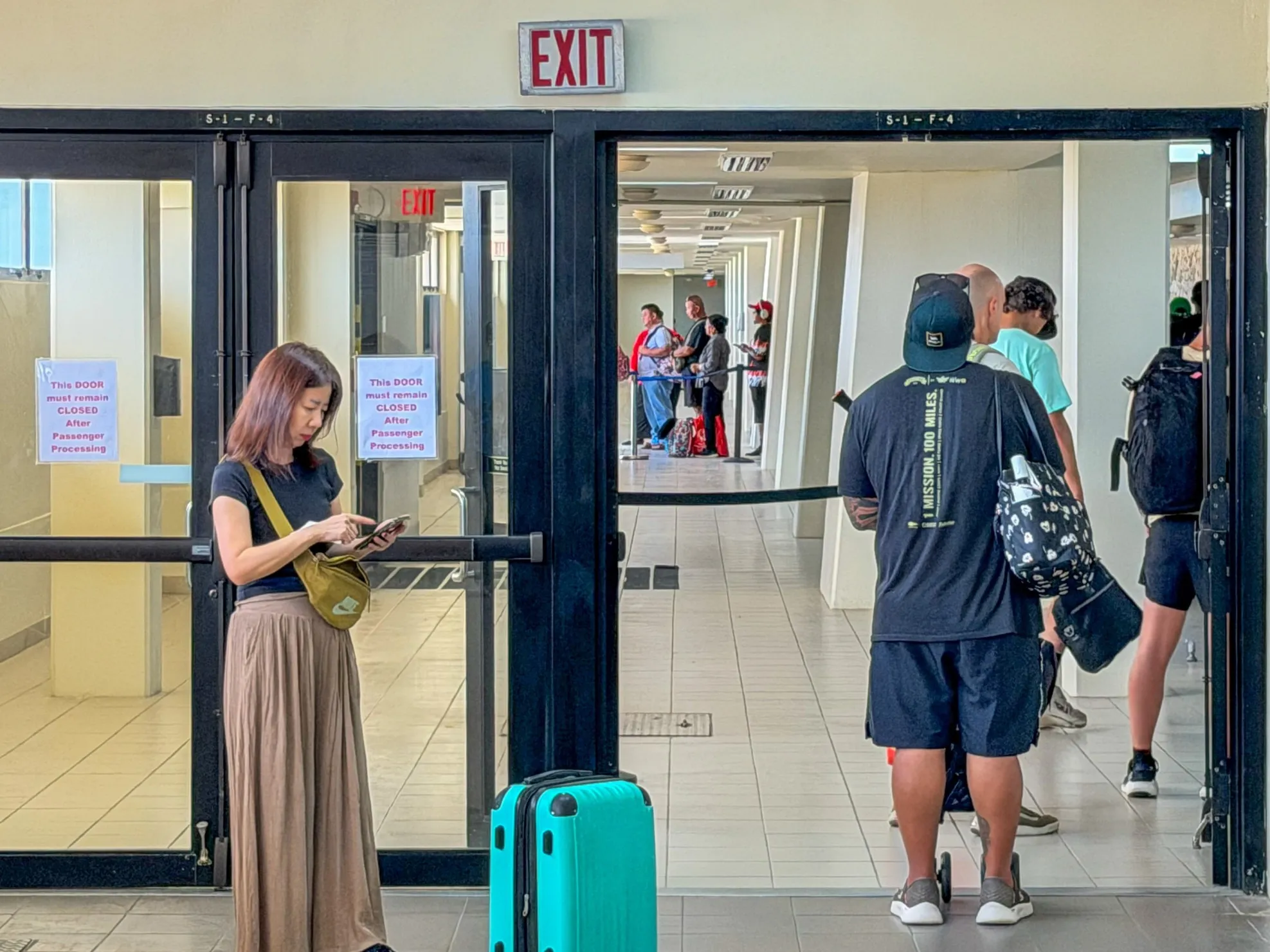
At the pre-entry screening point, just before the final checks into the departure area, two officers stood watch, patient and smiling. They allowed brief moments to linger.
A daughter holding her father’s hand. Friends standing close. A quick embrace, a few hurried words.
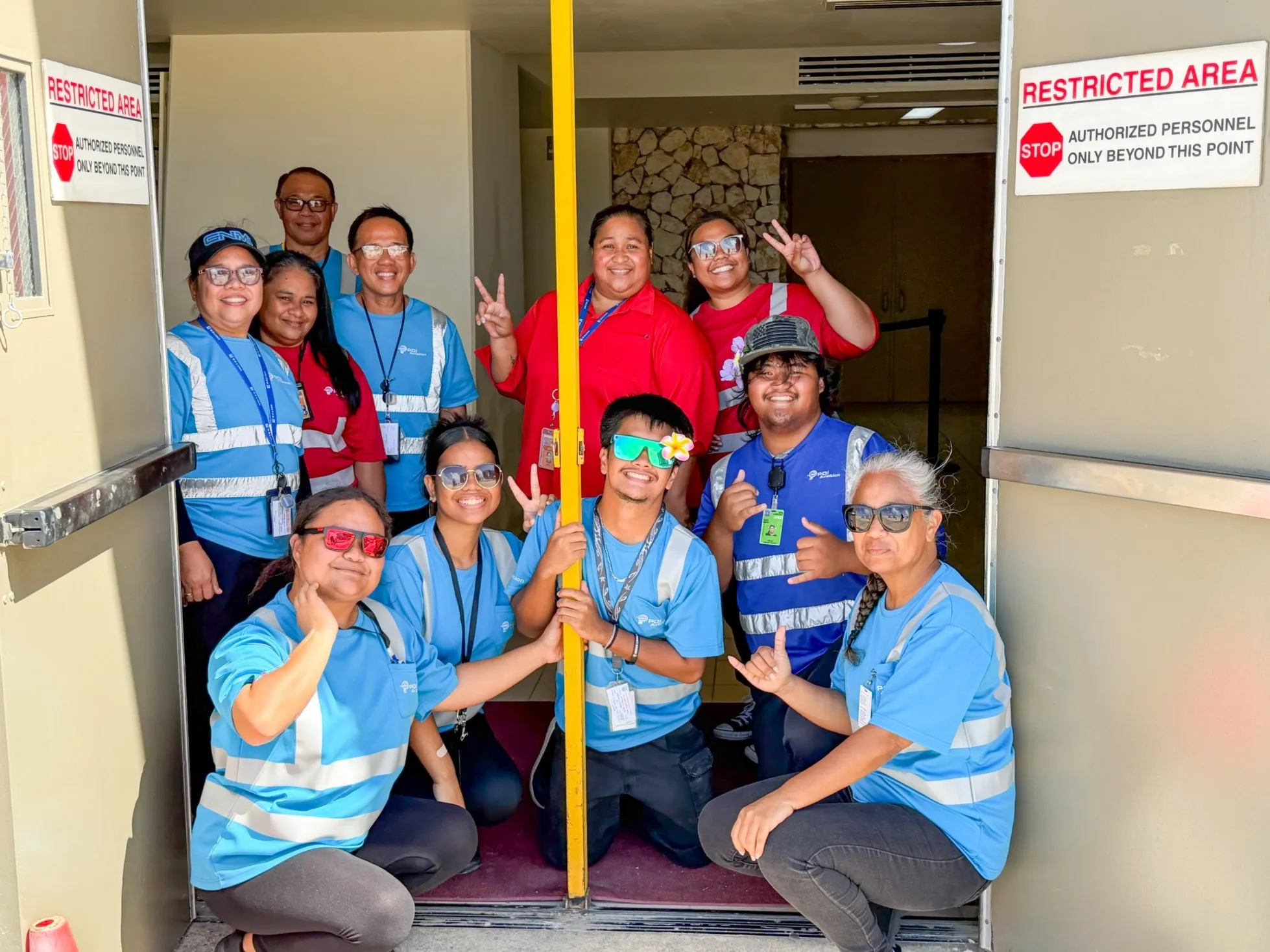
The officers did not rush them. They allowed families to take photos — one last frame by the sliding door along the elevated ramp leading into the boarding area. No raised voices. No visible strain. Just quiet understanding of what those seconds meant.
A final TSA screening followed, including a body pat-down and hand-carry inspection, before entry into the departure area. It moved smoothly, with no sign of the disruption caused by Sinlaku just twenty days earlier.
At customs pre-boarding, a light remark — “Trying to get away from Saipan” — was met with humor and empathy. After Sinlaku, even passing words carried meaning.
On the tarmac, care under pressure
Boarding took place under an open sky.
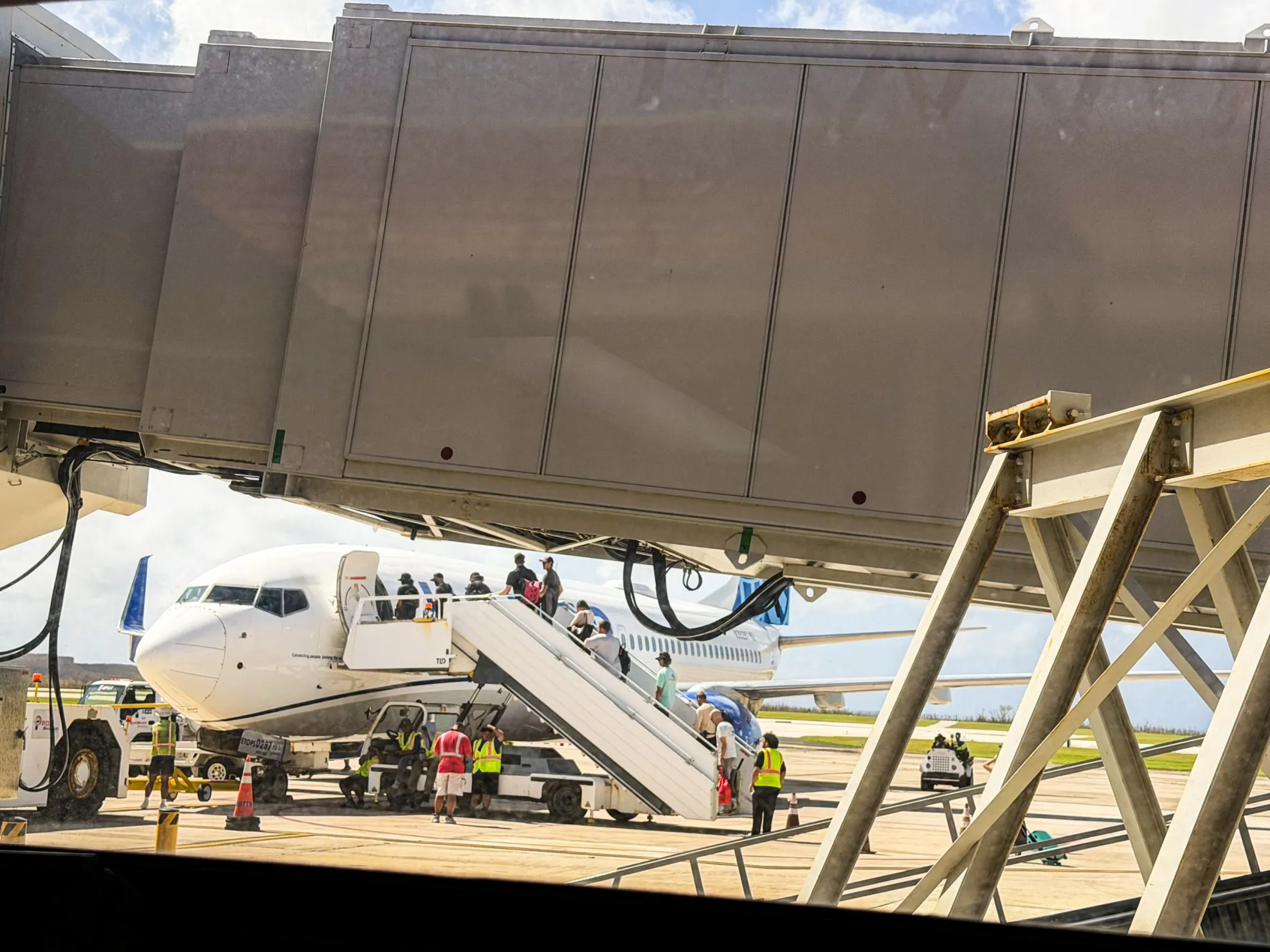
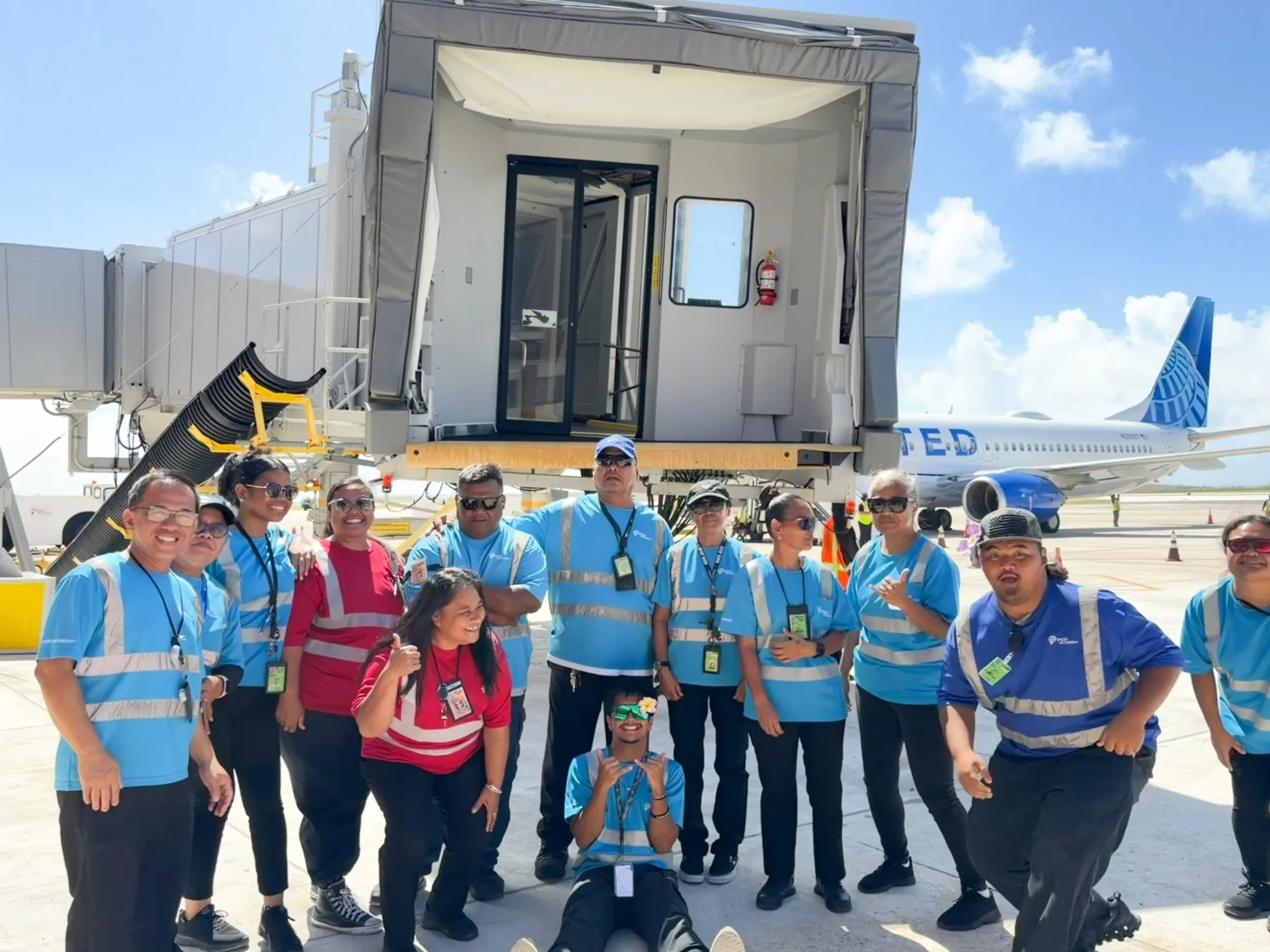
With all six jet bridge systems still affected and navigation equipment recovering, passengers were brought out in groups to limit exposure to the midday heat. The sun, sharp and relentless after the storm, was now another challenge to manage.
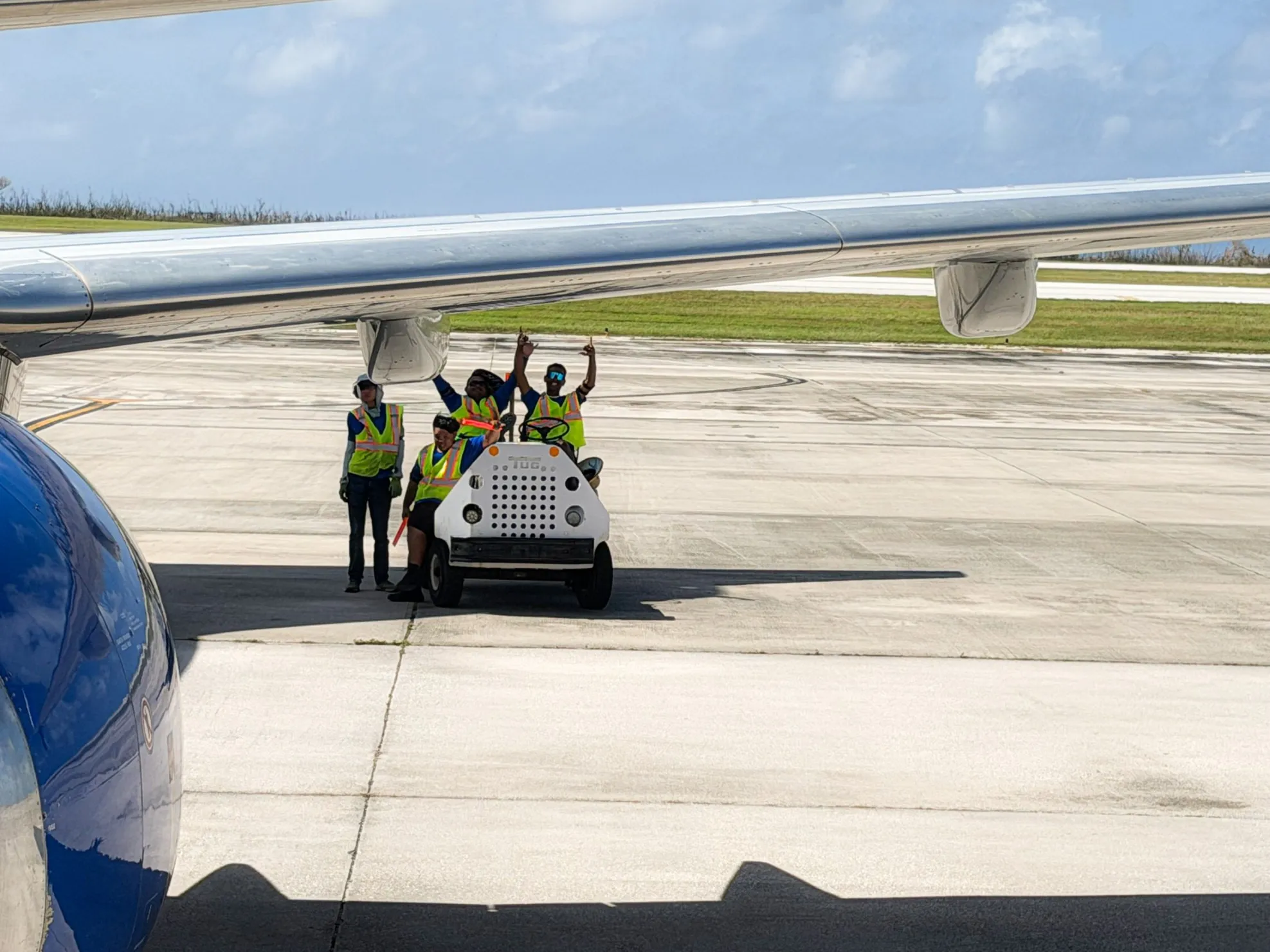
Ground handling crews from Pacific Oriental Aviation worked the line with quiet coordination. Smiles came easily, even in the heat, as they guided passengers across the tarmac step by step.
There was no rush. No crowding. Only a steady, courteous flow.
Inside the cabin, stories of recovery
Once on board, there was a brief delay for refueling — one of many adjustments still shaping operations.
Passengers waited.
Inside the cabin, conversations turned quietly to recovery efforts, volunteer work, and the road ahead for Saipan, Tinian, and Rota. Others remained silent, listening.
This was not ordinary cabin chatter. It carried a different weight — about support, survival, and community response.
Among the passengers were volunteers returning to Guam, military personnel, service members, and residents resuming travel after days of disruption. Some were storm survivors traveling onward for medical care or family needs. Others were connecting through Guam to Narita, Honolulu, or Manila.
There were also passengers displaced by canceled flights from carriers that have yet to resume service to Saipan. For now, only this limited daytime flight remains.
Inside the cabin, the crew responded the same way as everyone else that morning — with patience and warmth.
A system still in recovery
Operations remain limited.
The airport is still without full commercial power, operating largely on generators, and with limited running water.
Large industrial fans placed throughout the departure area help cut through the heat. It is not perfect, but it is enough to make conditions manageable.
Flights are restricted to daytime operations. There are no functioning runway lights or navigation aids for night service. Portions of the runway remain under assessment, and jet bridges are still offline, requiring all boarding to take place on the tarmac.
Federal Aviation Administration teams have been on Saipan conducting inspections and assessing recovery needs.
The Commonwealth Ports Authority continues to manage operations under constrained conditions while working toward full restoration.
The work behind the scenes
What unfolded that morning was not perfect. There were workarounds, adjustments, and visible reminders that recovery is ongoing.
But there were no breakdowns.
From airport personnel and United Airlines staff to TSA officers, Customs and Border Protection, and ground handlers, each played a role in keeping the system moving.
They, too, are residents of an island still recovering from the storm. They have families, damaged homes, and personal disruptions of their own.
Yet that morning, they showed up — steady, prepared, and present.
There were no visible signs of exhaustion. Only a shared effort to ensure each departure remained smooth and as comfortable as possible under the circumstances.
Twenty days after the storm, Saipan’s only gateway did more than reopen.
It held its ground.
