




By Emmanuel T. Erediano
[email protected]
Variety News Staff
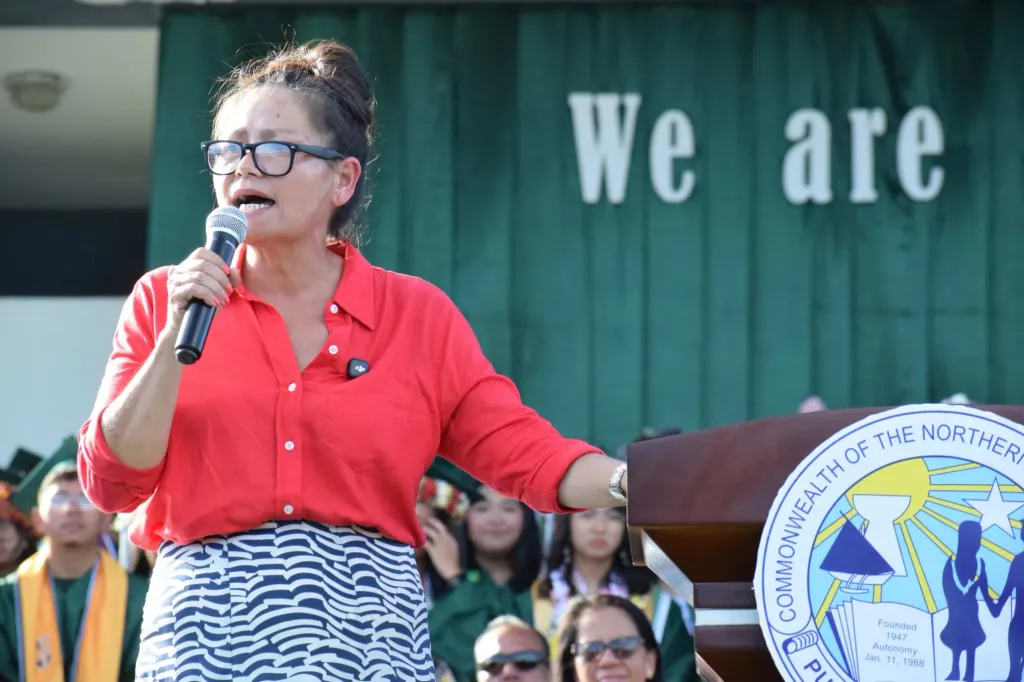
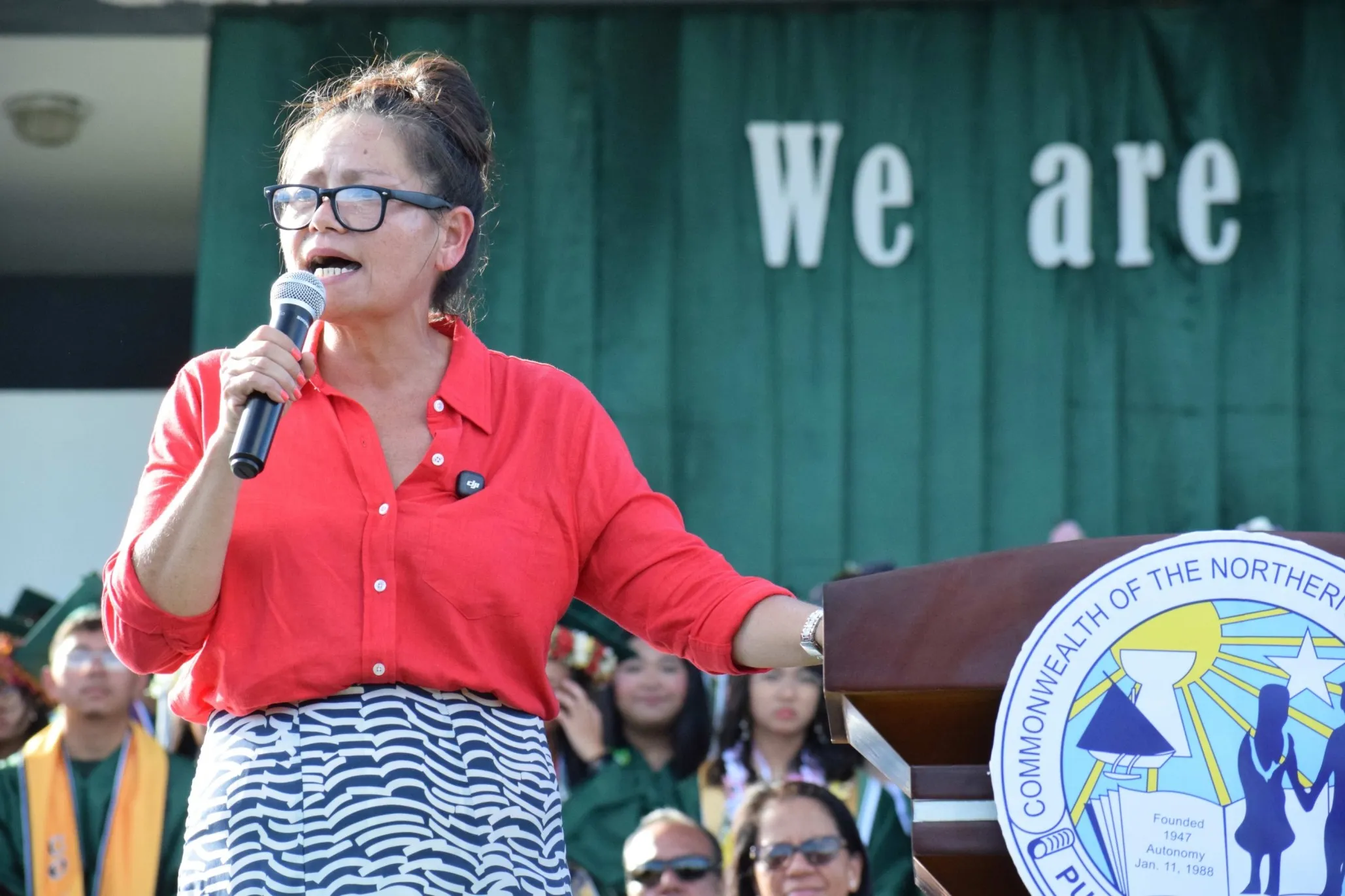
DELEGATE Kimberlyn King-Hinds on Friday commented on H.R. 8931, which she introduced on May 20, 2026, seeking to eliminate the touchback requirement for certain CNMI-Only Transitional Worker or CW-1 workers, saying it is one of the “areas of priority” in addressing the Commonwealth’s current workforce challenges.
“We can’t afford to let some people leave,” she said in an interview after the Saipan Southern High School graduation ceremony on Friday, referring to CW-1 workers, many of whom have already left or are set to leave the CNMI this year in compliance with the touchback rules.
H.R. 8931, which was referred to the Committee on Natural Resources and the Committee on the Judiciary, also proposes treating CW-1 workers admitted to the CNMI during fiscal years 2016, 2017, 2018, or 2019 as long-term workers qualified for a three-year CW visa.
King-Hinds said getting any immigration bill through the U.S. Congress is very difficult, and that her measure attempts to identify priority areas for fixing the current system and advancing reform.
She noted that Super Typhoon Sinlaku, from which the Commonwealth is still recovering, “has expedited” the timeline to address the islands’ workforce issues, especially for businesses affected by the “touchback” rule this year.
“Is that bill going to pass? I don’t know, but we’ve got to try really hard,” she said.
According to a report the U.S. Government Accountability Office released on May 13, 2026, “there are not enough local U.S. workers with the requisite skills available to fill current economic needs, and economic recovery efforts would require additional workers from outside the CNMI, according to CNMI officials.”
The GAO report said that in 2024 there were 7,220 foreign workers in the CNMI, approximately 32% of its workforce, according to analysis of CNMI tax data. The CNMI population declined from 53,800 in 2010 to 47,300 in 2020, according to the U.S. Census, and some officials estimate it has continued to fall since then.
The report said the number of workers in 2024 is lower than in 2019, following Super Typhoon Yutu and the Covid-19 pandemic.
In the absence of the CW-1 program, the GAO report said, the CNMI would need to increase the number of native-born workers, recruit workers from other parts of the United States, use other visa programs such as H-1B and H-2B, or use a combination of these approaches. Business leaders said they do use other visa programs but noted that these are less attractive because they are more costly, have longer processing times, and offer less flexibility than the CW-1 visa. For example, they said CW-1 visas allow employers more flexibility to move workers between job roles, whereas other visas may not permit such changes.
GAO’s analysis of CNMI tax data found that the CNMI workforce declined substantially over the last 20 years of available data, a period that coincided with the decline of the territory’s textile industry. From 2004 through 2024, the number of workers in the CNMI declined by roughly 28,000, or 56%.
Emmanuel “Arnold” Erediano has a bachelor of science degree in Journalism. He started his career as police beat reporter. Loves to cook. Eats death threats for breakfast.
