






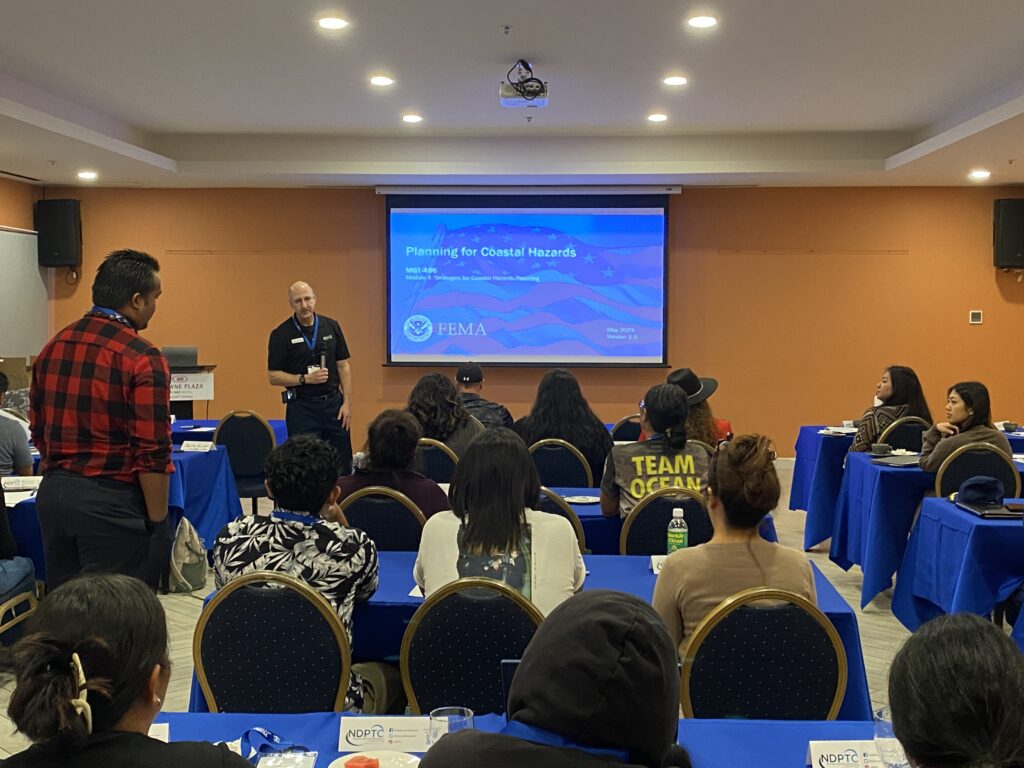
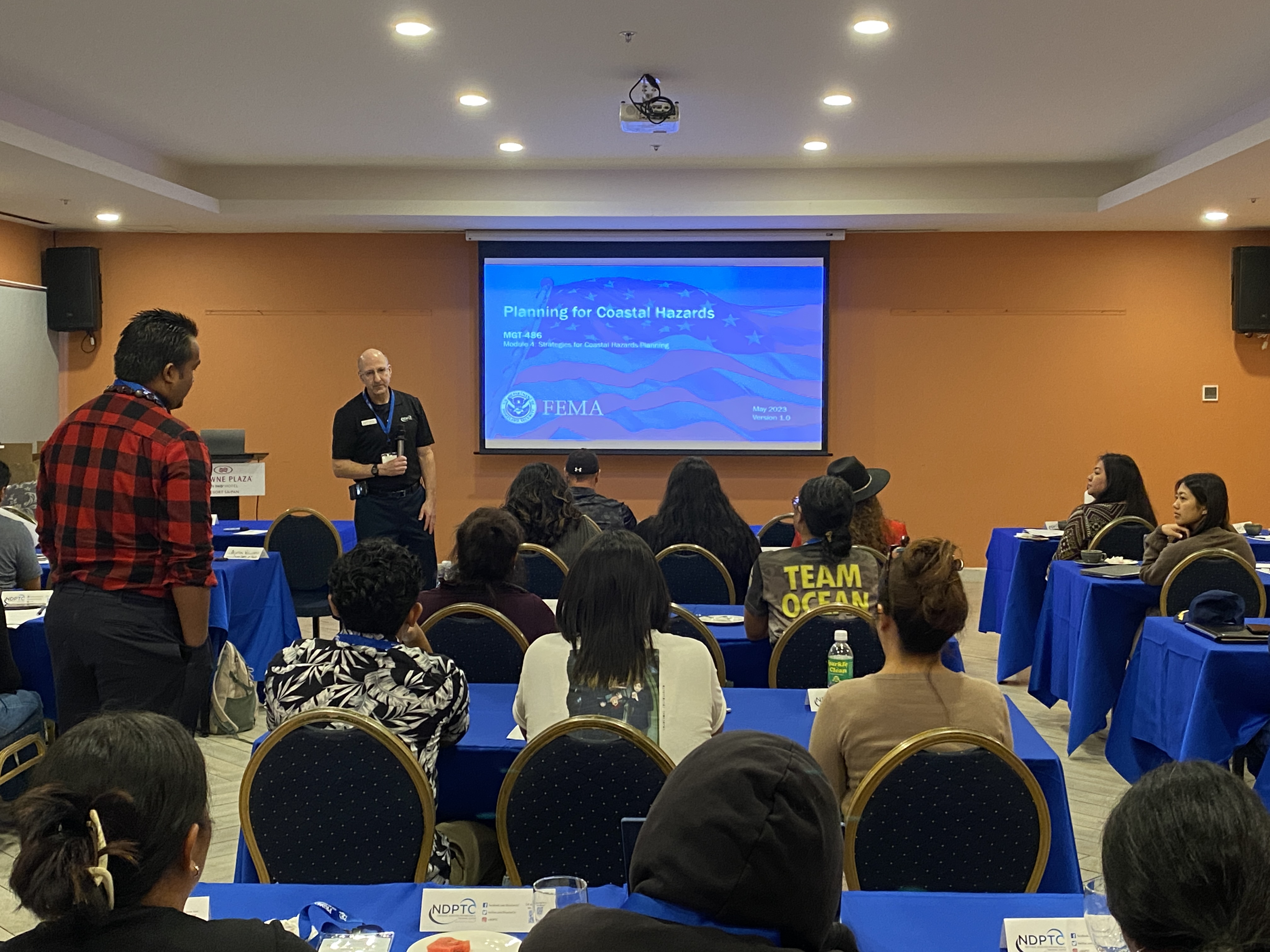
Two hundred residents are registered to take part in the Pacific Risk Management Ohana conference. Photo shows some of them participating in a pre-conference training event in the Azucena room of the Crowne Plaza Hotel on Wednesday, Feb. 21.
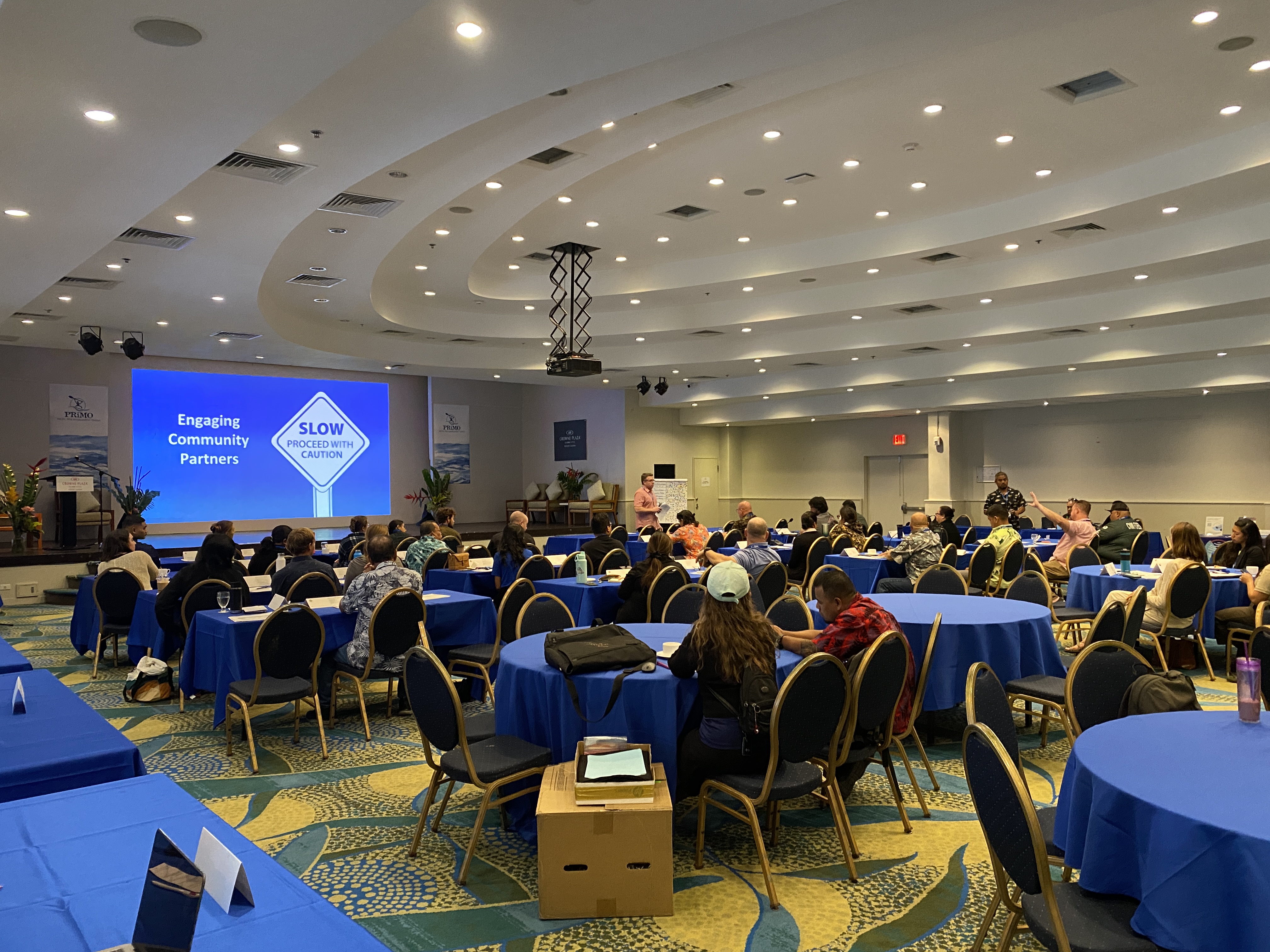
Participants listen to a presentation titled “Planning for Coastal Hazards in the Azucena room of the Crowne Plaza Hotel as part of a pre-conference training for the Pacific Risk Management Ohana conference, which will take place from Feb. 22 to 23.
THE Pacific Risk Management Ohana or PRiMO conference officially begins today, Wednesday, Feb. 22, but registrants attended a pre-conference training event at the Crowne Plaza Resort on Tuesday, Feb. 21.
On the agenda during the training event were four workshops: “Understanding Community Partners”; “Planning for Coastal Hazards”; “Writing Effective Survey Questions”; “Technical Assistance and Capacity Building for Planners”; and “Fostering Behavior Change.”
The PRiMO conference is organized by the Division of Coastal Resources Management in partnership with the National Oceanic and Atmospheric Administration. It is a gathering of people and organizations dedicated to “making the Pacific Islands more resilient in the face of natural hazards,” said Mary Uena, DCRM coastal resources planner.
The conference will have 200 participants, said Rich Salas, the director of DCRM.
A full agenda of the conference is available at http://tinyurl.com/primo-conference
“This is the first time we’re hosting this in the CNMI,” Salas said, adding that usually the PRiMO conference takes place in Hawaii. “We’re very happy and hopeful that these conversations that we will have the next few days are beneficial and meaningful to a lot of our participants,” he added.
Salas said the aim of the conference is to build the CNMI’s capacity to “deal with the pressing challenges that we face, which are impacts from climate change and other factors.”
He said the conference participants are from DCRM, the Office of Planning and Development, the Marianas Islands Nature Alliance, other local agencies and organizations.
“It’s important that we talk about our challenges and learn from our setbacks and figure out ways to move forward in the most efficient way possible,” Salas said.
