







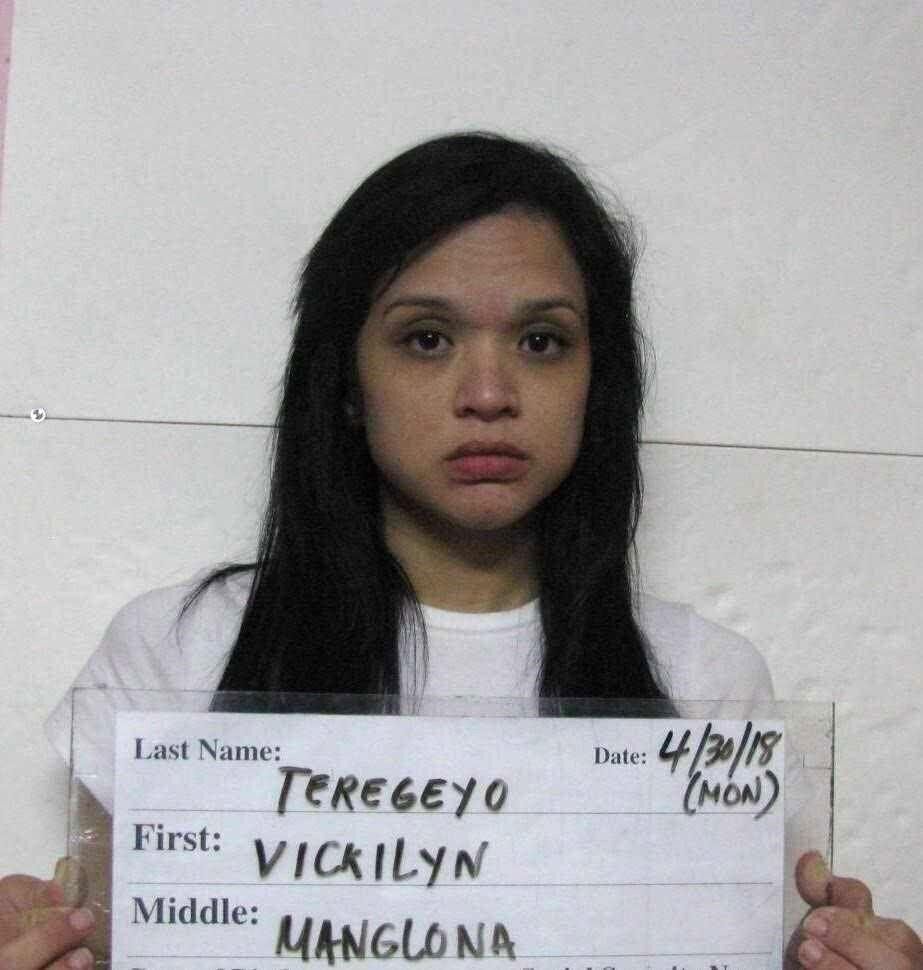
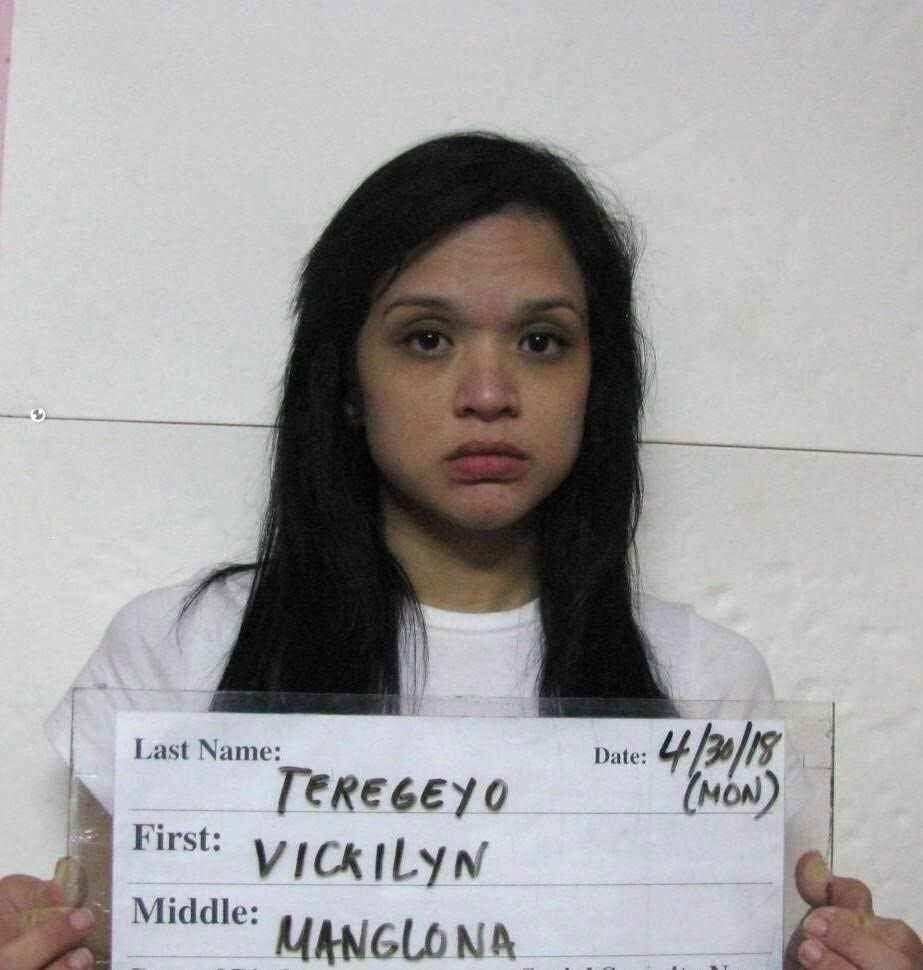
Vickilyn Teregeyo
VICKILYN Ramonica Manglona Teregeyo, who recently served a six-month prison sentence for violating the conditions of her probation, has tested positive for and admitted to using methamphetamine again, according to the U.S. Probation Office.
U.S. Probation Officer Gregory Arriola has requested the District Court for the NMI to issue a summons for Teregeyo “to appear before the court and be held to answer or show cause why her supervised release should not be revoked.”
The fourth term supervised release for Teregeyo started on Nov. 24, 2023 and was set to expire on May 23, 2025.
As part of the conditions imposed on Teregeyo, she must submit to substance abuse testing (no more than eight drug tests per month) to determine if she used a prohibited substance. She must not attempt to obstruct or tamper with the testing methods.
“On Dec. 26, 2023,” Arriola said, “a report was received from the laboratory, which revealed a positive result for methamphetamine for the sweat patch collected on Dec. 8, 2023.”
On Jan. 2, 2024, Teregeyo reported to the U.S. Probation Office for a noncompliance meeting.
When confronted with the results from the sweat patch removed on Dec. 8, 2023, Teregeyo admitted to using methamphetamine on Nov. 25, 2023, and executed an Admission of Drug Use form, Arriola said.
For continued monitoring, a sweat patch was applied on Teregeyo. She was instructed to return to the U.S. Probation Office on Jan. 9, 2024, for the removal of the device.
On Jan. 5, 2024, Arriola said, a report was received from the laboratory which revealed a positive result for methamphetamine for the sweat patch removed on Dec. 21, 2023.
“On Jan. 9, 2024, Ms. Teregeyo reported to the U.S. Probation Office for a noncompliance meeting and sweat patch removal. When presented with the Dec. 21, 2023 laboratory report, Ms. Teregeyo at first denied using the drug. She later admitted using the drug on Dec. 21, 2023, but stated she could not recall the specifics about her use. Afterwards, Ms. Teregeyo informed this officer that the patch that was supposed to be removed that day had been ripped off her arm during a physical altercation that occurred between her and a local woman earlier in the day. She stated she did not know the whereabouts of the patch and provided this officer with surveillance footage of the altercation, which had occurred at a store entrance,” Arriola said.
When informed that another patch would be placed on her person, Teregeyo “appeared to be upset and stated the patch will probably come back positive from the laboratory,” Arriola added.
“She explained that the woman who attacked her may have put something in her mouth during the altercation, which she believed to be methamphetamine. When informed about the absurdity of her statement, Ms. Teregeyo maintained her story and stated she believed this individual was out to get her. She also noted she met this woman while previously incarcerated,” Arriola said.
According to the probation officer, he was able to verify the altercation through a Department of Public Safety officer, and that an investigation was still ongoing.
At the revocation hearing on May 19, 2023, Teregeyo admitted using methamphetamine in violation of her probation. Chief Judge Ramona V. Manglona ordered her to self-surrender to the U.S. Marshals Service on May 26, 2023.
Teregeyo tested positive for the use of methamphetamine on March 10, 2023, and submitted diluted urine specimens on March 10 and 17, 2023.
Teregeyo was convicted on Guam of the offense of drug user in possession of a firearm and ammunition, but was allowed by the federal court system to serve her probation in the CNMI.
Teregeyo was sentenced by Guam District Court Chief Judge Frances M. Tydingco-Gatewood on May 24, 2019, to time served, 12 months and 18 days, with a three-year term of supervised release.
Her supervision was then transferred to the District Court for the NMI’s jurisdiction.
In March 2022, Judge Manglona revoked the supervised release of Teregeyo after the defendant admitted that she used methamphetamine.
She was sentenced to serve a three-month prison term followed by three months of home confinement/detention with electronic location monitoring as a special condition of supervised release, and 27 months of supervised release.
