






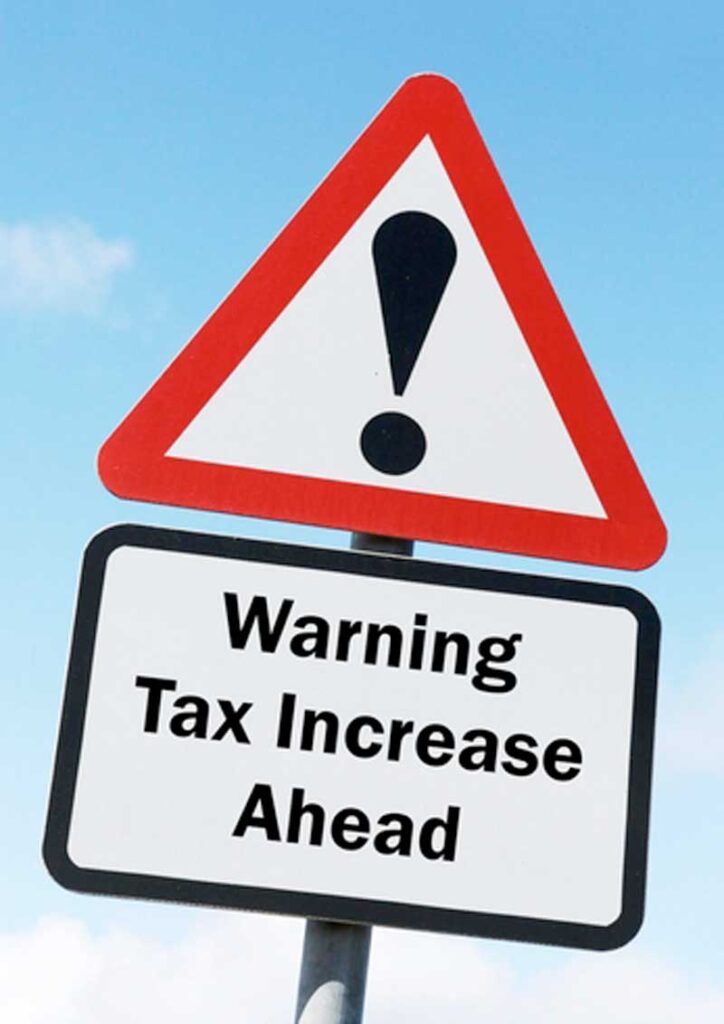
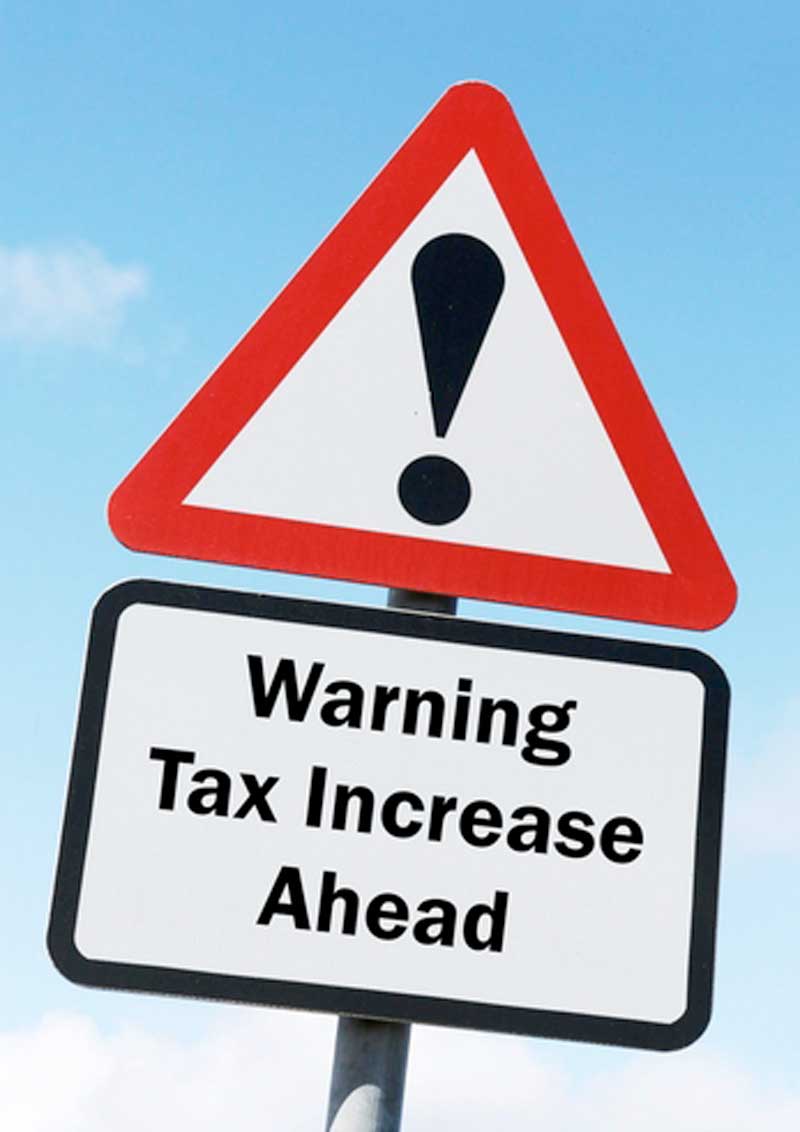
(SNIMC) — The 17th Saipan and Northern Islands Municipal Council leadership recently informed the chair of the Senate Fiscal Affairs Committee, Senate Vice President Donald Manglona. of an approach to taking action on the sin, sweet, construction and vehicle tax measures that are still pending in his committee.
The council said the net gain and adverse impact of the proposed tax hikes would inevitably spill over the local economy immediately in the short term and likely in the long run as well. These bill are the tobacco sin tax proposal of House Bill 23-7; the imported betel nut bill in H.B. 23-41; the soft drinks (sweet tax) and alcoholic beverages (leisure tax) in H.B. 23-7; H.B. 23-74 which would place a premium on commercial construction threshold; and H.B. 23-68 which would add levies on imported vehicles.
The council urges the committee to figure in and account for the reduced work-hours by government workers, including the existing local businesses, as the present reduced work hours takes immediate effect by automatically cutting deep into the workers’ take-home pay and income, which lowers consumer demand, a situation that is hardly synonymous with the creation of wealth nor attracts new investment activities in and to the CNMI. The proposed tax hikes when fully applied will surely have detrimental if not deleterious effect on consumers and the overall economy.
The proposed tax hikes may not encourage retention of existing investments and businesses in the present economic pipeline, much less spur reinvestments in the local community by existing businesses struggling during the Covid pandemic-induced recession and creeping inflation in the present economy.
Community reinvestments by existing businesses or the entry of new business activities in the local economy typically generate increased capital circulation in the economy in new capital and investments and ultimately increase revenues. The increased revenues from these activities also create multiplier spinoff effects in the overall local economy and finance, among which include increased consumer disposable income in a near-capacity work environment combined by robust business climate, consumer demand and investment, which the proposed tax hikes would dampen during the present recessionary climate coupled by the inflationary effect of tax hikes if the proposed tax increases are not properly designed and calibrated with prudence and executed strategically.
In the present environment, the Saipan and Northern Islands Municipal Council recommends that the sin taxes in H.B. 23-7 (tobacco tax), 23-41 ((imported betel nut tax), and H.B. 23-78 (sweet, softdrink and alcoholic beverage taxes), the construction tax in H.B. 23-74 and the vehicle tax in H.B. 23-68 be incrementally spread out in proportionately increasingly increments over a period of two years and up to four years instead of upon the effective date of the tax hikes.
By way of illustration, H.B. 23-74 may be amended so that it is implemented gradually at 1% to1.5% on the effective date of the policy, including H.B. 23-7 at 1.67% spread in increments over a 2-4 year period.
H.B. 23-41 (imported betel nut tax) should, however, be implemented at 100% right off the bat, except for H.B. 23-68, which should be spread over a 3-year period at 3.33% each year together with H.B. 23-78 at $0.05 per year.
For commercial construction activities, the levy should remain as is at $250,000 but increased for residential construction activities to $500,000. In this way, the tax burden on residential construction is on middle to higher income brackets and not on Section 8 and affordable housing clients, for instance.
In addition, each of the five tax measures must include a provision for built-in expiration or sunset within 5-6 years thereafter, or sooner when a comprehensive policy impact evaluation shows a clear and convincing adverse impact or a regressive effect which contravenes the intended effect of the policy proposals on revenue generation to begin with.
There is also a need to include a proviso for intermittent pause period when the intended effect of revenue production is not realized, or in the unanticipated event that the proposals produce unintended regressive consequences on the overall business climate or revenue production based off verifiable fiscal data from revenue and tax division.
In the alternative, the council leadership highly recommends to Senate Vice President Manglona’s finance committee to explore other investment-friendly options in attracting new business entries to the Commonwealth by revisiting and examining more closely numerous existing laws on revenues, statutes for internal revenue enhancements, such as the recommendations in the 2020 fiscal summit four years in the past administration.
For instance, each senatorial district should be allowed to calibrate its own rules and make an independent assessment on the feasibility and advisability in crafting senatorial-district-driven policies to attract new businesses to their shores. That is, Tinian and Rota could be given the flexibility and allowed to provide a mix of incentive that should serve as business havens for U.S. businesses, including anchor businesses for investments to Asia.
For instance, Rota could offer paradise living for neighboring residents of Guam in high rise condominiums.
Elderly care center may be an option for Rota’s tranquil environment, or for that matter, re-designate the Wedding Cake Rock Island of Rota for a special district investment and an opportunity for investors to stay longer in Rota.
Tinian ought to consider converting the former Tinian Dynasty into condominium housing for the military.
Other options could be to convert Aguiguan into an exclusive Las Vegas or Macau of the Marianas as a special economic and business district.
An alternative to or in addition to the above tax hike proposals may extend to and include revisiting the following existing public policies:
1) Education Tax Credit
2) Tax Rebates
3) Luxury Taxes
4) Real Estate Transfer Tax
5) Tax on BOOST grant recipients
6) Fuel Exemption Tax
The post-Covid economic environment requires public policy makers to view things outside-of-the-box in crafting public policies that are sensitive to a consumer demand driven service economy in a small business environment with uneven population base on Saipan, Tinian and Rota.
The above list is by no means exhaustive and may be improved with others not mentioned. In other words, it behooves the 23rd Legislature to revisit some of the existing revenue generating policies (e.g. ETC), or lack of policy (e.g. BOOST tax).
On the other hand, a case may be made to induce greater consumer demand through tax cuts which immediately translate into increased disposable income impacting on consumer demand as well as encourage businesses to hire tax paying workers and invest more on increased profits, thus generating more revenues through a combination of additional tax collections on increased work hours, increased consumer demands via increased disposable income for spending, and business revenues from robust business activities and expanded investments driven by increased profit margins generated by increased business activities, workers’ income taxes, business gross revenue tax collections driven by increased consumer demand, among others.
The council believes that the above suggestions ultimately call for moderation and incrementalism on the marginal rates the proposed tax measures on sin taxes, sweet taxes, vehicle taxes, and construction taxes should the Senate committee proceed with these tax proposals.
The Legislature may also consider enacting a comprehensive Northern Marianas descent public land privilege user tax and lease assignment and transfer privilege tax and surcharge including tagging a requirement on occupants and users of public land to build organizational local capacity within a year of use and occupancy of public land for entry, mid-management, and upper management occupations as well as offer at least 15% stock options to NMDs on existing and new public land users and occupants.
In any event, the most obvious and immediate impact of the tax proposals is a takedown on the ability by consumers to spend in a robust consumer demand environment with less than capacity on expected revenue production due to diminished supply in the short and long run, to the extent that workers remain on reduced work hours are squeezed out of the necessary disposable income or continue to operate on a thin income margin in the current work reduction scenario.
