




AN inter-agency task force has started injecting chemical into the roots and stems of the pest vine scarlet gourd to prevent it from further harming the environment.
The Invasive Species Rangers—the task force formed to combat the spread of scarlet gourd—began injecting Garlon 3A into the pest vines yesterday in Garapan.
Also known as ivy gourd, this pest vine now covers an estimated 1,200 acres of land on Saipan.
It does not only kill plants and animals, but it “destroys the scenic view of the islands,” according to the task force consisting of personnel from Northern Marianas College’s Cooperative Research, Education and Extension Program and the Department of Lands and Natural Resources.
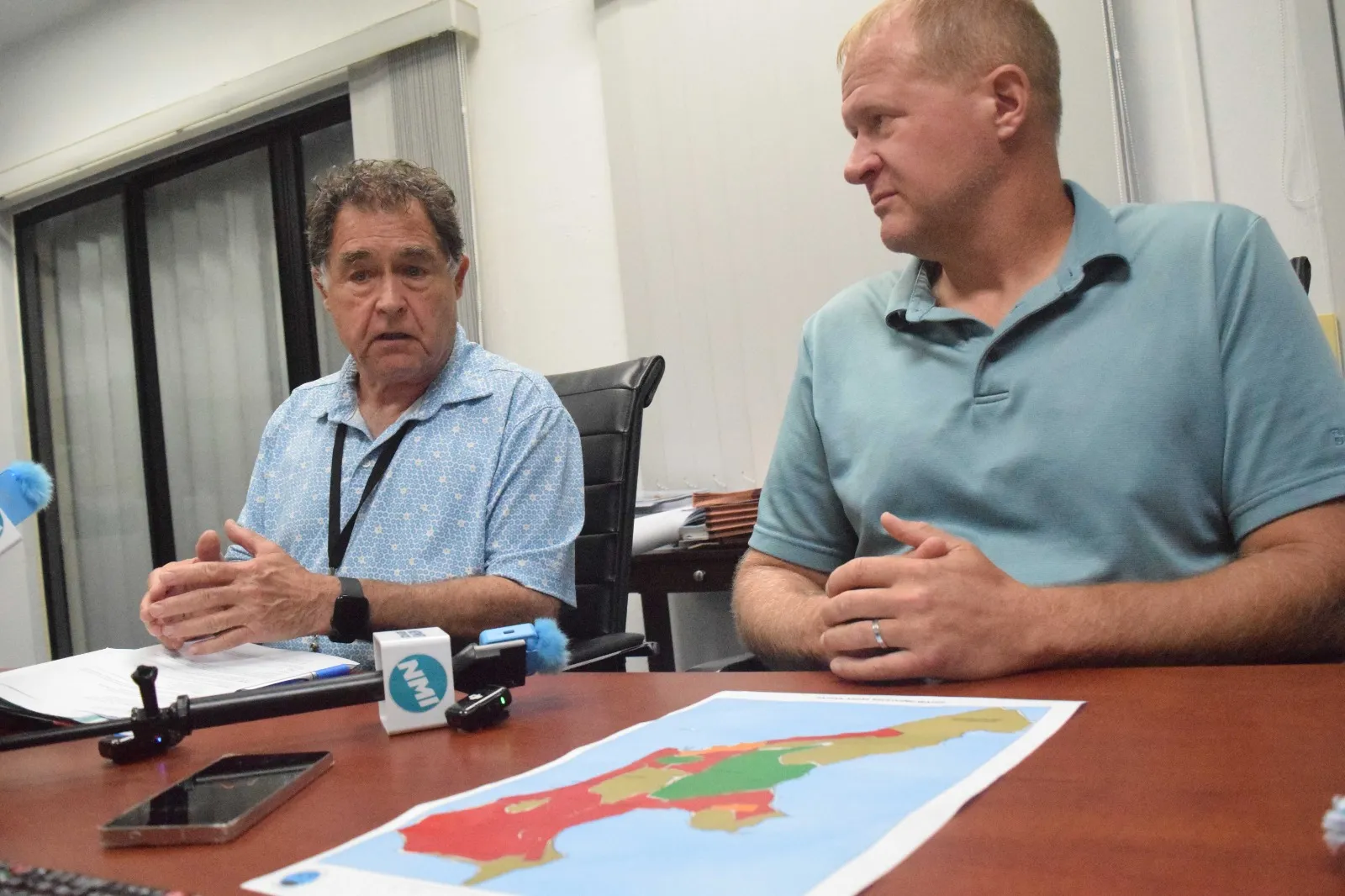
Dr. Lee Eavy of NMC-CREES said the injection of Garlon 3A is one of the most effective methods in killing scarlet gourd.
“In four to five weeks, the vines will be killed,” Eavy told the Variety.
Manny Pangelinan of DLNR said the task force’s main goal is to use a biological method to wipe out the scarlet gourd population in the CNMI.
This is the most effective method of controlling the pest vine, he said.
This method involves a moth. Its importation, however, requires the approval of the U.S. Fish and Wildlife Service and the U.S. Department of Agriculture’s Animal and Plant Health Inspection Service.
The ivy gourd grows indiscriminately. It climbs over and covers any stationary living and non-living objects like fences, telephone poles, large and small shrubs and trees.
The task force believed that a farmer on Capitol Hill introduced the ivy gourd in the late 1980s. It was only in 1996 that the CNMI government found out that this gourd was considered a pest in Hawaii. By 1997, it had spread to almost all areas of the island.
The public has also been advised to avoid cutting ivy gourds with bush cutter or mowers because they will only scatter vegetative parts and may grow into another plant.
