



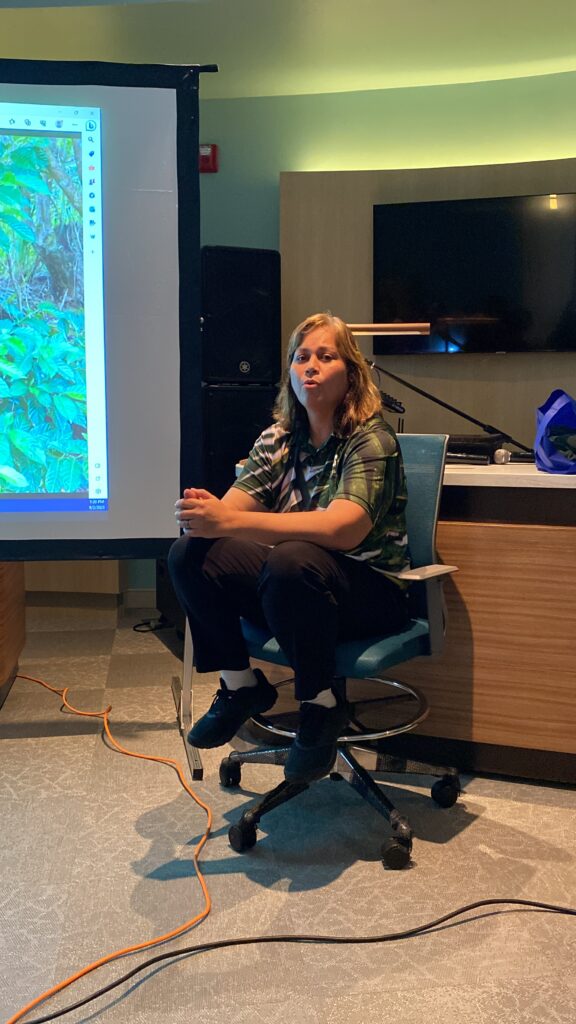
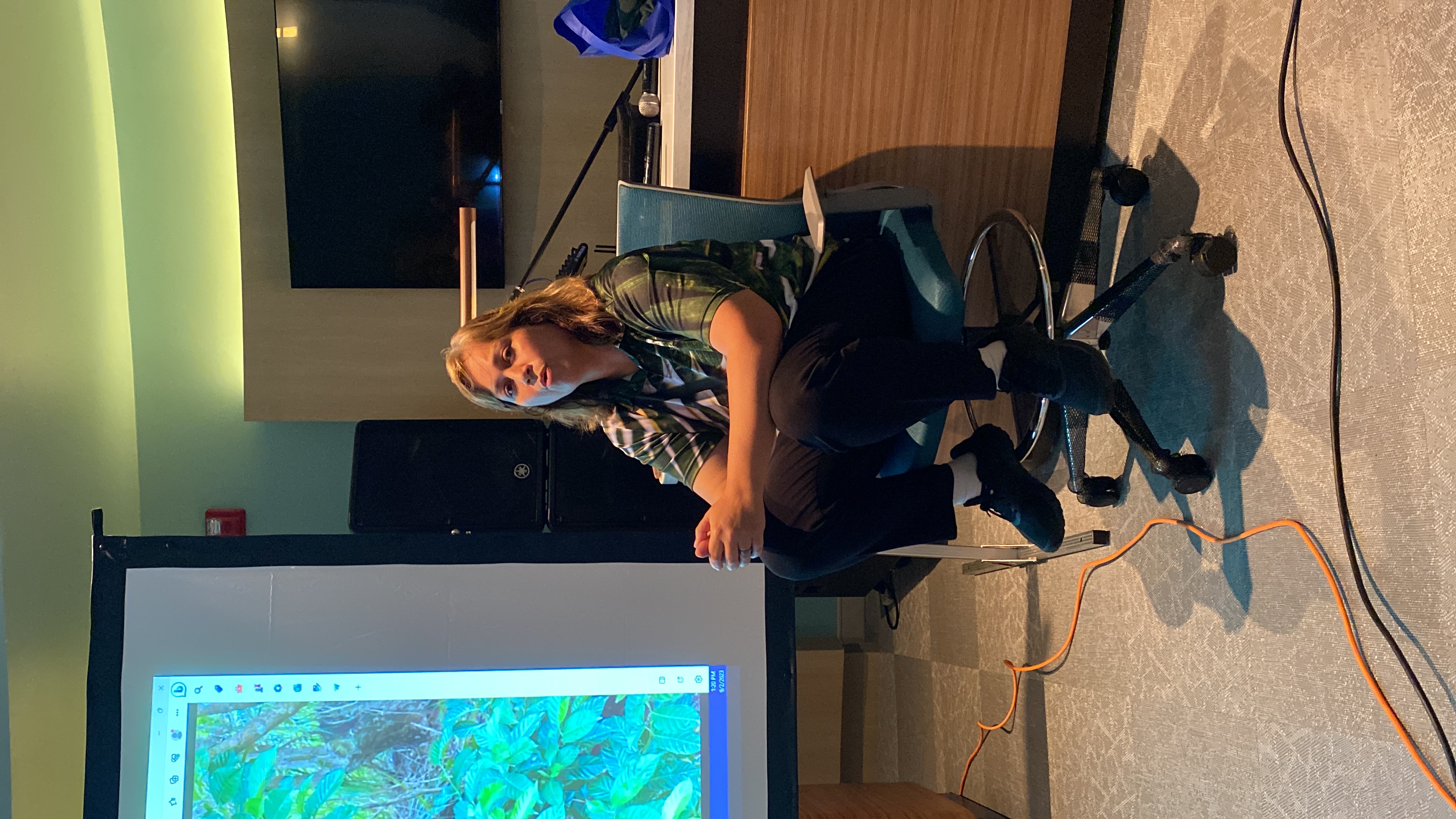
Dr. Tricia Lizama, a professor at the University of Guam, is helping pilot a traditional healing class.
ON Saturday, Sept. 2, Dr. Tricia Lizama, Chauntae Quichocho, and Cailey Chargualaf presented the challenges and successes they’ve encountered as they pilot a certificate program for traditional healing at the University of Guam.
They were among the presenters in the recently concluded 6th Marianas History Conference, which ran from Friday, Sept. 1 to Sunday, Sept. 3. The theme of the conference was “Healing the Wounds of History,” and it focused on healing practices and other topics relating to medicine and healing in the Marianas.
Lizama, Quichocho, and Chargualaf’s presentation was titled, “An Apprenticeship for Traditional Healers? Can we make it work in an institution using a cultural lens?”
“There’s so, so much knowledge and our traditional healing practices have been with us for 4,000 years,” Lizama said. “[But] we’re experiencing a crisis. On Guam alone we probably can tell you there’s less than 10 traditional healers.”
The certificate program was born out of a recognition that the knowledge of traditional healers needed to be handed down to a new generation.
Lizama is a social work professor at UOG, while Quichocho and Chargualaf are apprentice traditional healers and program assistants.
Lizama’s dissertation involved studying the ways traditional healing practices were preserved and perpetuated in modern Guam.
According to her official bio on the conference website, Lizama interviewed over 35 healers in Guam, Rota, Tinian, and Saipan.
Lizama’s work alongside Quichocho and Chargualaf in the certificate project is supported by UOG’s Para Hulo’ Strategic Plan, which aims to “model island wisdom and sustainability.” Under the strategic plan, UOG has aimed to embrace “regional identity and values and [engage] indigenous frameworks.”
During the presentation on Saturday, Lizama underscored the difficulty a program can have when marrying traditional ways of teaching and learning with Western educational systems.
“We’re finding that the values are conflicting,” Lizama said.
She said the main instructor of the traditional healing course is Lourdes Manglona, a yo’amte/suruhuana with over 60 years of healing experience.
One issue has been creating a résumé of that experience, when Manglona is not paid for her healing services, as is a custom in the culture.
But Lizama said Manglona needed a résumé as part of her application process to be hired at the university.
According to the conference keynote speaker Donald Mendiola, in the traditional way of carrying out Chamorro medicine, healers are not compensated with money. There are no documented invoices for yo’amte.
Compensation is another major issue that Lizama, Chargualaf, and Quichocho have encountered.
Lizama said Manglona is a full-time educator, but traditionally, because suruhuana don’t receive payment, it can be a challenge to put a price on her skills.
Lizama said there are also various pay scales, and fitting Manglona onto one is a sensitive issue.
“We want to value her,” Lizama said. “We want her to get the best salary ever, [but] we can’t just say ‘our healer’s valued at x amount of money, please pay her $100,000.’”
Lizama didn’t disclose how much Manglona makes, but she did express that putting a price on the wisdom that Lizama personally, greatly values was one of her “biggest challenges.”
“In some ways we had to settle,” Lizama said. “She’s OK with it because [a salary] is not why she’s doing it, but still, we want to value her and we want to compensate her because she’s spending a lot of time with us with all of the students.”
During the presentation, Chargualaf likewise shared her experience balancing the traditional way of collecting medicine —sometimes doing so in the jungle —with quantifying that work for a timesheet.
Chargualaf said sometimes Manglona only needs to observe where plants are growing, yet not pick anything. Other times, members of the class have to spend time collecting medicinal plants as assignments.
Chargualaf said it isn’t always so clear-cut when inputting programmatic activities onto a time sheet.
“The university is actually supportive of the class and the goal of perpetuating Chamorro traditions, but there are problems associated with making an indigenous system that has existed for thousands of years fit into a Western system that has different values,” Lizama said.
Chargualaf, for her part, spent time explaining some cultural challenges associated with conducting the class.
One issue is how religion and healing are intertwined in Manglona’s method. Traditionally, Chamorro yo’amte/suruhuanu/a ask permission from spirits before they take resources from the jungle.
Chargualaf said student diversity is something they have to take into account in their teaching method because of this.
“In the [class book] we have typed out Mama Lou’s prayers and what she says when she’s going to pick amut, when she’s going to make the medicine,” Chargualaf said. “The intent is for us to memorize it and for us to have our own guide when we’re picking medicine or making it. We have to preface the class that these are the prayers, and yes there’s ‘Yu’us’ [the Chamorro word for God] in it, but maybe you’re Buddhist, or atheist, and you don’t have to say it.”
Chargualaf said traditionally, outside of the university, a person learning from a healer would likely not have an issue with religion, as they would belong to the same spiritual values.
However, the class isn’t totally filled with hurdles, Lizama said.
She said the benefits to being at the university include grant funding; vehicles and tools available to harvest medicine around the island; a dedicated space to teach; and resources to build a medicinal garden.
Lizama said there is also definite interest in the program, which can fulfill the goal of spreading the cultural knowledge to a new generation. When it started over the summer, there were 18 students, but that number ballooned to 35 for this school year, Lizama said.
She added that they had to cap the number of participants, as there were more interested students, but not enough space in the course.
Lizama said in terms of perpetuating and preserving culture, there is value in being around Manglona, who is a first-language, fluent Chamorro speaker.
“I feel that this is another way to help people connect to their roots,” Lizama said, adding that Manglona speaks Chamorro in the class.
There are likewise many outreach opportunities that bring the culture of Åmut Chamorro to people who have either never experienced local medicine or have not experienced local medicine in a while, Lizama said.
The ultimate conclusion that Lizama, Quichocho, and Chargualaf reached is that the university setting can work as a place to produce students who have a broad understanding of Chamorro medicinal practices, but an apprenticeship would more appropriately be created elsewhere.
“We hope to establish an opportunity to bridge the western and traditional knowledge through the institution to produce healers,” Quichocho said. “Maybe not ASAP because that’s not possible, but just to build the foundation for that route and what it could look like.”
Lizama concurred.
“Not everyone is going to come out and be a traditional healer, but if you learn one or two or three things — basic things — that your nana biha [grandmother] used to do that’s all we want,” Lizama said. “Our class will be a class for educational purposes, but our apprenticeship we have to do somewhere else–so that we don’t have these kinds of struggles, and because not everyone can jump into the apprenticeship either.”
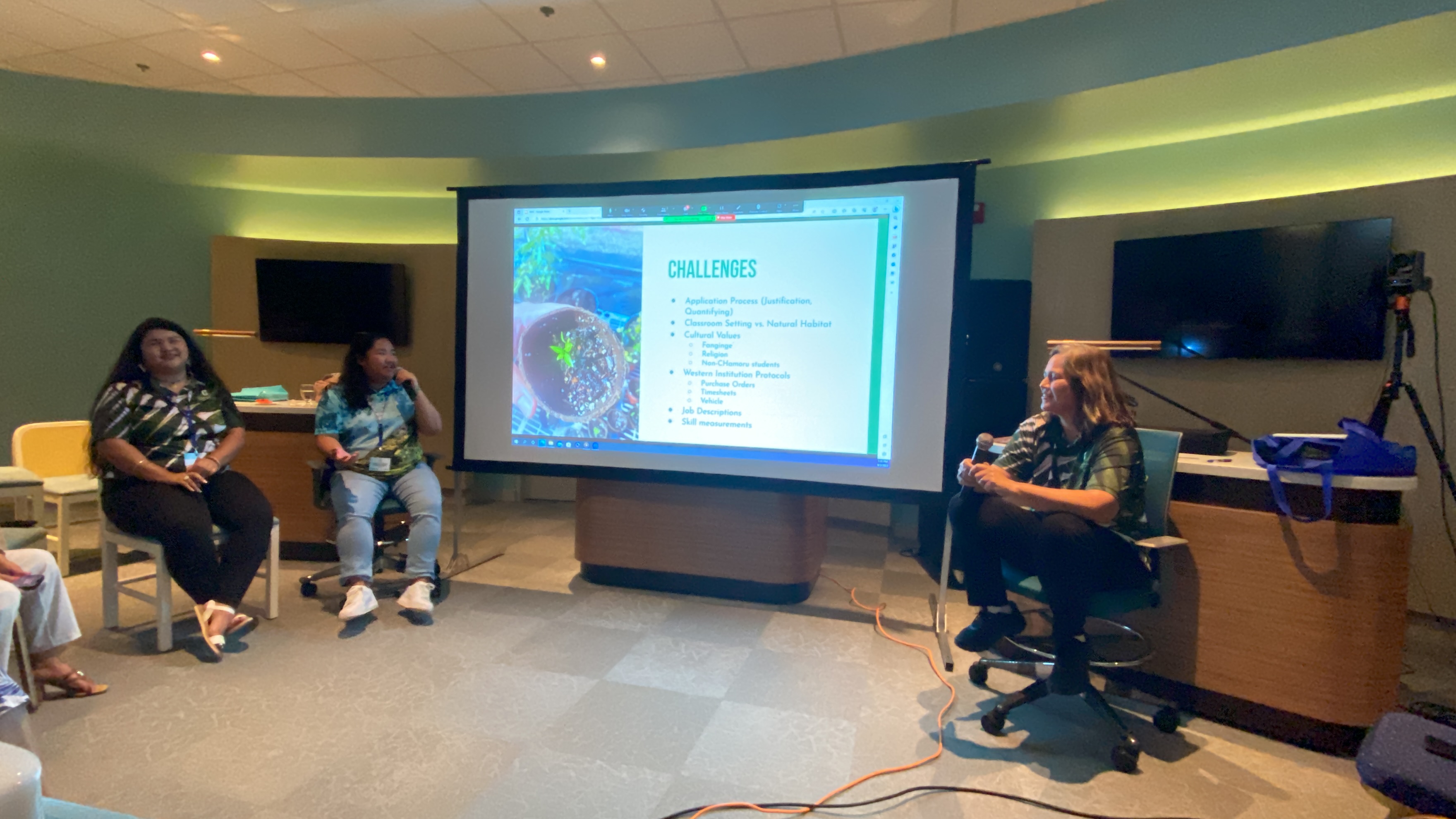
From left, Chauntae Quichocho, Caley Jay Chargualaf, and Dr. Tricia Lizama share the challenges and successes of teaching traditional Chamorro medicine in a Western institution.
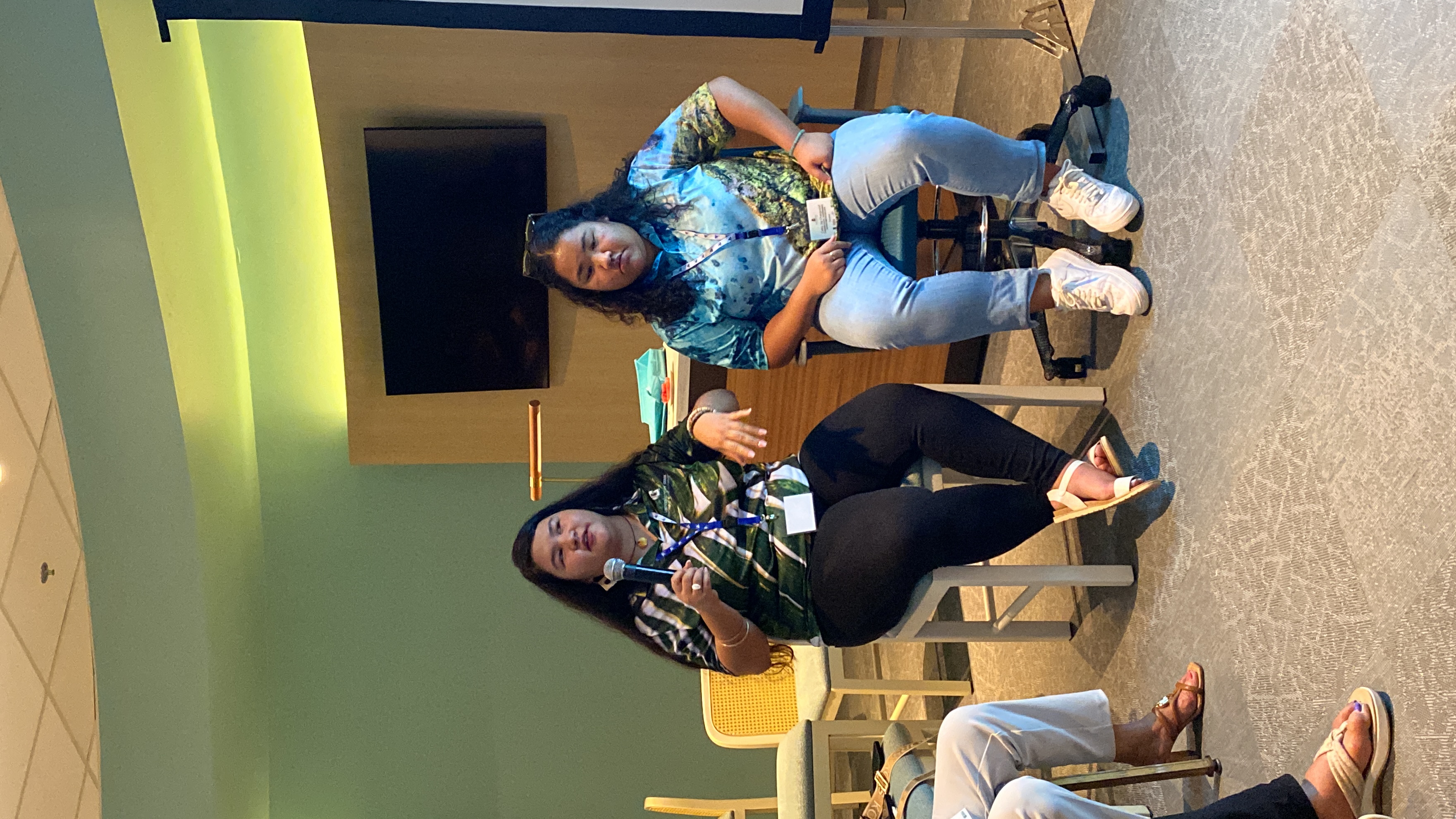
Chauntae Quichocho and Caley Jay Chargualaf were among the presenters at the recently concluded Marianas History Conference.
