







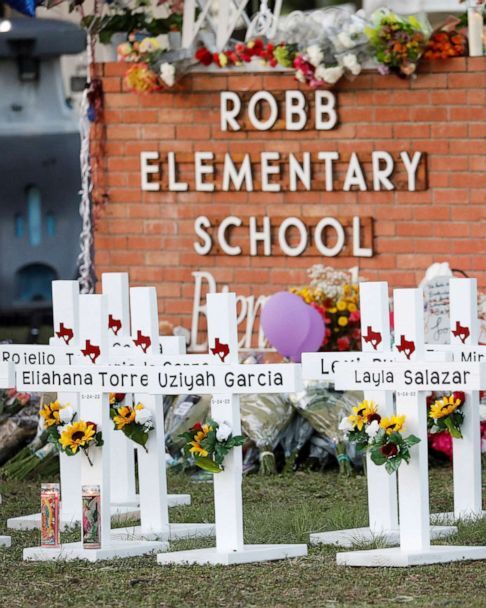
IN light of the Robb Elementary School mass shooting in Uvalde, Texas that killed 19 schoolchildren and two teachers, government officials and school systems across the nation, including the CNMI, have spoken up about how to better protect students, faculty, staff, and school administrators.

“I think that unfortunate situations like these force us to sit down at a table. We cannot wait until something happens to our children. What can we do to have, at least, some protocols to safeguard and protect our children?” asked Gov. Ralph DLG Torres during a media briefing on Friday, June 3.
The governor said he was not aware of the specifics of active shooter protocols in place in the CNMI schools, but did say that it is a good time for stakeholders to have that discussion.
Because of the number of registered handguns, registered rifles, and artillery in the CNMI, the governor said there needs to be stricter protocols on who can enter school campuses, from early childhood education to even the college campuses.
“We have a long way to go… This is a good time for all of us to sit down and have a protocol [in place],” he said.
Education Commissioner Dr. Alfred B. Ada, for his part, said on Friday that an active shooter incident response guide is in place in public schools.
He added that he is waiting for a report from Sinapalo Elementary School on Rota, which conducted an active shooter drill on May 24.
In the event of an active shooter, Ada said the Public School System protocol is to “lockdown and shelter in place.”
He said this matter will be further discussed during the next school emergency stakeholders meeting with the Department of Homeland Security, the Department of Fire and Emergency Medical Services, and the Department of Public Safety, followed with a tabletop exercise these next two months.
Ada said more drills are being planned when the 2022 to 2023 school year begins.
The CNMI PSS Active Shooter Incident Response Guide is designed to protect students, staff, and visitors during an active shooter incident.
Objectives of this guide include notifying law enforcement, staff, students, and visitors of the threat; containing the scene and minimizing the number of potential victims; coordinating the school’s response with the law enforcement incident command system; and returning to normal operations as quickly as possible.
The guide includes specific procedures for faculty, staff and administrators from immediate response (up to 10 minutes into the incident) to demobilization and system recovery (8 to 24 hours into the incident).
