


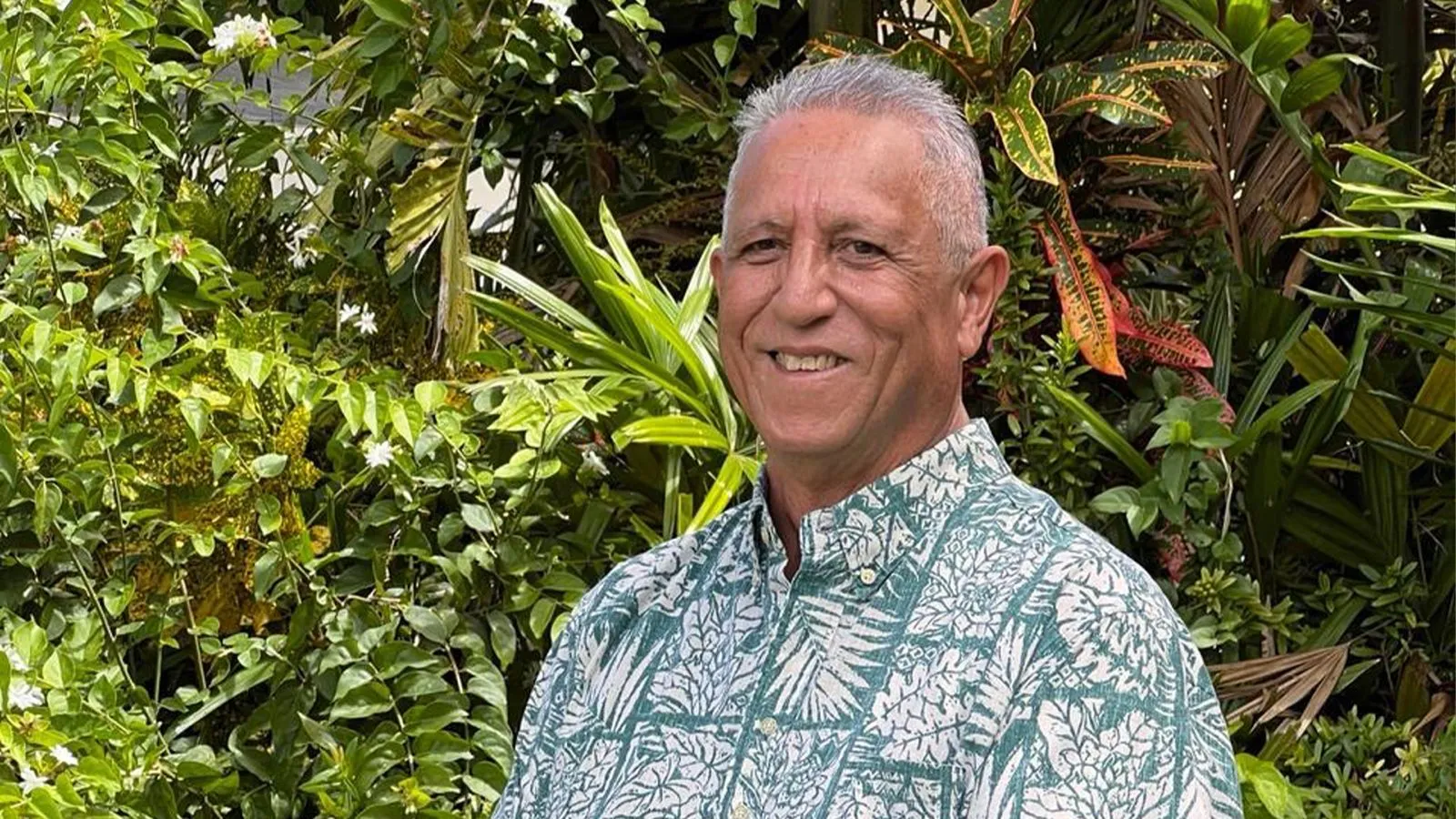



HAGÅTÑA (The Guam Daily Post) — A man convicted of murdering former Humåtak Mayor Daniel Sanchez will get a new trial.
On Thursday, the Supreme Court of Guam issued its decision on the appeal made by Rudy Fegurgur Quinata, who is currently serving a life sentence for murdering former Mayor Sanchez in April 2021.
Although the higher court disagreed with Quinata that there was insufficient evidence to support the conviction, the justices ultimately determined a new trial was necessary based on “a plausible claim of juror misconduct.”
According to the decision, a day after the jury reached a verdict, one of the jurors emailed the jury commissioner to explain a juror was aware Quinata had a previous conviction and had been incarcerated. Additionally, the juror allegedly referenced Quinata’s criminal history several times during the two weeks of deliberations, despite the foreperson reminding the jury to “only consider what they heard at trial.”
After the email was sent, the trial court rejected Quinata’s argument that the disclosure of his criminal history was “prejudicial and harmful” and ruled that an evidentiary hearing was not necessary.
However Supreme Court justices, referring to past decisions involving juror misconduct and applying them to Quinata’s case, stated “the trial court abused its discretion.”
“The People do not challenge the authenticity of the email, and with no other information, we also have no reason to doubt the email’s validity. Because there was a credible allegation of juror misconduct that, if true, could result in a new trial, the trial court abused its discretion by failing to hold an evidentiary hearing,” the justices stated in their opinion.
In past cases of alleged juror misconduct, the Supreme Court explained that typically an evidentiary hearing would be held, but considering the passage of time since Quinata’s August 2022 trial, justices were not convinced that trying to recall jurors to discuss their deliberations “would satisfy the demands of justice.”
Considering this, the Supreme Court decided to vacate Quinata’s conviction and ordered he receive a new trial.
Quinata’s attorney at trial and during the appellate proceedings, Peter Santos from the Alternate Public Defender, gave a comment to The Guam Daily Post in light of the decision.
“The Supreme Court’s opinion acknowledges the Government’s case was a weak circumstantial case, but still legally sufficient, however, the misconduct of a juror was not examined and so it cannot be certain the misconduct didn’t deprive Mr. Quinata of a fair trial,” Santos said.
Santos also disclosed that when Quinata’s criminal history was mentioned, the deliberations had nine of the 12 jurors voting not guilty before “a sudden shift after the extraneous information was shared.”
Santos, who said, as of Friday, he did not know if he would stay on Quinata’s case, also commended the reporting juror.
Sked
Quinata’s then-girlfriend and co-defendant Joyner Sked also appealed her murder conviction and life sentence stemming from the death of Sanchez. The Supreme Court also on Thursday announced its decision on her appeal.
The Supreme Court, similar to its decision in Quinata’s appeal, did not agree there was insufficient evidence to support the conviction, despite Sked arguing she was found guilty based on circumstantial evidence.
Justices explained that, although there was only circumstantial evidence, it was significant in tying her to the crime scene, considering she was with Quinata and Sanchez the night Sanchez was believed to have been killed. It was also discovered that she had injuries on her knees and made statements to individuals that she knew Sanchez had been stabbed.
“Taken together with the evidence connecting Sked to the crime scene and her unexplained knowledge that Daniel had been stabbed, the jury was able to convict Sked based on more than mere suspicion or innuendo. Additionally, it was reasonable for the jury to suspect the injuries to Sked’s knees were sustained during an altercation and not from fishing on the reef,” the justices wrote.
Sked also was found guilty at her trial of a special allegation of using a deadly weapon, a pair of scissors, in the murder of Sanchez, but argued there was not sufficient evidence to support the conviction.
Justices agreed, considering there was no “direct testimony or DNA evidence connecting her to the scissors, and there is little in the record that indicates that Sked herself used or possessed scissors found at the crime scene as a deadly weapon.”
“It may prove that Sked knew Sanchez was stabbed, but it is a step too far to infer that she herself used the scissors to stab Sanchez,” the justices wrote in their decision to reverse Sked’s convictions for the special allegation.
Additionally, the Supreme Court vacated Sked’s convictions on aggravated assault because aggravated assault is an included offense of murder. As a result, the case will be remanded to the Superior Court for further proceedings not inconsistent with the opinion.
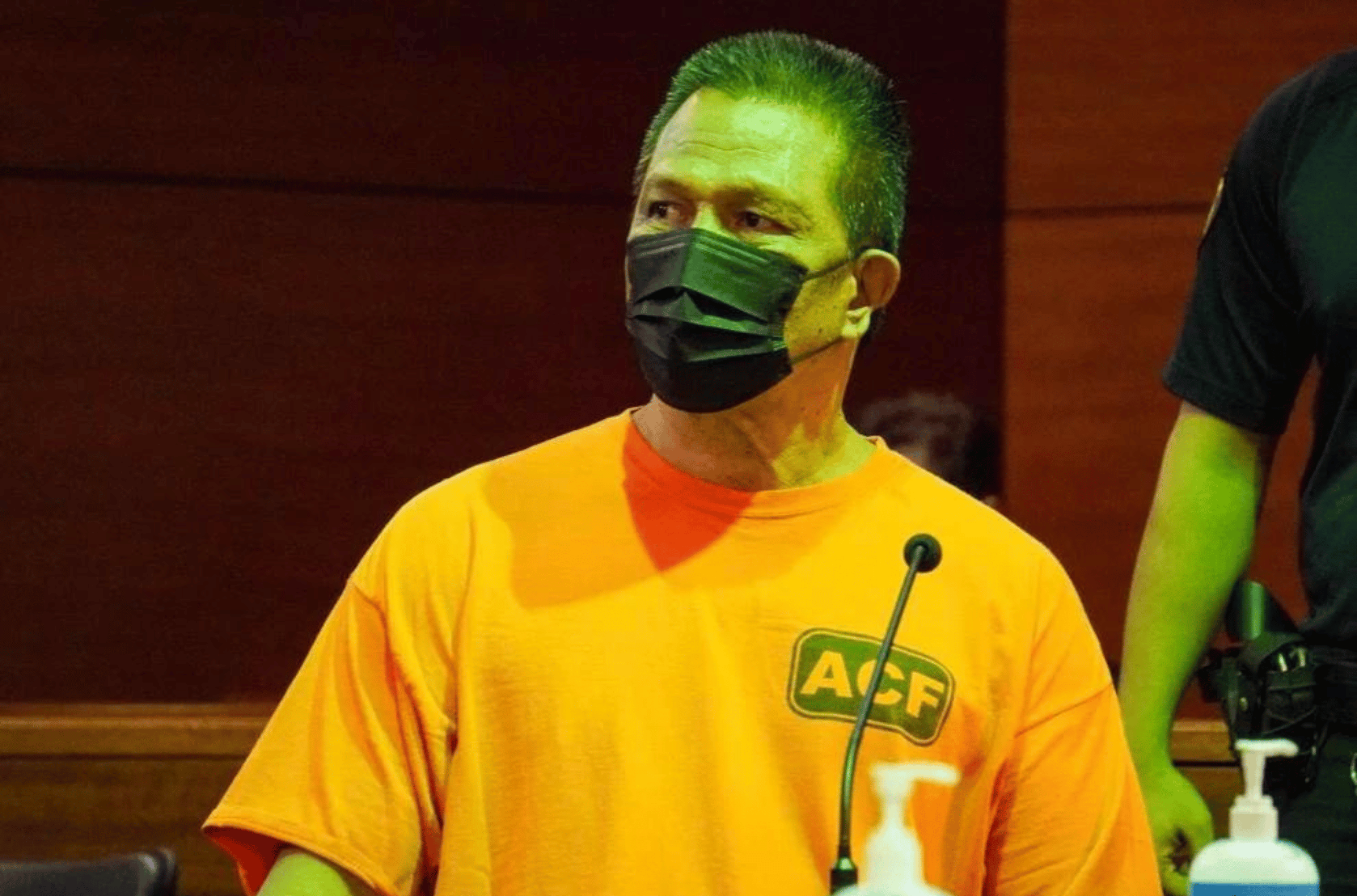
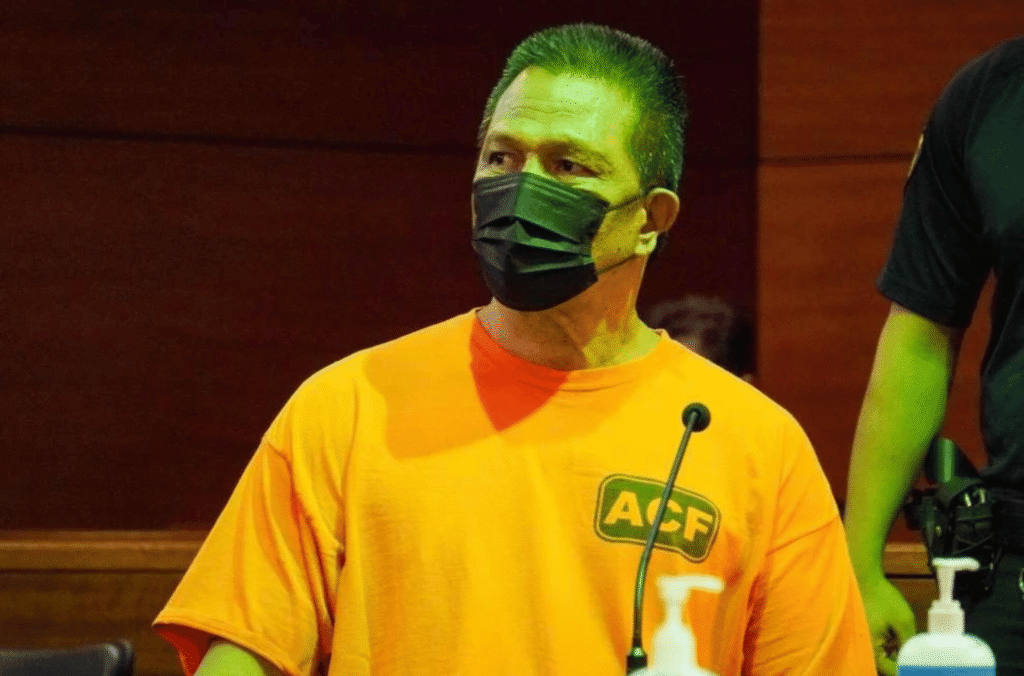
Rudy Fegurgur Quinata, pictured Monday, Aug. 15, 2022, in the Superior Court of Guam in Hagåtña, was sentenced to life in prison for the April 2021 murder of former Humåtak Mayor Daniel Sanchez.
