





HAGÅTÑA (The Guam Daily Post) — Tobacco use on Guam is among the highest in the nation, though local residents don’t hit the bottle at quite the same rates that they light up, according to a report issued Thursday.
The Guam State Epidemiological Outcome Workgroup and the Guam Behavioral Health and Wellness Center released the finalized 2021 update of the Guam State Epidemiological Profile.
It notes that “COVID-19 dominated the political, health, socioeconomic and psychological landscape between 2020 to 2022. During this time, it was hypothesized that substance misuse and mental health disturbances across the global community would be significant.”
While data points don’t show a large increase in substance misuse in 2020 and 2021, “Clearly, challenges in substance misuse prevention and control remain,” the report states, and better policy for helping to prevent negative substance use on Guam continues to be needed.
The number of Guam adults smoking tobacco has fallen in the past decade, but the island’s smoking rate still outpaces most of the nation, according to the report, with about 1 in 5 residents smoking tobacco as of 2021. In 2011, nearly 1 in 3 local adults were regular smokers.
Only about 12 states, including Arkansas, Missouri, Alabama and Alaska, had comparable rates of full-time smokers among adults in 2021.
And on Guam, women appear to smoke almost as much as men nationwide.
“In 2020, female smoking in Guam was similar to male smoking in the USA,” the report finds, at 15% versus 14%, respectively.
Use of smokeless tobacco is even more prevalent, with the island reporting about double the rate of what’s seen nationwide.
CHamorus smoke more than any other ethnic group, with 28.9% of those surveyed reporting they smoked, while other Micronesians are the most likely to use chewing tobacco, at 24.8%, the report found.
Smoking among high school students has fallen off dramatically from the late ’90s when, at one time, around 45% of high schoolers reported they smoked. As of 2019, that number was closer to 15%.
But there’s no word on whether younger kids may be turning to e-cigarette usage, or vaping, instead of tobacco, as the report doesn’t collect that information. Vaping is on the rise, with the number of adult users doubling between 2018 and 2019, and resting at about 11.1% of the population as of 2021. Most individuals who opt to vape are younger.
Alcohol use
According to the report, 8.1% of all arrests on island in 2021 were alcohol-related.
But the island doesn’t drink at the same high rates it smokes, and Guam reported slightly lower rates of regular drinkers, compared with the rest of the U.S, at 39.8% locally versus 53.2% nationwide. Rates of heavy alcohol use on Guam were comparable to the rest of the nation, at 5.5% versus 6.2%, and rates of binge drinking followed a similar trend.
The report notes that higher taxes on alcohol over the past decades, and the increase of the minimum drinking age from 18 to 21 in 2010, may be factors in declining rates of youth drinking.
Marijuana, meth, painkillers
The report notes, “It will be critical to track future marijuana consumption, with the recently enacted … act that legalizes marijuana use for both medical and recreational use.”
Recreational adult cannabis use was legalized on Guam in 2019, while medical cannabis has been legal since 2015.
About 1 in 8 adults on the island reported being current users of cannabis, putting the island about on par with rates of cannabis use stateside, the report found. Men are about twice as likely to use cannabis as women.
The perceived risk of harm from cannabis over the last decade has fallen dramatically, with about 1 in 3 people believing there’s no risk from using cannabis, while just 1 in 5 people believed there’s great risk to cannabis use in 2021. About half of all people surveyed reported there was great risk as late as 2011.
As for use of methamphetamine, the report details usage only among high schoolers.
Meth use among high schoolers has been steady in recent years, after falling off between 1999 and 2011, the report shows. In 1999, nearly 13% of all high schoolers reported trying meth at least once – and nearly 1 in 5 CHamoru students had tried the drug, while in 2019, the number decreased to about 5.6% of all high schoolers surveyed.
That’s still more than twice the national rate reported by the U.S. Centers for Disease Control and Prevention in 2019, which was 2.1% of high schoolers.
Researchers only recently started collecting data on local misuse of prescription pain medicine. In 2019, 15.5% of surveyed high schoolers reported misusing prescription painkillers – higher than the national rate of 14.3%.

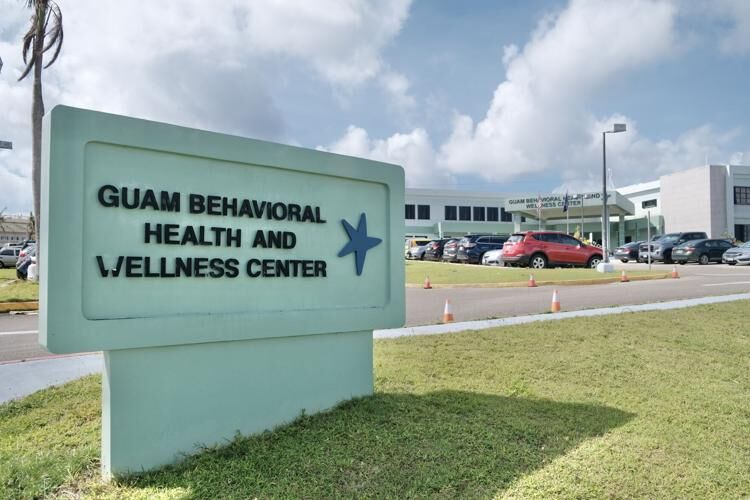
The entrance to the Guam Behavioral Health and Wellness Center in Tamuning is shown Thursday, July 6, 2023.
