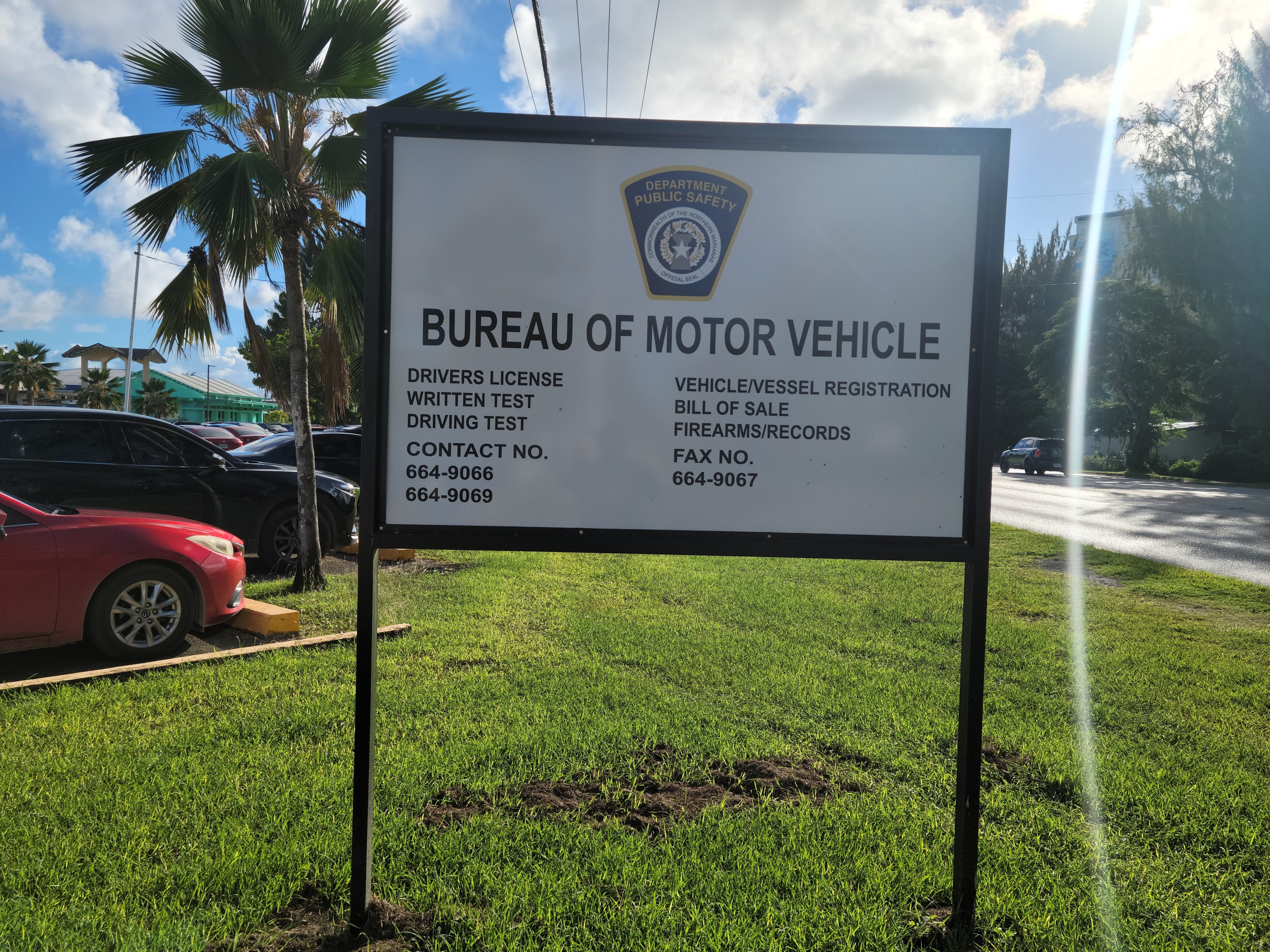



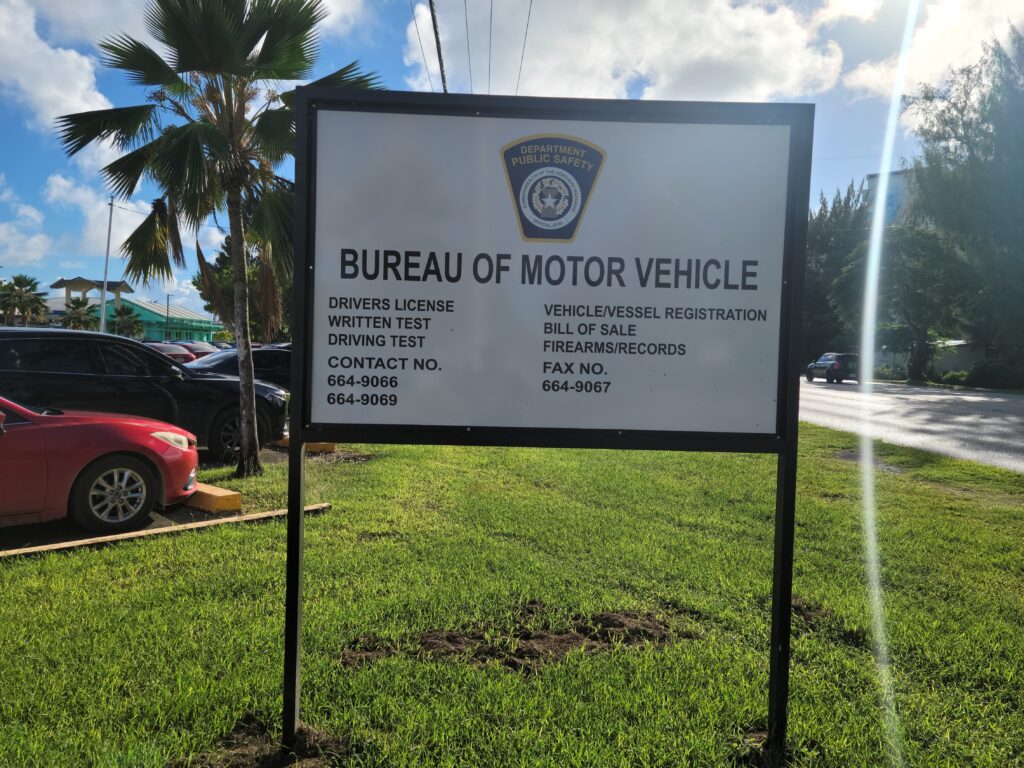
THE Palacios-Apatang transition committee team assigned to the Department of Public Safety found that the “Real IDs” issued by the Bureau of Motor Vehicles do not work in certain United States areas.
“The CNMI is not networked with the federal government’s National Crime Information Center,” the transition team report stated.
The U.S. Department of Homeland Security gave the CNMI until June 2019 to be Real ID compliant.
The federal Real ID Act of 2005 establishes minimum security standards for license issuance and production, and prohibits certain federal agencies from accepting for certain purposes driver’s licenses and identification cards from states not meeting the Act’s minimum standards.
A Real ID can be used as identification for boarding U.S. domestic flights.
According to the transition team report, BMV lacks the pertinent standard equipment to streamline the process of acquiring the registration of vehicles/vessels/heavy equipment, licensing, and records. In addition, BMV has an inadequate server room, the report stated.
“Only one scanner-printer was effectively networked. All other scanner-printers were not networked, and therefore ineffective. The collection and preservation of data was saved to the hard drives at each station and none of the data is moved to a central data point for digital preservation. The server room is functional. The security cameras in the BMV registration area are working. The server room has a variety of disconnected cables and storage items. The server room is separated from the DPS main building’s server. Work is still conducted manually,” the report stated.
It added that the Firearms and Records Section’s processing of records is still conducted manually.
“Both of their digital fingerprinting machines are broken and are utilizing an ink and paper fingerprinting process which is more time consuming,” the report stated.
A record search for an individual’s license is conducted manually, the report stated, adding that the file folders are located in a library style rolling cabinet system.
The DPS transition team made the following recommendations:
1) The Bureau of Motor Vehicles should work with the DPS IT Department and CNMI Homeland Security in creating a data network system that is accessible to all relevant parties. Patrol officers are unable to run license plates due to systems failures and either complacency or incompetency in inter-departmental communication and interaction. BMV must create or procure a practical software solution for records that give officers real time information and a statewide integrated traffic records system.
2) The officers in BMV must maintain the same level of professionalism and training as a patrol officer within their specific field. Officers at BMV must receive training and certifications in Microsoft Office, printer usage, office networking, and any related software and tasks. Each officer must also have a clear working knowledge of all components of their work environment to include surveillance cameras, electronic data storage areas, electricity backup and breaker boxes, and who are the armed officers present and on location for security. Training should bring awareness and awareness should create solutions.