








JOSHUA Brazzle, a Tinian resident whose hobby is astrophotography, said he took 300 photos of the lunar eclipse on the evening of May 26.
He said he used three iPhones — iPhone SE, iPhone 11 and iPhone 7 — a Celestron PowerSeeker 127EQ telescope and a Celestron motor drive axis to take the photos from 6:31 p.m. to 11 p.m.
Clouds and scattered rain over the Marianas made it difficult to get a decent shot of the astronomical event, he added.
To achieve a time lapse effect, he edited the photos with PhotoShop and Apple Editing.
Brazzle is an employee of the Commonwealth Ports Authority on Tinian. He is originally from Washington who moved to Tinian four years ago,
He said anyone can use any smart phone with a fairly good camera to shoot a photo of the moon at night.
“The moon is very bright so you want to lower down the exposure and ‘ISO’ just a bit to bring out the color and some detail. Just point and shoot. A tripod or any stand to hold your phone will help,” Brazzle said.
His photography can be viewed on Tinian Astrodad-Facebook.
More camera tips
For Saipan professional photographer David Butterfield of “WeJustClicked” photography, “the best camera to use is the one you have on hand.”
If that is a cell phone camera, he added, “don’t be too hard on yourself if your photos don’t turn out like you envision.”
He said the “shorter focal lengths of most cell phone cameras make for wider angle photos, which will make even a full moon appear smaller. Additionally, the smaller sensor size of a cell phone camera means photos taken in low light will appear grainy.”
He said the “dramatic moon photos we often admire are created with very long telephoto lenses, usually in the 300-400 mm range.”
He added, “Thanks to the principal of image compression, this exaggerates the size of the moon, making it appear much closer to the foreground/viewer.”
Butterfield said most cell phone cameras are in the 10mm range.
“If you wish to dress up your moon photo though, perhaps find an interesting tree or other nearby object to silhouette against the night sky.
“You may also want to try a different composition, positioning the moon over a third of the image, instead of simply in the center for example. My recommendation though? Snap a few photos if you wish — it is always nice to record a memory. But after that, ‘focus’ on enjoying the beautifully eerie moment with family or friends. Experience tells me that will mean more to you later on, than posting the perfect shot of a rock thousands of miles away.”

Lunar Eclipse 2021: time lapse photos by Joshua Brazzle
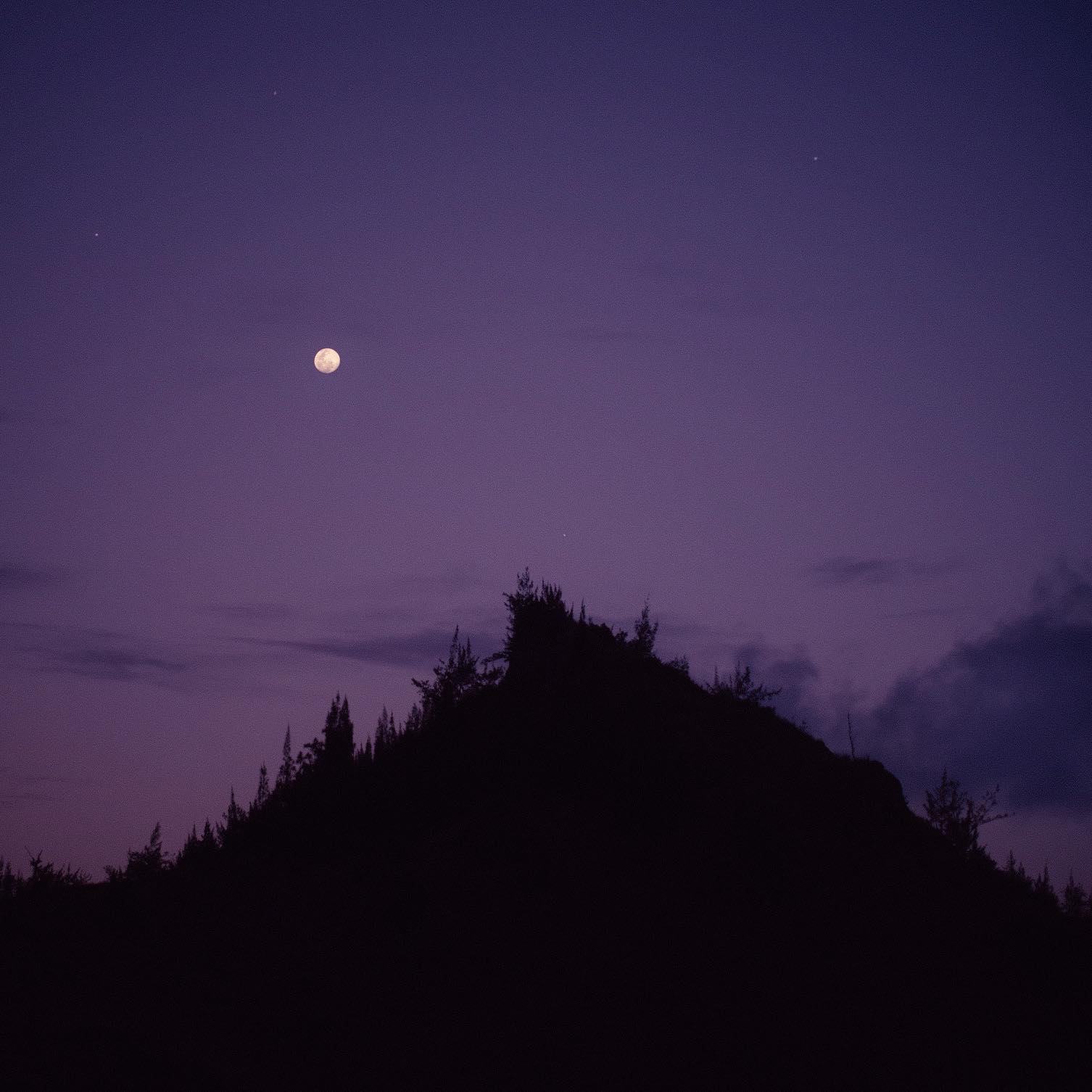
A full moon in April 2021.
Photo by David Butterfield
