






By Walter Ulloa
For Variety
HAGÅTÑA (The Guam Daily Post) — Despite growing national momentum to put micro-nuclear reactors on military bases, Guam’s government has received no official notification that the island’s installations are next, according to the executive director of the Community Defense Liaison Office.
Vera Topasna told The Guam Daily Post Tuesday that, as of now, the Department of Defense has not formally transmitted any plans, budget, or timeline to the governor of Guam regarding micro-nuclear reactors on island.
“There is no official word on bringing micro-nuclear reactors to the Guam bases and installations,” Topasna said. “At this point, none of that has been officially transmitted to the governor.”
She said the Department of Defense flagged the concept roughly two years ago, designating certain installations as test beds for the technology. But she drew a clear line between that early-stage exploration and any confirmed plan for Guam.
“They would start looking at the feasibility of using micro-nuclear reactors on installations,” she said. “There is no official word that Guam will have micro-nuclear reactors.”
Topasna also noted that any such reactors would be strictly inside the fence, intended for military use and not for the civilian grid or community outside base perimeters.
That assurance did not fully settle concerns raised by senators during a public informational briefing last week on military buildup and defense convened by Sen. Telo Taitague at the Guam Congress Building, where the nuclear reactor question emerged as one of the sharper points of the session.
Taitague said she understood roughly $400 million had been set aside for small nuclear reactors at two military installations, though details were still emerging.
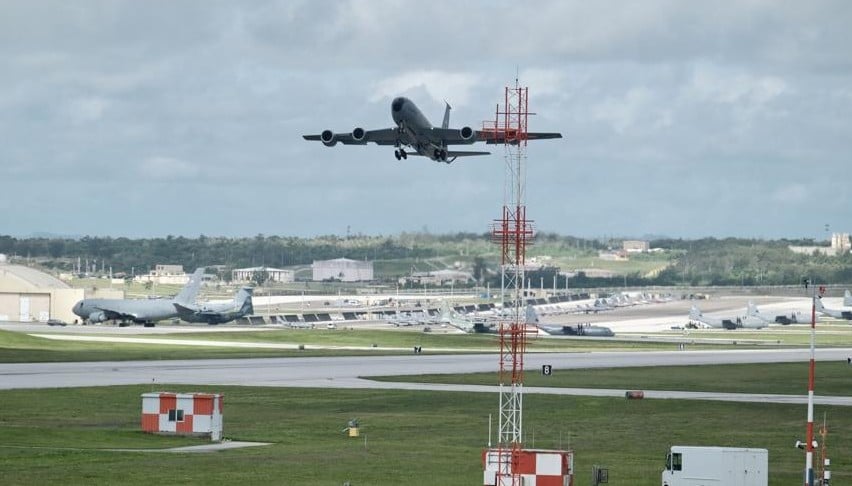
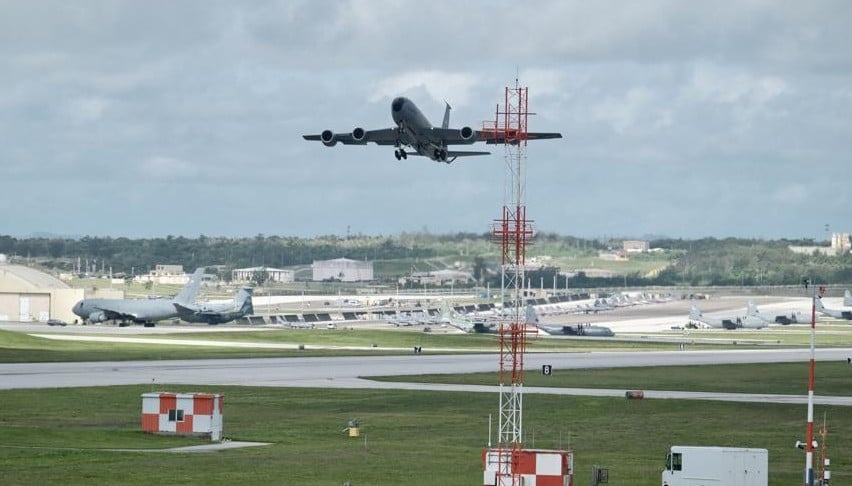
While a provision in the National Defense Authorization Act, secured by Guam’s congressional delegate, requires the governor receive 180 days’ notice before a permanent micro-nuclear reactor arrives on island, Sen. Chris Barnett pressed on whether that protection extends to temporary or portable reactors. The Pentagon has already demonstrated it can airlift a containerized reactor aboard a C-17 cargo aircraft.
Topasna acknowledged the 180-day notice requirement but said it has limits.
“That’s separate and apart from any environmental, like a (National Environmental Policy Act) process,” she told the Post. “That’s just (a) notification to the governor.”
On whether the micro-reactor question will come up at an upcoming federal roundtable in San Francisco, Topasna was direct: it will not.
“The San Francisco roundtable was really focused on what our community critical infrastructure needs are,” she said. “The discussion about micro-nuclear reactors is more a Guam discussion direct with (the) ‘Department of War,’ separate from the regional convening.”
She said the governor intends to hold a separate conversation with the Department of Defense on the subject, driven in part by comments from Delegate James Moylan and remarks from the secretary of Defense.
Barnett captured the broader frustration in the chamber, recalling that senators raised the reactor issue years ago only to be dismissed.
“I and a few of my colleagues had asked about this, and the response we got was basically, don’t freak out; that’s just a little footnote of a footnote in a report that’s buried under 10 reports,” he said. “And here we are just a few years later, finding out that it’s a reality.”
The Pentagon’s push to put nuclear microreactors on military bases is accelerating nationally. The Air Force recently selected Buckley Space Force Base in Colorado and Malmstrom Air Force Base in Montana as preferred sites under its Advanced Nuclear Power for Installations program, targeting deployment by 2030 or earlier. The Army separately announced plans to install small reactors at nine of its bases under Project Janus.
Neither the commander of Joint Region Marianas nor the commander of Joint Task Force-Micronesia attended last week’s briefing or sent a representative.
Taitague recessed rather than adjourned the briefing to allow the public to submit testimony at a future date. No date has been set. Written testimony may be submitted to [email protected]/.
