


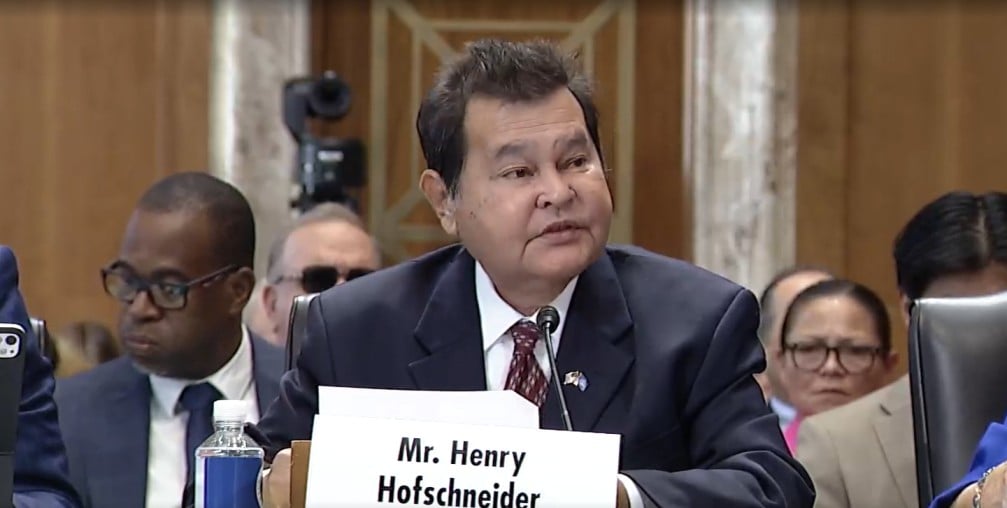




But under the popular initiative proposed by Rep. Heinz S. Hofschneider, part-time lawmakers cannot work for the government.
That provision changes everything. It can make the proposal actually workable considering, moreover, that the CNMI economy will drastically change under a federalized immigration system. What will be left of the private sector will have no choice but to hire more residents, who, for their part, will find it increasingly difficult to get government jobs. The government will have to downsize not because it wants too, but because it has to. Its current revenue base will gradually vanish into thin air. More residents — and nonresidents — will leave the islands, which means a smaller population. The CNMI will return, economically, to what it was around the early 1980s, which is fine for most locals.
In any case, as I also argued before, a part-time Legislature means a weak Legislature — and a more powerful chief executive. Right now, despite a full-time Legislature, a strong-willed governor can get away with a lot of things. (The opposition runs the 16th Legislature and they can’t even talk about impeaching an extremely unpopular governor.) Now imagine what a governor can do with a Legislature that can only be in session for a limited number of days each year.
There is, however, a separate proposal that can address this concern: Rep. Frank Dela Cruz’s House Legislative Initiative 16-2, which calls for an elected, non-partisan AG.
If the CNMI wants a part-time Legislature, it should also have an independent AG who can keep a close eye on the governor.
Attached to the four-page motion to dismiss filed by the feds on Tuesday was a 34-page memorandum in support of the motion.
If this were a boxing match, then the memo should be the left-right-upper-cut combination that floored the governor’s arguments.
• The “economic disaster” he claims will happen under federalization is based on a Government Accountability Office report “that contains numerous disclaimers stating that the report has no predictive value whatsoever.”
• Under CNMI law, the governor is not authorized to represent the commonwealth in a lawsuit — that’s the responsibility of the AG, “who is not found in the complaint.”
• The Covenant “clearly and unambiguously permits” the U.S. Congress to apply U.S. immigration law to the CNMI.
“The court,” the feds say, “should recognize the complaint for what it is: a disaffection with Congress’s decision to apply federal immigration law to the CNMI as a result of the CNMI’s failure to adequately address growing immigration problems and concerns.”
Send feedback to [email protected]
