






By Gregorie Michael Towai (Eipéráng)
For Variety
THIS is not an article I had planned on writing.
Over the past several weeks, much of my attention has been devoted to caregiving responsibilities while also navigating the difficult reality of loss and grief. As many caregivers understand, life does not slow down to accommodate either. Responsibilities remain. Appointments continue. Loved ones still depend on you. Writing and public engagement often become secondary to the immediate needs of those in your care.
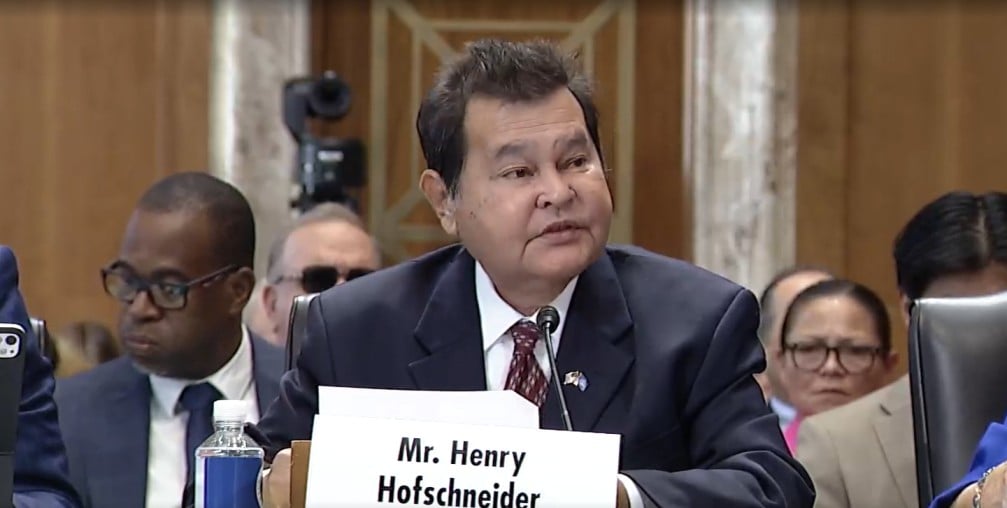
Yet when I came across the recent Marianas Press report regarding testimony before the U.S. Senate Energy and Natural Resources Committee by CNMI Chief of Staff Henry Hofschneider, I found myself compelled to reflect on what was being discussed. Not because of the specific debate surrounding Chinese tourism or visa policy, but because the testimony touched on a much larger issue that has quietly shaped the Commonwealth’s economic trajectory for decades.
During the hearing, Hofschneider acknowledged both the national security concerns associated with visa free entry for Chinese nationals and the economic realities facing the CNMI. He recognized what many already know: tourism remains an important component of our economy and any significant disruption to visitor arrivals can have serious consequences for local businesses and families.
The problem, however, is that the Commonwealth continues to find itself trapped in the same conversation year after year. We are constantly debating how to restore a market that once existed rather than asking why our economic future remains so dependent on decisions made by governments, airlines, and markets beyond our control.
At various points in our history, we placed our hopes on Japanese tourism. Later, we shifted those hopes toward China. Whenever visitor numbers declined, whether because of economic downturns, geopolitical tensions, changing travel preferences, or policy decisions, the Commonwealth found itself searching for ways to recreate the past rather than designing the future.
This is not an argument against tourism. Tourism will always remain one of the CNMI’s most valuable industries. It supports hotels, restaurants, transportation providers, retailers, tour operators, and countless small businesses. Tourism should remain an important part of our economy. What it should not remain is the primary foundation upon which our entire economic future rests.
The testimony before Congress unintentionally highlighted a deeper vulnerability. Whenever discussions arise regarding Chinese visitors, visa waivers, military concerns, or federal policy, the underlying message often becomes that the CNMI’s economic well-being depends on preserving access to a single source of revenue. That is not resilience. That is dependency.
What concerns me even more is that we often frame these discussions in Washington almost entirely through the lens of tourism. We ask how federal policies affect visitor arrivals. We ask how restrictions impact hotel occupancy. We ask how changes influence economic activity. These are legitimate concerns, but they are not the only concerns that should define our relationship with the United States.
The Covenant established far more than a tourism destination in the Western Pacific. It created a political partnership between the people of the Northern Mariana Islands and the United States. That partnership should provide opportunities that extend beyond visitor counts and airline schedules. The CNMI should not be approaching Washington solely as a jurisdiction seeking tourists. It should be approaching Washington as a strategic American community seeking investment, infrastructure, innovation, workforce development, and long-term economic security.
As America’s westernmost community, the CNMI occupies a unique position in the Pacific. We sit at the crossroads of Asia, Oceania, and the United States. We possess strategic geographic importance, extensive marine resources, rich Indigenous knowledge systems, and direct access to federal institutions. Few places in the Pacific can make that claim.
The question we should be asking is not how to rebuild the economy of 2015. The question should be how to build the economy of 2040.
Imagine the CNMI becoming a center for ocean research, marine conservation, climate science, and deep ocean exploration. Imagine partnerships with universities and research institutions studying our oceans and reefs. Imagine becoming a regional hub for disaster preparedness, maritime studies, Pacific governance, and environmental monitoring. Imagine expanding communications infrastructure, supporting undersea cable systems, attracting technology investment, and developing industries that are not dependent on the arrival of the next flight.
Imagine exporting knowledge alongside tourism. Imagine creating opportunities for scientists, researchers, educators, innovators, and entrepreneurs. Imagine an economy built upon multiple sectors working together rather than relying overwhelmingly on one.
Many island jurisdictions throughout the world have already begun pursuing these opportunities. They recognized that survival depends on diversification. They understood that no single industry can carry the weight of an entire economy indefinitely.
Our ancestors understood this principle long before economists gave it a name. A traditional vast ocean navigating outrigger canoe, does not rely on a single component to remain seaworthy. Its strength comes from balance. Every part contributes to stability. When one element is stressed, the others help keep the vessel upright.
The same principle applies to economic development.
Tourism should be one revenue stream. Ocean science should be another. Education should be another. Technology, communications infrastructure, military support services, environmental research, renewable energy, cultural preservation, and knowledge-based industries should all be part of the conversation.
When one sector struggles, the others help sustain the community.
The debate over Chinese tourism will likely continue. Reasonable people can disagree about visa policies, security concerns, and economic priorities. But regardless of where one stands on those issues, we should all agree on one thing: the Commonwealth cannot afford to spend another decade placing all of its hopes on the return of a single market.
The testimony before Congress should not simply reignite another discussion about Chinese visitors. It should prompt a broader conversation about economic resilience, strategic partnership, and long-term vision.
The future of the CNMI will not be secured by restoring yesterday’s economy. It will be secured by building an economy capable of adapting to tomorrow.
That is the conversation we should be having.
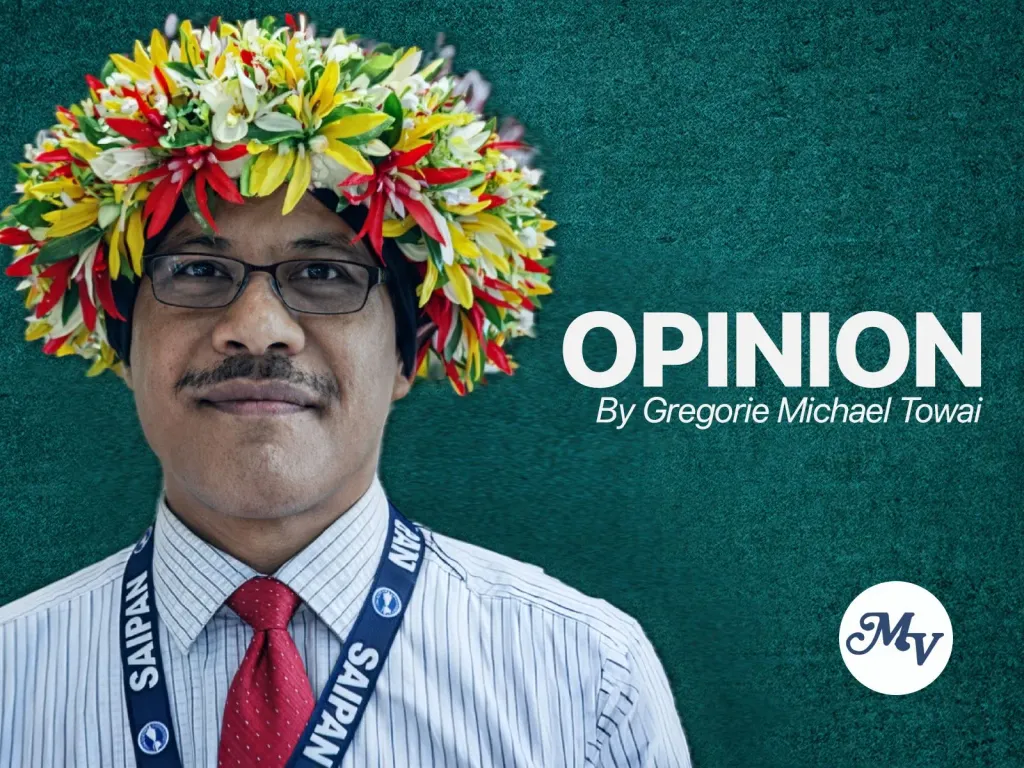
Gregorie Michael Towai (Eipéráng) is a CNMI-born independent researcher, cultural advocate, and founder of the Refaluwasch Journal of Knowledge and Culture. His work focuses on Pacific governance, resilience, Indigenous stewardship, and sustainable futures for island communities.
