



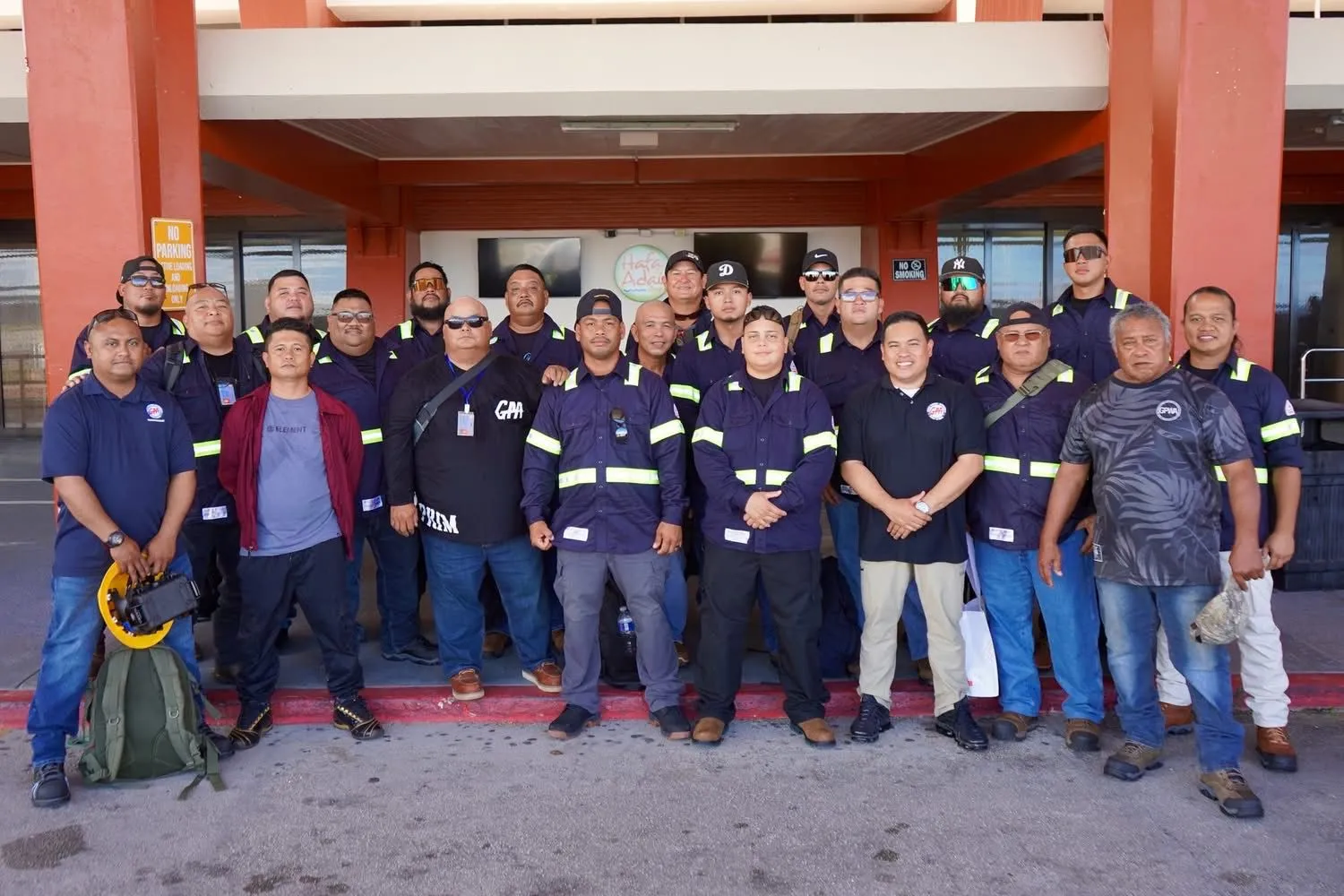


demonstration outside the administration building included kids and teens. However, the dismal turnout is not an indication of public sentiment. And no, please; please — there’s nothing “cultural” about the unwillingness of residents to be seen at these protest actions.
Most of the local people either work for the government or have relatives who do so. The prominent members of the local community who are not in the government own businesses that have to deal with the public sector. They cannot openly antagonize the powers that be.
But it will also be a mistake to assume that they are “silent.” Far from it. They call up their lawmakers and other officials who get an earful. They circulate anonymous denunciatory letters on Capital Hill. They heckle. Like that individual who saw the governor one night at the Paseo de Marianas during a power outage: “Thanks for the better times!” They attend public forums organized by the more vocal citizens. You can read some of their thoughts in the comment section of the Variety Web site. They talk and argue about these issues during rosaries and other family gatherings. And we will hear from them, loud and clear, in Nov. 2009.
They consider rallies not useless, but inconvenient.
I also have to point out that these demonstrations and public forums were unthinkable a decade ago. As things get worse, we may see more people on the sidelines either getting into the fray — or worrying more about their government jobs.
A local resident told me that compared to the CNMI people, Filipinos are more willing to stage and join rallies. Not really. The “Unity March” last December was more of a supplication than a rally. Less than a third of the estimated Filipino guest worker population on island joined the event, which was a plea for green cards, not for the governor’s resignation.
True, rallies are almost a daily event in the P.I., but these involve a handful of leftist students mouthing slogans from the 1960’s. These kids have nothing to lose and would rather be out in the streets than in their overcrowded and non-air-conditioned classrooms. Back home, moreover, the population is 91 million. Which means that more than 99 percent of the population have nothing to do with these rallies that are held in Metro Manila only. You don’t see government employees or the ordinary and mostly apolitical Filipinos waving “OUST GMA!” placards. Indeed, the number of people who join these rallies is so few that, sometimes, organizers have to pay jobless people to hold banners and scream at the bored police officers who will have to club and hose these demonstrators eventually.
The last of the large rallies in the P.I. were held at exactly the same spot in Metro Manila in January and May 2001 — the first triggered the coup that ousted Erap, and the second was staged by the urban poor who were upset by the removal of their president. Tens of thousands joined these rallies but, again, they comprised a very small portion of the population.
Nowadays, the only reason rallies get publicized is because the commies have resorted to “showbiz” gimmickry. They wear outrageous masks and costumes and burn spectacularly outlandish effigies of their objects of scorn. The photographers and police officers deployed to these events actually outnumber the demonstrators.
On Saipan, where there are only 20,000 people of NMI descent, the dissatisfaction with this administration is widespread. But the local people also know that the election clock is ticking anyway. Soon this administration will be lame-duck and then happily extinct.
Send feedback to [email protected]
