

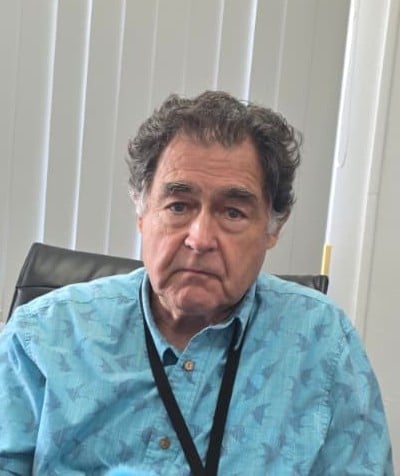





The governor still refused to divulge the names of his supporters financing the lawsuit filed on Sept. 12 in the U.S. District Court for the District of Columbia, but hinted that these individuals may soon find themselves burdened.
Finance Secretary Eloy Inos told the media yesterday that, so far, not a single public penny has been used in the lawsuit, which is challenging the labor-related provisions of the CNMI federalization law.
Fitial has asked the Legislature to appropriate up to $400,000 for the anticipated legal expenses in the next eight months.
But lawmakers said the CNMI should negotiate with the federal government instead of suing it.
The governor said although a private firm represents the CNMI government in the lawsuit, it doesn’t mean that Attorney General Matthew Gregory is incapable of representing the CNMI.
“Our AG’s office is not well equipped [to handle this type of case],” he said. “The law firm that we’re using, [their lawyers] clerked for the U.S. Supreme Court justices. They are experienced.”
The governor said his administration is not against the border control provision of the federal law but it is challenging the statute’s labor-related provisions which, he claimed, would phase-out the guest worker program by 2014.
“We’re not against national security,” he said. “Some staffers in the U.S. Congress think that the CNMI is dispensable. Because they want us to be like the other Micronesian islands. They want us not to be above Guam. So, I told them, I don’t have any qualms if you guys want us to be equal with our sisters — Guam and Micronesia — but in prosperity not in poverty.”
He said the people of the commonwealth have to understand that the federalization law will negatively impact the islands’ fragile tourism-based economy.
“I will continue to tell the people that this is for their own good,” Fitial said. “I am asking the people to help me because this is for all of them. If they read the [General Accountability Office report on the federalization law], they will be concerned about their lives,” he said.
According to the GAO, however, “there is no substantiated data available to validate the foreseen significant negative consequences of the federalization law on the islands’ labor market, tourism and foreign investment.”
