

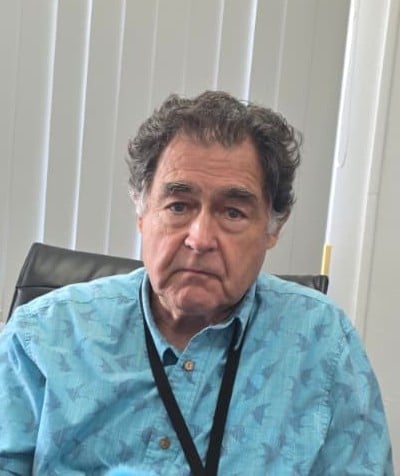


“It’s about sincerity,” said Pohnpei-based Willy Kostka, who heads the Micronesia Conservation Trust.
The Trust is coordinating funding to implement the “Micronesia Challenge,” a multi-country project to establish conservation management over 30 percent of coastal marine areas and 20 percent of land in Palau, Federated States of Micronesia, Marshall Islands, Guam and the Northern Mariana Islands.
Kostka was in Majuro earlier last week for a regional climate change meeting.
“If Marshall Islands, Federated States of Micronesia and Palau were as big as industrial countries,” Kostka said looking out over a parking lot in Majuro filled with SUVs and four wheel drive pickup trucks, “we’d be among the worst polluters.”
Kostka said islanders should take the first steps to mitigating climate change impacts on these low-lying islands, starting with governments investing money in climate-proof infrastructure.
“If we’re serious (about mitigating climate change impacts), we need to start adapting and building infrastructure that is climate proof,” he said.
“There is no way to raise international donor money for major climate change-proof infrastructure.”
But the Compacts of Free Association between the Micronesian island nations and the United States require a large portion of U.S. grants be spent on infrastructure.
“Plans should be developed for climate proofing of infrastructure and the governments should spend Compact money on it,” he said. Then they can go to Japan or other donors to request additional funding needed to complete projects, Kostka said.
One of Micronesia’s leading conservation officials, he believes leaders need to set their sights on their home.
“We are so focused at the international level (on climate change),” he said. “But if we evaluate how we’re doing at home, we’ll see that we are still building the way we’ve been doing it for the last 50 years. And we have four wheel drive vehicles on flat islands and are telling others to fix their greenhouse gas emissions.”
Many anticipated climate change problems related to erosion, saltwater flooding and severe storms could be avoided “if we rethink development. We can get all the money we want, but if we still build by the beach, what good will it do?”
Many atoll nations in the Pacific rise barely one meter above sea level.
In the past two years, conservation officials have begun focusing more on how to mitigate expected sea level rise impacts on their small islands.
But national budgets of these small island governments show it is business as usual, Kostka said.
“There have been a lot of workshops with talk about what we need to do (to prepare for a changing climate), but unless government budgets reflects these needs, it is just talk,” Kostka said.
“We didn’t cause climate change, but we have to deal with it. Complaining isn’t dealing with it. We need to start protecting ourselves and the way to do that is to do things differently — the way we build and treat our environment.”
He thinks aggressive climate change action by vulnerable islands will generate increased support for mitigation efforts from donor countries.
“We can do so much more first,” he said. “If other countries see (island) governments putting the effort in, it will be hard for them to say ‘no’ to requests for help. We should fix things within (our countries), so when we go out we are sincere about our cry for help to the international community.”
