







RATEPAYERS should remember that someone must pay for power generation and other utility services provided by CUC. In an election year, candidates often promise legislative “relief” for ratepayers. But that’s like putting a thermometer in the freezer on a hot day. The reading may go down, but it’s still hot outside. The real costs of providing power and other utility services cannot be wished away by legislation.
Politicians can advocate for and commiserate with ratepayers all they want, but someone still has to pay for generating power and providing CUC’s services. Fuel costs are paid either through the fuel adjustment charge — as is the case right now — or through government subsidies. Guess who ends up footing the bill for those subsidies?
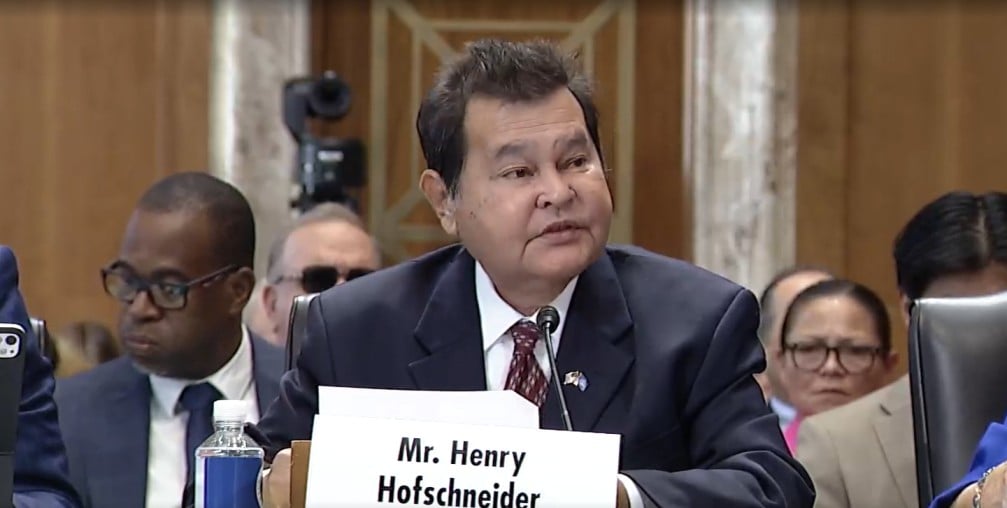
Last week, the Senate Committee on Public Utilities, Transportation and Communications conducted a very informative hearing with utility officials regarding several “well-intentioned” bills aimed at “benefiting” or “protecting” ratepayers. Hearing CUC officials discuss these measures reminded me of what President Reagan once said: “The nine most terrifying words in the English language are, ‘I’m from the government and I’m here to help.’ ”
One of the bills, according to an assistant attorney general, would kill CUC’s solar project — a project lawmakers themselves say should be expedited.
Another assistant attorney general, who also serves as CUC’s legal counsel, said the bills needed “drastic” improvements. He was being polite. The only meaningful upgrade would be to shred them.
One bill would supposedly “help” farmers by setting a water rate of 25 cents per thousand gallons.
Its implementation, the assistant AG said, “would absolutely require [CUC] to raise water rates on everyone else. That proposed water rate is way below the cost of production. Also, the bill lacks any mechanism to prevent someone from transferring, donating or selling that water to others. It may sound far-fetched, but if I owned an ice and water company, I could obtain a farming license, buy water for 25 cents per thousand gallons, and then resell it. As currently written, many of these bills would either bankrupt CUC or, at the very least, force higher rates on consumers.”
CUC’s executive director added that the bill “might help food producers, but it’s not going to help those whose water rates would have to be increased to subsidize a lower rate for a specific class of users.”
In any event, the assistant AG argued that now is not the time to enact any of these measures.
“I don’t need to tell anyone about the super typhoon that just happened,” he said. “CUC is in the middle of a recovery effort. Yet every bill before the committee today would take effect immediately upon becoming law. You’re considering changing the rules in the middle of a recovery. I think that’s cruel and shocking. Right now, CUC is fronting much of the cost of the recovery effort. Changing the rules in the middle of this process could be a death sentence for CUC. If many of these bills are passed, I believe there would be a federal takeover, and the first thing the federal government would do is increase rates.”
CUC’s chief financial officer reminded lawmakers that the agency “is already one of the most heavily regulated public entities in the CNMI.”
Each year, she noted, CUC undergoes a comprehensive independent financial audit conducted in accordance with generally accepted accounting standards. Those audits evaluate not only the corporation’s financial statements, but also its internal controls over financial reporting and operational processes, including cash management, billing and collections, payroll, procurement, contract administration, accounts payable, accounting systems, asset management, and compliance with laws, regulations and grant requirements.
“These annual audits already identify weaknesses, deficiencies and recommendations for corrective action,” she said.
In addition, she noted that CUC’s finances are routinely reviewed by federal agencies and grant providers. The utility is also subject to oversight by the Commonwealth Public Utilities Commission, as well as federal stipulated orders and judicial supervision.
“Every week, CUC meets with representatives of the U.S. Environmental Protection Agency and the U.S. Department of Justice regarding compliance obligations and operational performance,” she said. Twice a year, CUC participates in court proceedings where a federal judge reviews finances, collections, operations, compliance status, accomplishments, deadlines and corrective actions. “Very few public utilities in the United States operate under this level of scrutiny.”
According to the CFO, the proposed legislation would largely duplicate reviews that already exist.
“Rather than generating new information, this legislation would require CUC employees to repeatedly gather, organize and reproduce information that has already been reviewed by auditors, regulators, federal agencies and the courts. The result would be duplication of effort, not improved governance. These costs will ultimately be borne by ratepayers.”
But that’s not all.
“The bill requires CUC to fund the audit and all associated compliance requirements using utility revenues,” she said. “There is no appropriation and no outside funding source. Consequently, the costs will be borne by utility customers who are already facing significant financial pressure.”
Even if funding were provided, the legislation “would divert critical staff from core operations. CUC already faces significant workforce challenges, with many employees performing multiple functions because of staffing shortages. Implementing the bill would require hundreds, if not thousands, of staff hours devoted to assembling records, responding to auditors, preparing reports, maintaining dashboards and managing compliance activities.”
“Every hour spent supporting duplicative audits is an hour not spent restoring infrastructure, responding to customers, repairing systems, improving reliability, securing grants or advancing capital projects. This legislation risks creating additional administrative burdens without producing a corresponding public benefit,” she added.
“The bill appears designed to find fault rather than improve performance. Constructive oversight should focus on helping public institutions identify weaknesses, implement improvements and achieve measurable progress. Instead, the legislation presumes failure, imposes punitive deadlines, establishes automatic default mechanisms, triggers oversight hearings, restricts management actions and creates personal financial penalties.
“CUC does not object to audits. We object to legislation that creates redundant oversight structures, diverts limited resources, increases costs to ratepayers and imposes punitive requirements that do little to improve service delivery.”
The CFO urged lawmakers to focus instead on policies that strengthen utility operations, improve infrastructure reliability, support workforce development and provide CUC with the flexibility necessary to operate in a businesslike manner for the benefit of the Commonwealth.
The next time you hear a politician promising to “protect” ratepayers, ask whether the proposal includes subsidizing their CUC bills and appropriating funds to pay the government’s CUC bills.
If not, it’s just election-year grandstanding.
Send feedback to [email protected]
Zaldy Dandan is the recipient of the NMI Society of Professional Journalists’ Best in Editorial Writing Award and the NMI Humanities Award for Outstanding Contributions to Journalism. His four books are available on amazon.com/.
