



By Bryan Manabat
[email protected]
Variety News Staff
A NATIONAL Weather Service meteorologist says the CNMI has made major strides in emergency communication and hazard readiness, with Rota’s Tsunami Ready renewal this week highlighting years of strengthened coordination between local and federal partners.
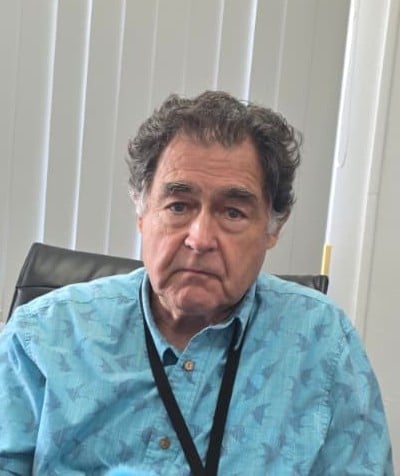
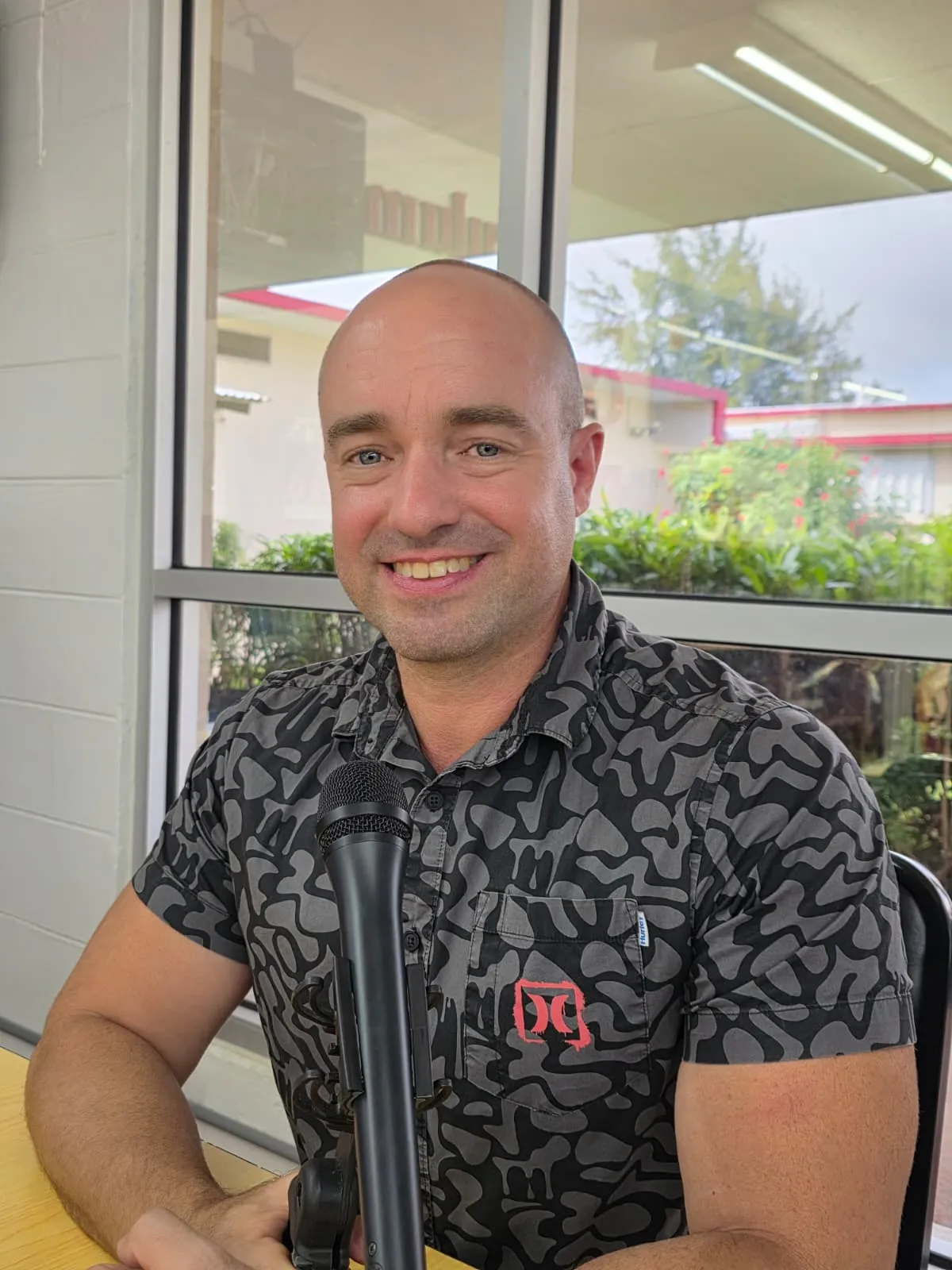
“We’re the National Weather Service Weather Forecast Office on Guam. Within our area of responsibility is the CNMI,” said Landon Aydlett, NWS-Guam warning coordination meteorologist. “We don’t exist just for Guam alone, but for all of the CNMI as well as the compact states… CNMI is one of our key stakeholder communities.”
Aydlett spent the week in the CNMI conducting meetings, outreach, and the four‑year review required for communities certified under the Storm Ready and Tsunami Ready programs. Rota’s certification was set to expire March 10.
The programs ensure coastal and hazard‑prone communities have multiple, reliable ways to receive, understand, and disseminate life‑saving weather information. They also require close coordination with emergency management offices on planning, exercises, and public education.
Aydlett said the CNMI Homeland Security and Emergency Management Office has become one of the region’s strongest partners.
“We work closely with the CNMI Homeland Security and Emergency Management Office here in Saipan, as well as in Tinian and Rota, for maximum preparedness and outreach for all things weather hazards and water hazards,” he said.
Lessons from past storms
Aydlett noted that Typhoon Soudelor in 2015 exposed gaps in communication and public understanding of alerts. But those weaknesses, he said, led to major improvements.
“I’d say the CNMI is definitely up to par, and this has been a years‑long process,” he said. “The best thing you can do with a disaster is learn from it. When another super typhoon occurs in the future — it’s a matter of time — we want to be ready and make sure everybody, everywhere gets all the information they need.”
He emphasized the ongoing challenge of reaching every segment of the community, including visitors, non‑English speakers, and vulnerable populations.
Tsunami awareness remains a priority
Aydlett said the Marianas Trench is often misunderstood as a protective barrier, when in fact it is a potential tsunami source.
“A lot of people think the Mariana Trench protects us and keeps us safe from tsunamis, but the trench is actually a source for possible tsunamis,” he said. “We always have to be aware of the causes, the hazards, and the actions to take.”
He plans to return to the CNMI several times this year to support tsunami awareness campaigns, tropical cyclone preparedness, and public education on the meaning of watches, warnings, and advisories.
A year of outreach ahead
March will feature National Tsunami Awareness Week, followed by National Preparedness Month in September. Aydlett said these observances help reinforce messages that can fade over time.
“It gets lost in translation — what a watch means, what a warning means, and the actions to take,” he said. “This is just more reason for us to have more presence up here in the CNMI.”
He added that the partnership with CNMI Homeland Security and Emergency Management Office has become seamless.
“They make my job easy,” Aydlett said. “We have that 24‑7 collaboration… so that we can be as fast as possible to receive, understand, discuss, and push out information.”
Bryan Manabat was a liberal arts student of Northern Marianas College where he also studied criminal justice. He is the recipient of the NMI Humanities Award as an Outstanding Teacher (Non-Classroom) in 2013, and has worked for the CNMI Motheread/Fatheread Literacy Program as lead facilitator.
