



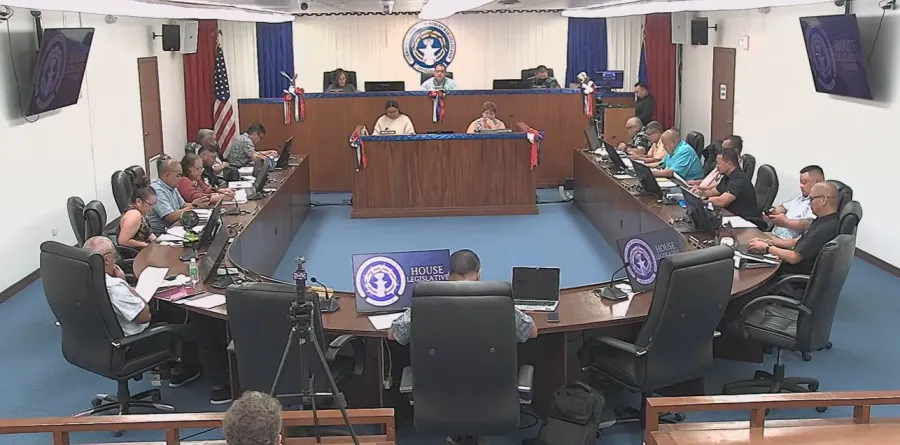




The panel, however, also proposed further amendments to the bill itself, H.B. 16-220, which was introduced by Vice Speaker Joseph P. Deleon Guerrero, R-Saipan. This is the second time that both houses will review the bill.
The current election law allows the Election Commission to remove from the list those voters who failed to vote in the last general elections and failed to re-register for this year’s elections.
In an interview yesterday, the committee chairwoman, Sen. Maria T. Pangelinan, said failure to vote in a general election should not preclude the person from participating in the runoff.
“A runoff is considered the second part of an election,” she said.
The person who votes in the runoff election should remain a registered voter, she added.
Pangelinan, D-Saipan, said this legal issue is now being addressed by the Senate legal counsel who is determining whether this is a matter of constitutional rights or just a state policy decision.
She believes that voters should not be denied their right to vote.
Rep. Ray N. Yumul, R-Saipan, said he and some of his colleagues in the House believe that the current version of the bill would be unfair to those who participated in the general elections.
This, Yumul said, may lead to complaints from the losing candidates.
The bill came from the House to the Senate Committee on Fiscal Affairs already containing language that would allow registered voters who fail to vote in the general election to participate in any subsequent runoff, and Pangelinan agrees with the concept.
She said voters who are off-island may find it costly to be participating in both elections so they might choose to vote only in the runoff.
Pangelinan also found two potential loopholes in the current version of the House bill:
• Persons who vote in the runoff election will remain registered voters — implying that even if they were somehow found to be not qualified to vote in the general or runoff election, they would still retain their status as a registered voter.
• These same words also imply that a person could arguably remain a registered voter in spite of other statutes that would normally disqualify him.
As there are other reasons under current law that could disqualify a voter, the Senate Committee on Fiscal Affairs amended the wording of the bill to acknowledge existing law and close the loopholes.
Pangelinan said the current version of the House bill also creates problems for absentee voters attempting to participate in a runoff election.
Under current law, in a general election, the Election Commission must mail out ballots to absentee voters no less than 10 days prior to the election.
This time frame is time tested.
In the House bill, the last day the commission can mail ballots for a runoff election is only seven days prior to the election, and absentee ballots must be postmarked on the date of the election in order to be counted.
This time constraint risks the possibility that an absentee voter may not receive his or her runoff ballot in time, the senator said.
Her committee looked for a way to adhere to the constitutional amendment ratified by the people which mandated that the runoff election be held 14 days after the general election results are certified.
The committee decided to amend the House bill by adding three days to the postmark deadline for absentee voters in a runoff election.
This would allow 10 days for the absentee ballot to be delivered to the voter, just as it is in a general election, Pangelinan said.
This November, for the first time in CNMI history, if none of the gubernatorial candidates received more than half of the votes cast, a runoff between the top two candidates will be held 14 days after the general election day.
