




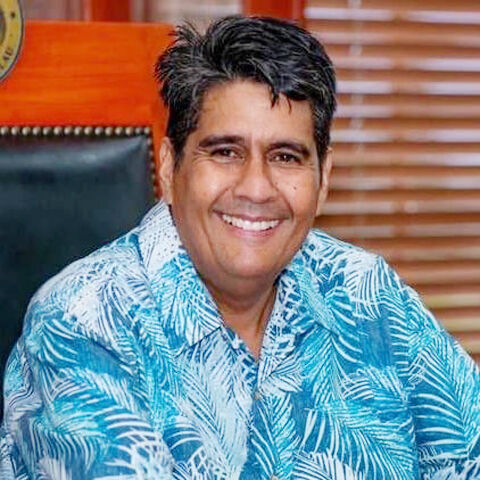
KOROR (Island Times/Pacnews) — Palau’s President Surangel Whipps Jr. is the first Pacific Island country leader to publicly express support for Japan’s plan to release treated nuclear wastewater into the Pacific
After meeting with Japan’s Prime Minister Fumio Kishida last week, Whipps said he has confidence in Japan’s ability to meet local and international standards and ensure the safety and well-being of the Japanese and the people of the Pacific.
“The level of attention and compliance that the Government of Japan has on local and international standards, as well as the health and safety of the citizens of Japan and the Pacific, helps boost our belief that Japan has a solid plan that it should be allowed to implement,” Whipps said.
Other Pacific island leaders are waiting for the outcome of the meetings between the International Atomic Energy Agency and experts hired by the Pacific Islands Forum to look into the possible impact on the ocean of the discharge of treated nuclear wastewater.
Forum Secretary-General Henry Puna said Japan had promised not to release the water while experts hired by the Forum and the IEAE continue to study the issue.
Fiji Prime Minister Sitiveni Rabuka has expressed strong opposition to the planned discharge while Solomon Islands Prime Minister Manasseh Sogavare said he supported it last week, only to change his mind this week.
He told the Solomon Islands parliament that his earlier statement was “misconceived” and that the Pacific is not the place to dump “unsafe, untreated nuclear wastewater.”
Concerns continue to be voiced regarding the long-term impact on oceanic ecosystems of the gradual release of treated nuclear wastewater into the ocean.
Japanese fishermen, scientists, marine biology and ecology experts, along with residents of Pacific island countries, are urging Japan not to release the water.
But President Whipps trusts that Japan will do what its government said it will do, which is to remove contamination before the water is discharged.
The nuclear-contaminated water came from the Fukushima Daiichi nuclear power plant nuclear plant which was damaged by an earthquake in 2011, resulting in the meltdown of three reactors. Seawater was pumped into the plant to cool the reactors. The resulting contaminated water was then stored somewhere to prevent leaking or spillage.
Japan said it has been “treating” the wastewater to remove dangerous radioactive isotopes, and what is left is “safe” to be released into the ocean.

Surangel Whipps Jr.
